Sources and
credits.
Sources are cited beside the content they support. Every document, primary text, and historical marker is transcribed directly below for in-exhibition study.
Historical and primary sources
Entries follow APA 7 where metadata is available. Dates are omitted where the source does not establish them; “n.d.” means no date supplied. Each entry includes transcribed archival text and institutional holding details.
-
Cress, J. D
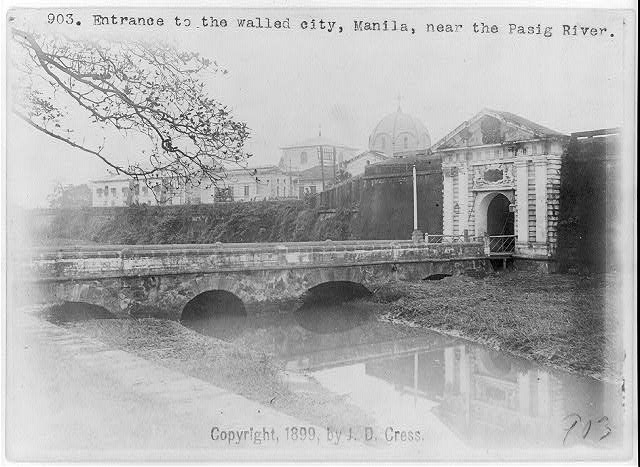
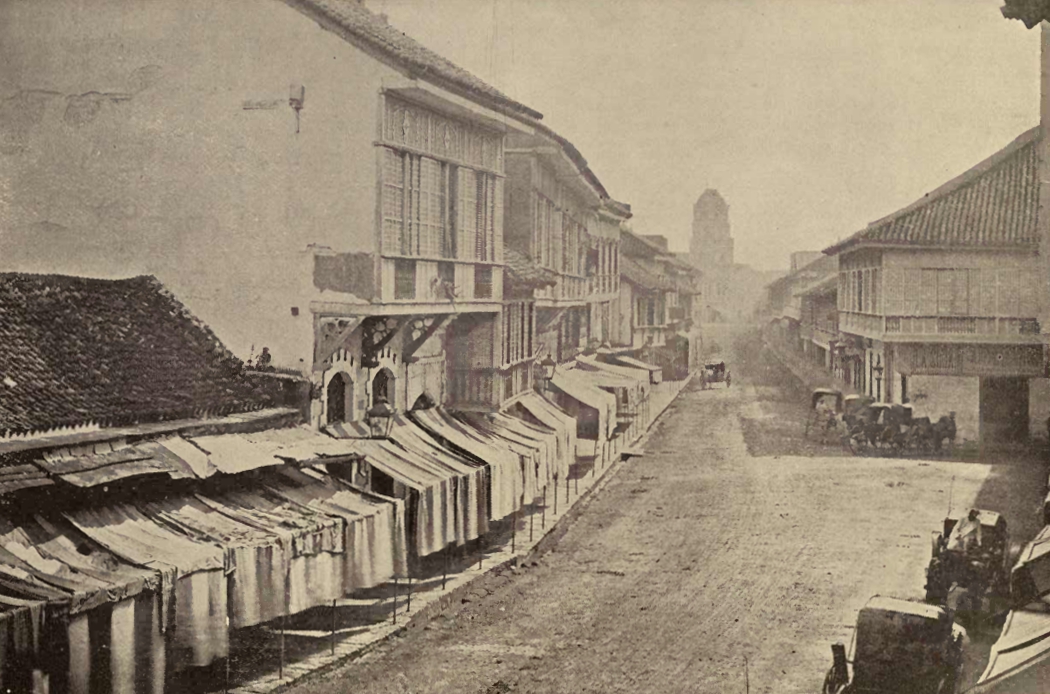
Citation: Cress, J. D. (c. 1899). Entrance to the walled city, Manila, near the Pasig River [Photograph]. Library of Congress. LC-USZ62-60796. No known restrictions on publication.
Holding repository / Registry: Library of Congress Prints and Photographs Division, LC-USZ62-60796
Transcribed primary excerpt / record:Photographic print by J. D. Cress, cataloged circa 1899, depicting the stone gate and drawbridge entrance to Intramuros near the Pasig River. Digital ID: cph 3b08216. Preserved as archival evidence of late 19th-century colonial Manila fortifications.
-
National Commission for Culture and the Arts
Citation: National Commission for Culture and the Arts. (2003). Nation observes 142nd birth anniversary of Jose Rizal.
Holding repository / Registry: National Commission for Culture and the Arts & Calamba Parish Register (Book 7 of Baptisms, folio 49)
Transcribed primary excerpt / record:José Protacio Rizal Mercado y Alonso Realonda was born on June 19, 1861 in Calamba, Laguna, to Francisco Engracio Rizal Mercado y Alejandro and Teodora Morales Alonso Realonda y Quintos. Baptized on June 22, 1861 by parish priest Fr. Rufino Collantes, with Fr. Pedro Casañas standing as godfather. Fr. Collantes noted in the parish records: “Take good care of this child, for someday he will be a great man.”
-
National Historical Commission of the Philippines
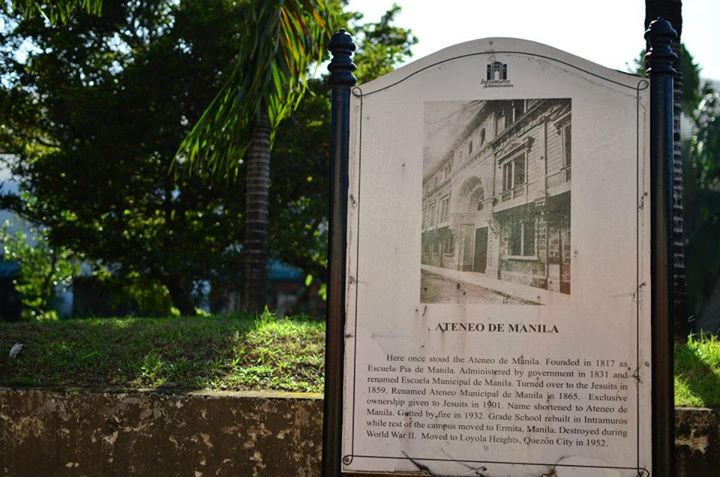
Citation: National Historical Commission of the Philippines. (n.d.). Ateneo de Manila [Historical marker].
Holding repository / Registry: National Historical Commission of the Philippines & Ateneo Municipal de Manila Archives
Transcribed primary excerpt / record:Rizal entered the Ateneo Municipal de Manila in June 1872 under the direction of the Jesuit fathers. He excelled in rhetoric, philosophy, natural history, and classical languages, earning the grade of “Sobresaliente” (Excellent) in all subjects and graduating with the degree of Bachiller en Artes on March 23, 1877 at age 15. The Jesuit humanistic ratio studiorum formed his early intellectual foundation.
-
National Museum of the Philippines
Citation: National Museum of the Philippines. (n.d.). Diploma awarded to Dr. Jose Rizal.
Holding repository / Registry: National Museum of the Philippines & University of Santo Tomas Archives
Transcribed primary excerpt / record:Between 1877 and 1882, Rizal pursued simultaneously the preparatory course in Theology and Philosophy and Letters, followed by Medicine at the Real y Pontificia Universidad de Santo Tomás in Intramuros. He completed his fourth year of medical studies before deciding to continue his education in Spain to complete specialized ophthalmic training.
-
Philippine Embassy in Madrid
Citation: Philippine Embassy in Madrid. (n.d.). Jose Rizal’s walking tour Madrid.
Holding repository / Registry: Philippine Embassy in Madrid & Archivo Histórico Nacional (Madrid)
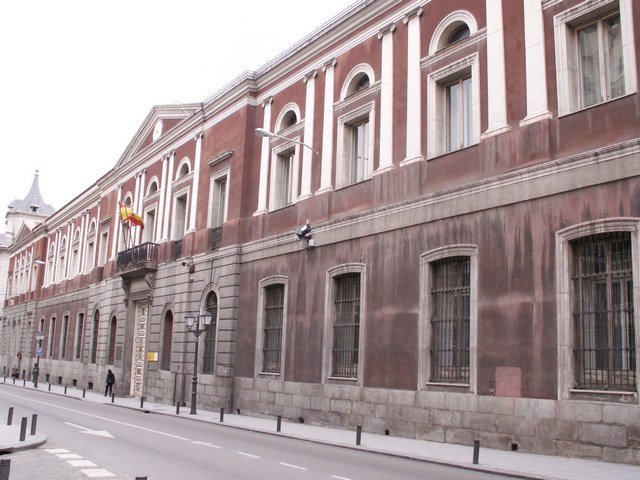
Transcribed primary excerpt / record:Rizal matriculated at the Universidad Central de Madrid in October 1882. On June 21, 1884, he was conferred the Licentiate in Medicine, and on June 19, 1885, he completed the Licentiate in Philosophy and Letters with sobresaliente honors. In Madrid, he immersed himself in the reformist circle of expatriates and delivered his celebrated Brindis toast on June 25, 1884 honoring Juan Luna and Félix Resurrección Hidalgo.
-
National Museum of the Philippines
Citation: National Museum of the Philippines. (n.d.). Heldenreise: Dr. Jose Rizal’s time in Germany.
Holding repository / Registry: National Museum of the Philippines & Wilhelmsfeld Municipal Registry
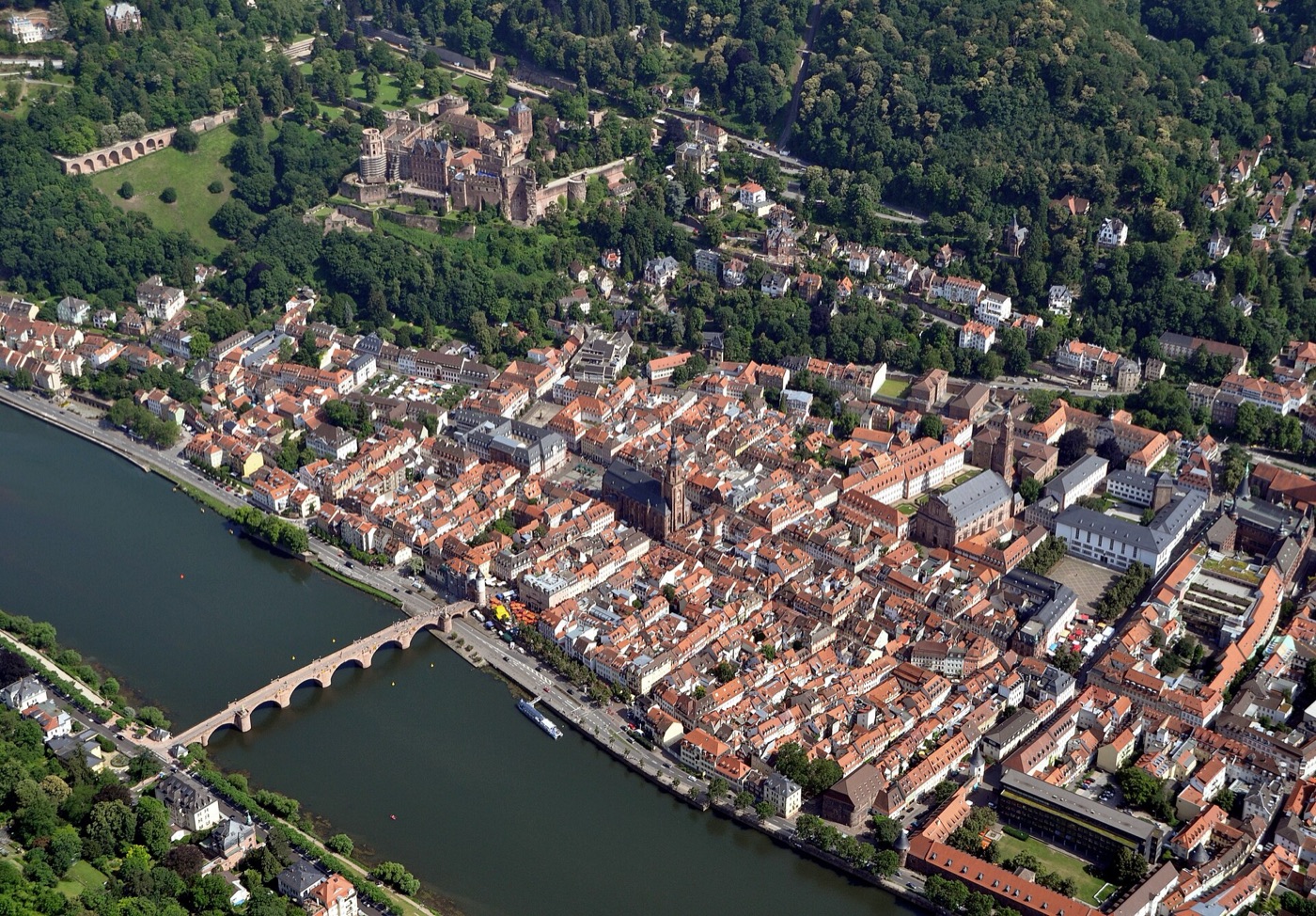
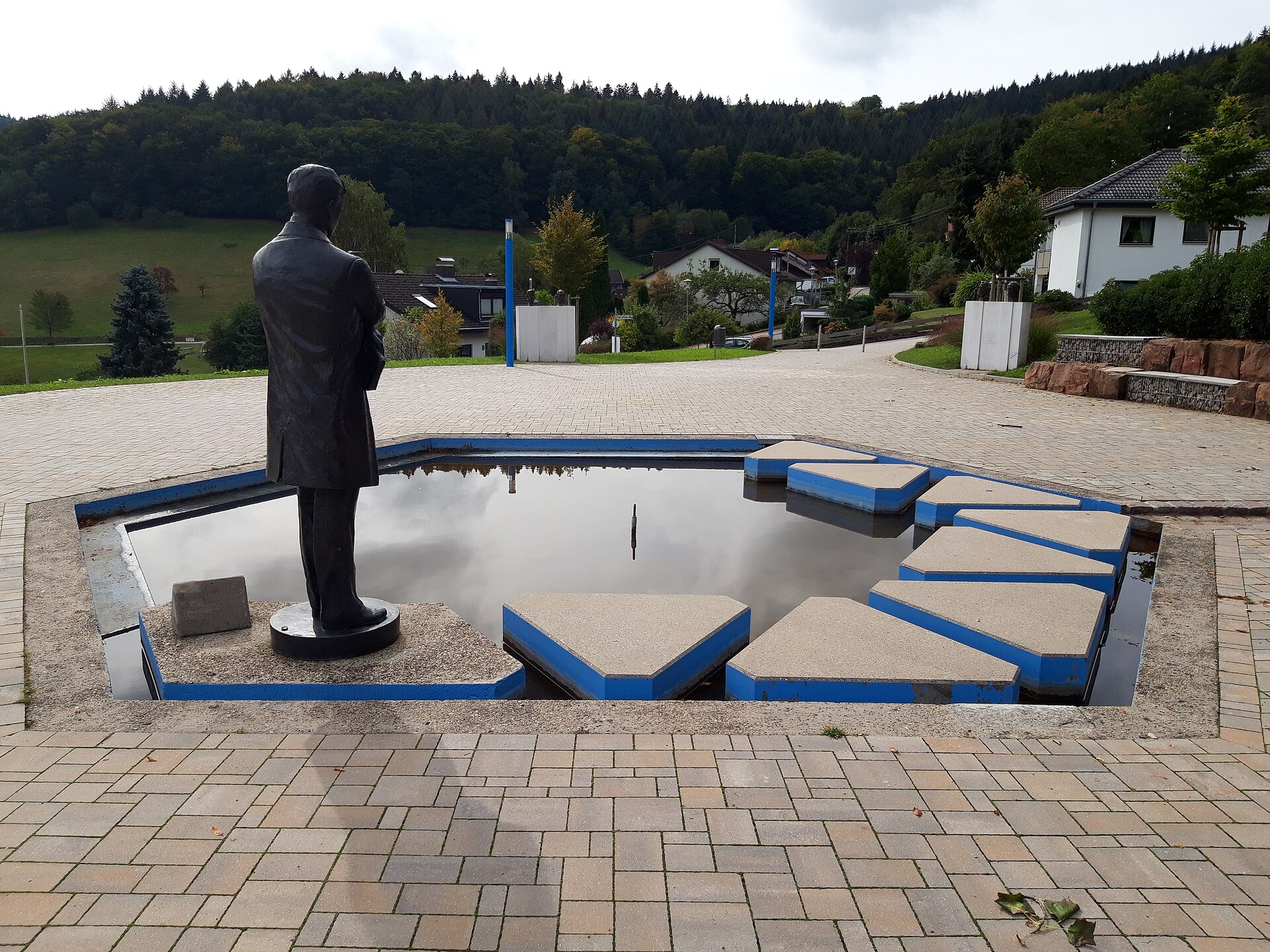
Transcribed primary excerpt / record:Arriving in Heidelberg in February 1886, Rizal attended lectures by ophthalmologist Dr. Otto Becker at the university eye clinic and trained in clinical procedures. In spring 1886, he resided in the vicarage of Protestant Pastor Karl Ullmer in nearby Wilhelmsfeld, where he drafted the final chapters of Noli Me Tangere and composed the poem “A Las Flores de Heidelberg”.
-
Ravin, T. B
Citation: Ravin, T. B. (2001). José Rizal: Philippine national hero and ophthalmologist. Archives of Ophthalmology, 119(2), 280–284.
Holding repository / Registry: Archives of Ophthalmology (AMA Historical Archives, Vol. 119, No. 2)
Transcribed primary excerpt / record:From October 1885 to January 1886, Rizal served as assistant in the Paris clinic of Dr. Louis de Wecker (1832–1906), one of Europe’s foremost ophthalmic surgeons. Rizal sought surgical training specifically to treat his mother’s failing eyesight from cataracts. In 1892, in Dapitan, he successfully operated on Teodora Alonso’s eyes, fulfilling his scientific and filial mission.
-
Intramuros Administration
Citation: Intramuros Administration. (n.d.). Museo ni Rizal.
Holding repository / Registry: Intramuros Administration, Museo ni Rizal at Fort Santiago
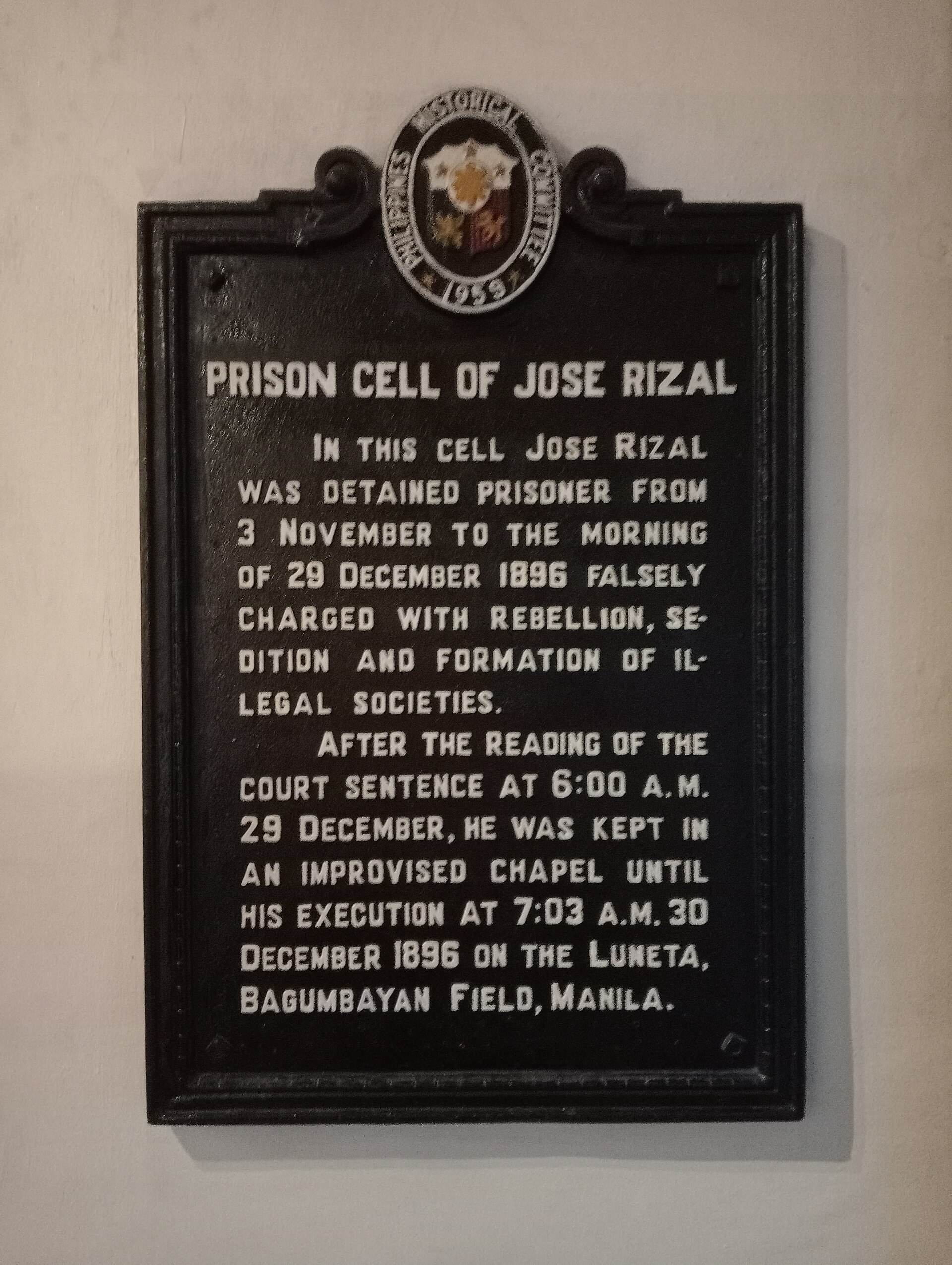
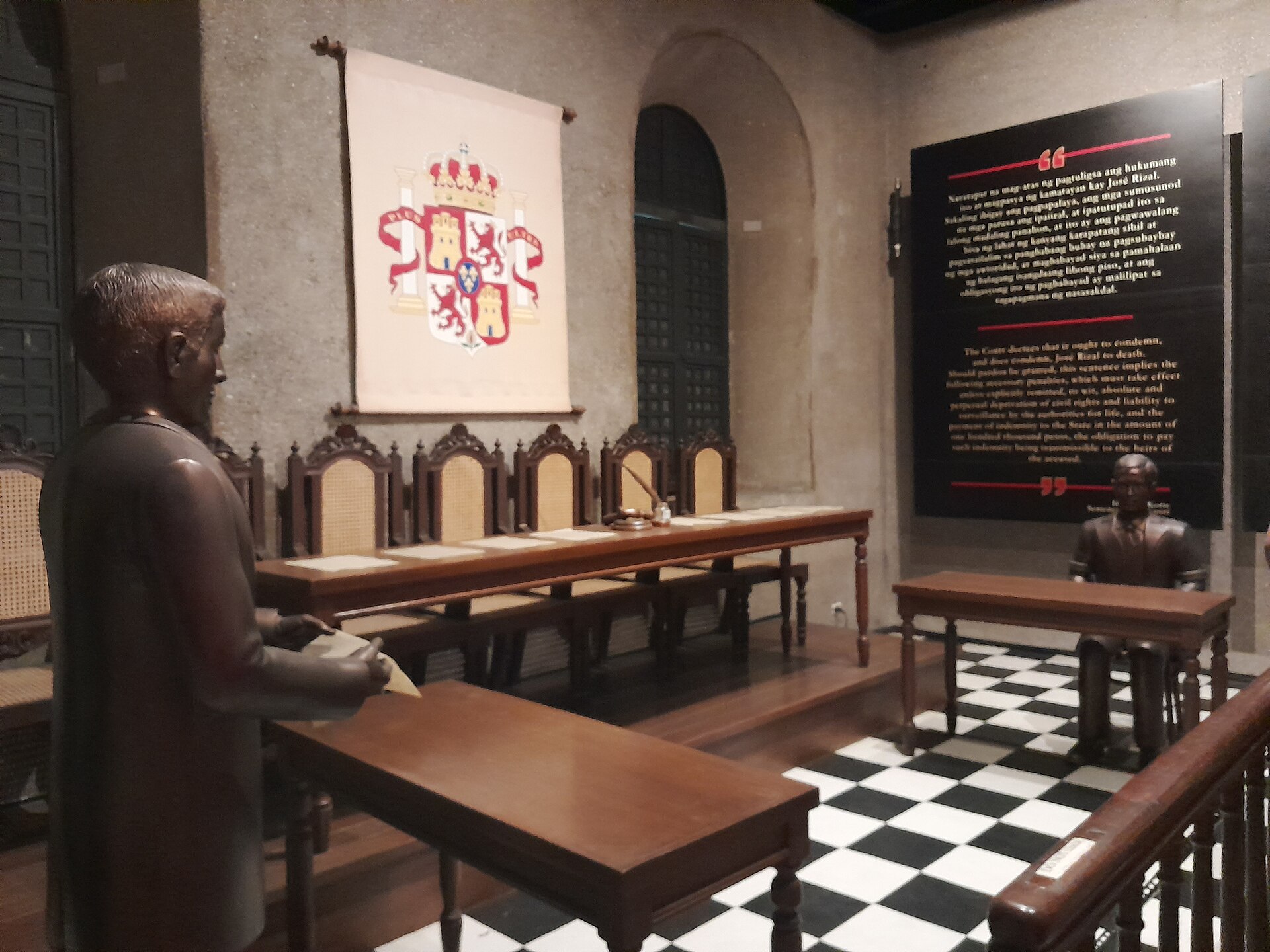
Transcribed primary excerpt / record:Following his arrest aboard the Isla de Panay in 1896, Rizal was incarcerated in solitary confinement at Fort Santiago on November 3. He faced a military court-martial on charges of founding an illegal association (La Liga Filipina), promoting rebellion, and sedition. Despite the absence of weapons or orders bearing his command, the tribunal condemned him on December 26, 1896 to death by firing squad.
-
National Historical Commission of the Philippines
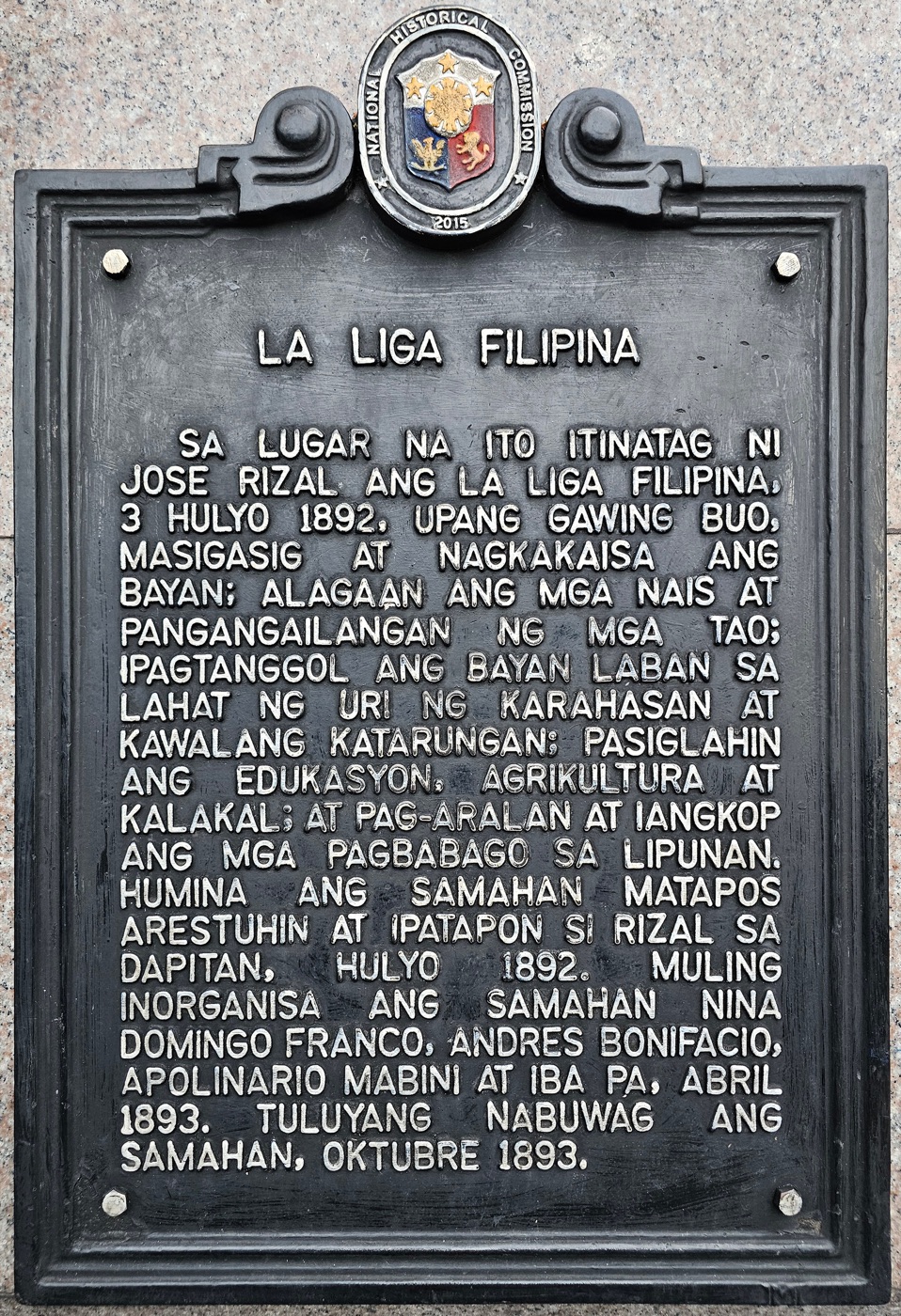
Citation: National Historical Commission of the Philippines. (2015). La Liga Filipina [Historical marker].
Holding repository / Registry: National Historical Commission of the Philippines, Marker Registry 2015
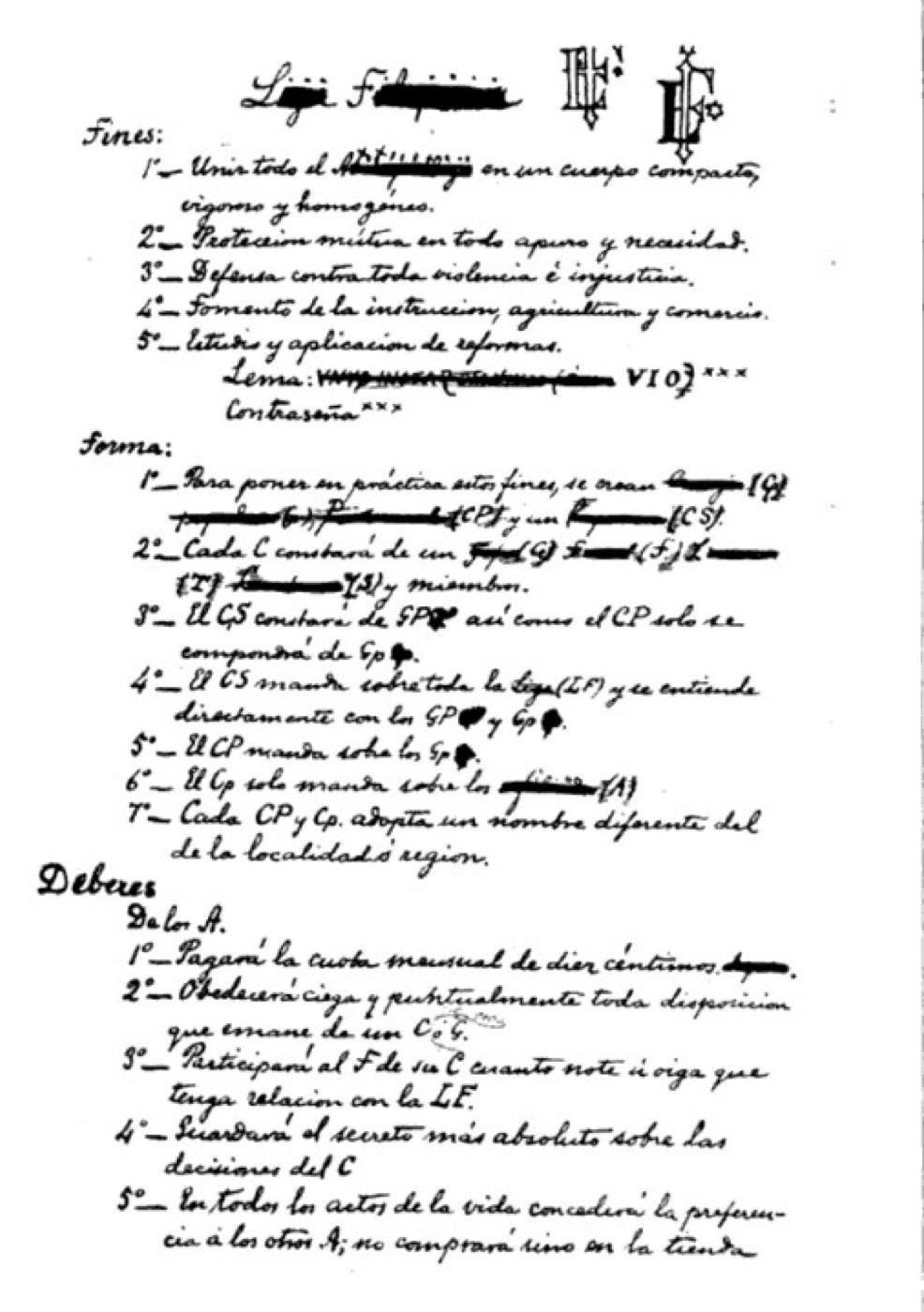
Transcribed primary excerpt / record:On July 3, 1892, Rizal founded La Liga Filipina at the house of Doroteo Ongjunco on Calle Ilaya, Tondo, Manila. Its constitution established five core aims: (1) To unite the whole archipelago into one compact, vigorous, and homogeneous body; (2) Mutual protection in every want and necessity; (3) Defense against all violence and injustice; (4) Encouragement of instruction, agriculture, and commerce; (5) Study and application of reforms. The league was dissolved upon Rizal’s arrest three days later.
-
City Government of Dapitan
Citation: City Government of Dapitan. (n.d.). Rizal Shrine.
Holding repository / Registry: City Government of Dapitan & NHCP Talisay Historical Shrine
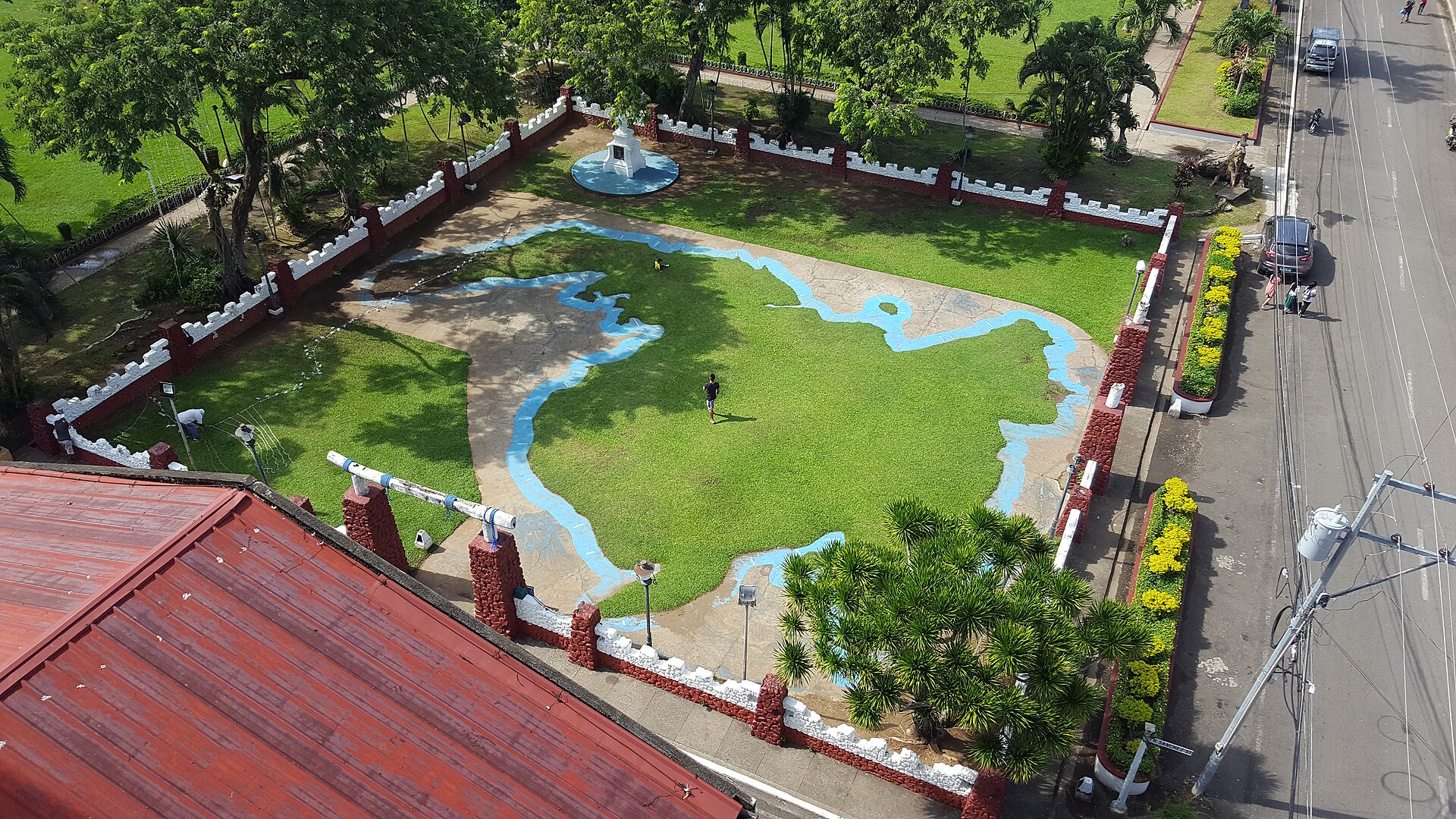
Transcribed primary excerpt / record:Exiled to Dapitan from July 17, 1892 to July 31, 1896, Rizal transformed his confinement into four years of civic enterprise. He purchased a 16-hectare estate at Talisay, constructed a waterworks system with bamboo and brick pipes, established a tuition-free school for sixteen local boys, treated patients regardless of wealth, collected new biological specimens (Draco rizali, Apogonia rizali, Rhacophorus rizali), and sculpted the 900-sq-meter relief map of Mindanao.
-
National Commission for Culture and the Arts
Citation: National Commission for Culture and the Arts. (2003). Andres Bonifacio and the 1896 Revolution.
Holding repository / Registry: National Commission for Culture and the Arts & Archival Katipunan Records
Transcribed primary excerpt / record:Upon learning of Rizal’s deportation to Dapitan on July 7, 1892, Andrés Bonifacio, Ladislao Diwa, Teodoro Plata, and others convened at 72 Calle Azcarraga, Manila, to establish the Katipunan (KKK), concluding that peaceful assimilation was futile. In June 1896, Bonifacio sent Dr. Pío Valenzuela to Dapitan to consult Rizal; Rizal advised that an armed revolt without sufficient arms, training, and backing was premature.
-
National Historical Commission of the Philippines
Citation: National Historical Commission of the Philippines. (n.d.). Jose Rizal (DOST Taguig City) [Historical marker].
Holding repository / Registry: National Historical Commission of the Philippines & Luneta Memorial Registry
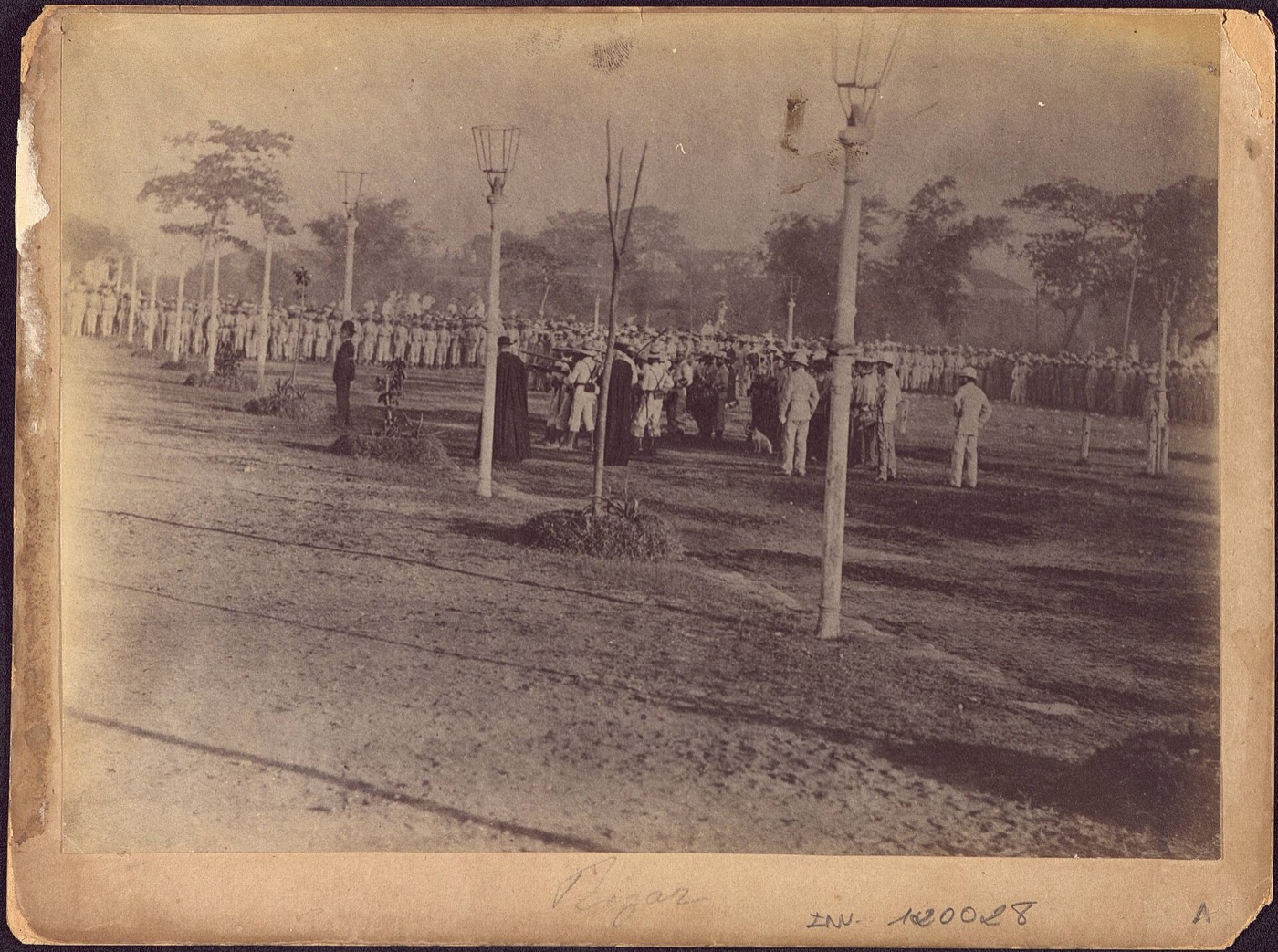
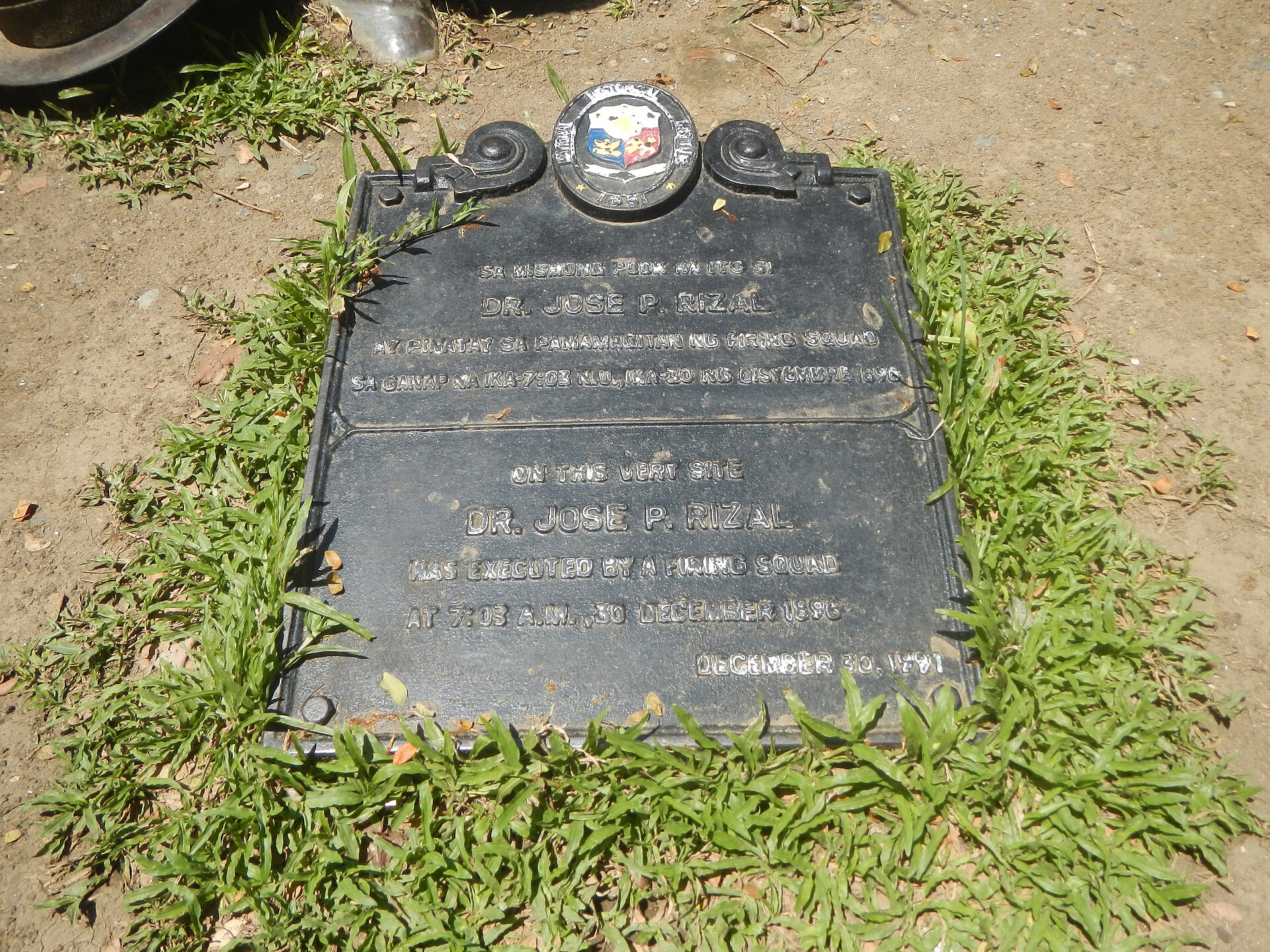
Transcribed primary excerpt / record:At 6:30 a.m. on December 30, 1896, Rizal was marched under military escort from Fort Santiago through the streets of Intramuros to the Bagumbayan field. At 7:03 a.m., facing Manila Bay, the firing squad discharged. A military physician took his pulse immediately afterward and recorded it as steady and calm. His final words were: “Consummatum est!” (It is finished).
-
Rizal, J
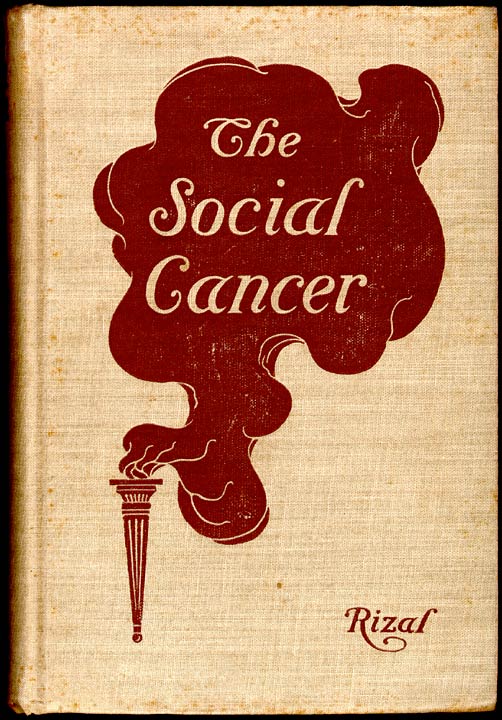
Citation: Rizal, J. (1912). The social cancer (C. E. Derbyshire, Trans.). Philippine Education Company. (Original work published 1887). Project Gutenberg.
Holding repository / Registry: Berliner Buchdruckerei (1887 first edition) & Derbyshire translation (1912)
Transcribed primary excerpt / record:From Rizal’s dedication “A Mi Patria”: “Desiring your welfare, which is our own, and seeking the best means of restoring you to health, I shall do with you what was done of old with the sick, who were exposed on the steps of the temple, in order that every one who came to invoke the Divinity might offer them a remedy... I will strive to describe your condition faithfully, without favor or prejudice; I will lift the veil that conceals the evil, sacrificing everything to truth.” (Derbyshire, Trans., 1912).
-
Rizal, J
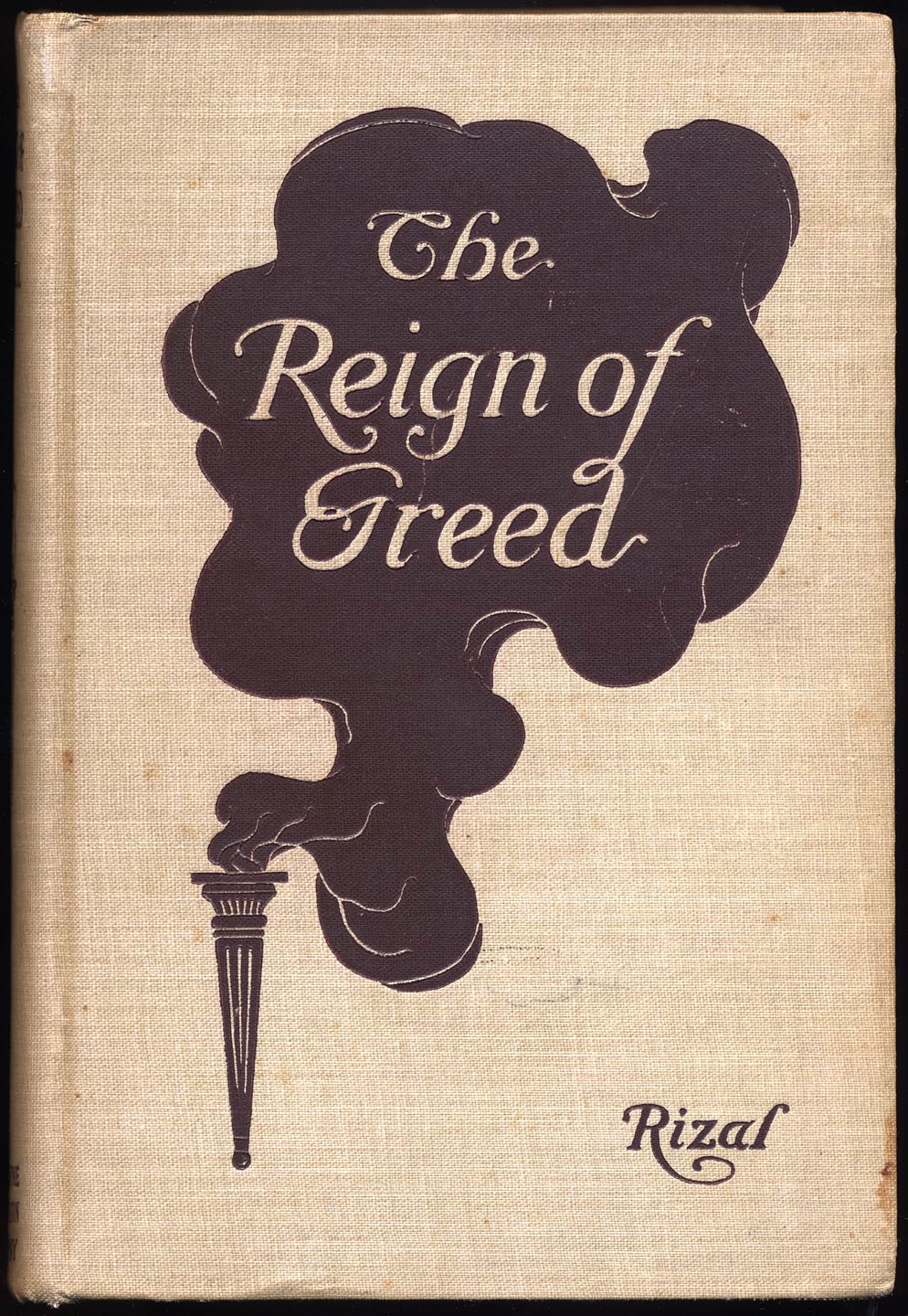
Citation: Rizal, J. (1912). The reign of greed (C. E. Derbyshire, Trans.). Philippine Education Company. (Original work published 1891). Project Gutenberg.
Holding repository / Registry: F. Meyer-Van Loo (Ghent 1891 first edition) & Derbyshire translation (1912)
Transcribed primary excerpt / record:From Rizal’s dedication to Gomez, Burgos, and Zamora: “The Church, by refusing to degrade you, has placed in doubt the crime that has been imputed to you; the Government, by shrouding your trial in mystery and pardoning your co-accused, has made us believe that your martyrdom was an error committed in the shadow of prejudice... Until the Government recognizes that your death was an injustice, accept these pages as a tardy wreath of dried leaves upon your unknown graves!” (Derbyshire, Trans., 1912).
-
Republic Act No. 1425
Citation: Republic Act No. 1425. (1956, June 12). Supreme Court E-Library.
Holding repository / Registry: Supreme Court of the Philippines E-Library & Official Gazette (Vol. 52, No. 6)
Transcribed primary excerpt / record:Section 1: Courses on the life, works and writings of Jose Rizal, particularly his novels Noli Me Tangere and El Filibusterismo, shall be included in the curricula of all schools, colleges and universities, public or private: Provided, That in the grant of collegiate courses, the original or unexpurgated editions of the Noli Me Tangere and El Filibusterismo or their English translation shall be used as basic texts. Section 2: It shall be obligatory on all schools to keep in their libraries an adequate number of copies of the original and unexpurgated editions.
-
Constitution of the Republic of the Philippines
Citation: Constitution of the Republic of the Philippines. (1987). Arts. II, III, XI, XIV. Supreme Court E-Library.
Holding repository / Registry: Supreme Court of the Philippines E-Library, 1987 Constitution
Transcribed primary excerpt / record:Article III, Section 1: No person shall be deprived of life, liberty, or property without due process of law, nor shall any person be denied the equal protection of the laws. Section 4: No law shall be passed abridging the freedom of speech, of expression, or of the press, or the right of the people peaceably to assemble and petition the government for redress of grievances. Article XI, Section 1: Public office is a public trust. Public officers and employees must at all times be accountable to the people, serve them with utmost responsibility, integrity, loyalty, and efficiency.
-
Library of Congress
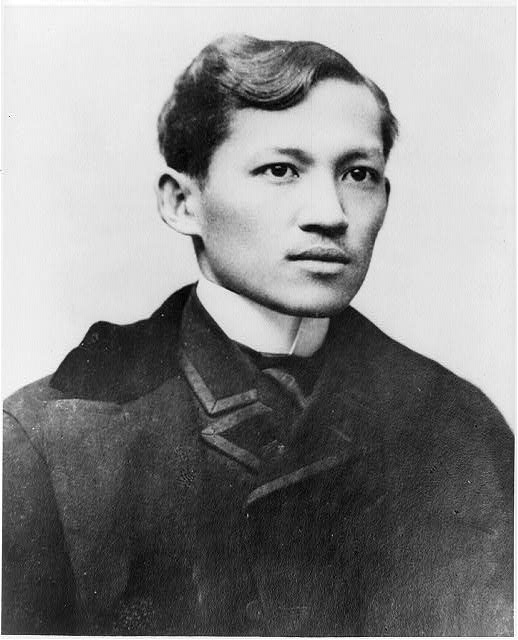
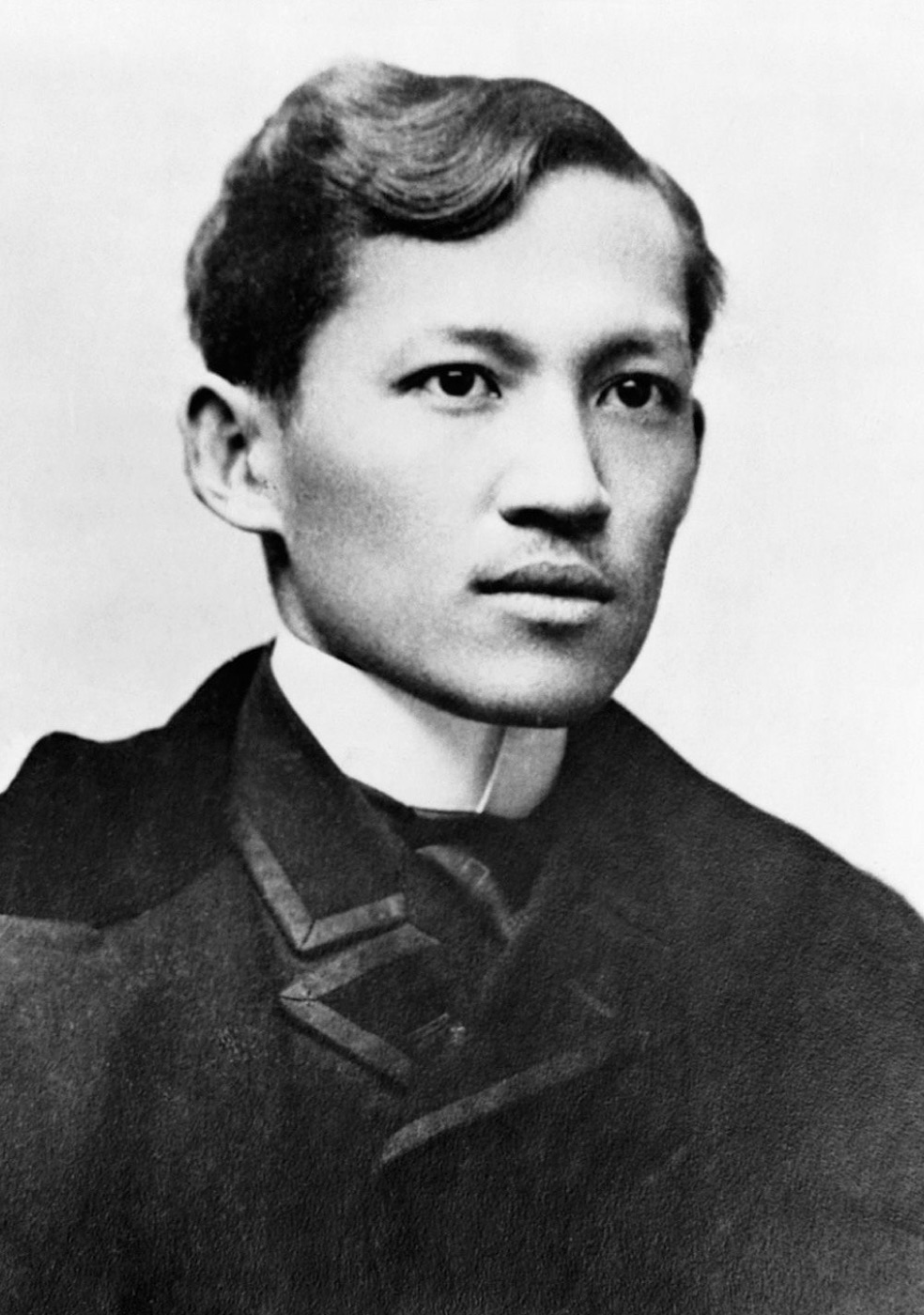
Citation: Library of Congress. (n.d.). Jose Rizal, 1861–1896, bust portrait, facing left [Photograph]. Prints and Photographs Division.
Holding repository / Registry: Library of Congress Prints and Photographs Division, LC-USZ62-43453
Transcribed primary excerpt / record:Archival gelatin silver photographic print of Dr. José Rizal, seated and facing left. Call number: LOT 14030-2, no. 12 [P&P]. Reproduction number: LC-USZ62-43453. No known restrictions on publication. Preserved as the project’s primary archival baseline portrait.
Reading notes
The novels are primary literary sources, not transparent records of events. Character symbolism and significance notes are interpretations. Derbyshire’s 1912 translations use period language; his introduction should be distinguished from Rizal’s text. Consult your course edition for translation differences.
The timeline uses years or ranges when a day is not verified. The trial entry is dated to December 1896 rather than assigning an unsupported exact day. Modern comparisons use constitutional text, not unsourced claims about contemporary outcomes.
Image provenance
Every image below is either an archival reproduction, a photograph of a present-day site, or a photograph of a public-domain edition. No AI-generated historical image or reconstructed first-edition cover is presented as evidence. Modern photographs are labeled as present-day views and do not show what Rizal saw.
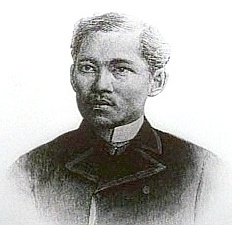
- The project’s primary archival portrait of Rizal, from the Library of Congress. Library of Congress, LC-USZ62-43453. No known restrictions on publication. · Public domain Open in image viewer ↗
- Entrance to the walled city near the Pasig River, cataloged circa 1899. J. Dress, c. 1899. Library of Congress, LC-USZ62-60796. No known restrictions. · Public domain Open in image viewer ↗
- The 1912 Derbyshire translation of Noli Me Tangere, digitized by Project Gutenberg. Project Gutenberg ebook 6737. Public-domain edition. · Public domain Open in image viewer ↗
- The 1912 Derbyshire translation of El Filibusterismo, digitized by Project Gutenberg. Project Gutenberg ebook 10676. Public-domain edition. · Public domain Open in image viewer ↗
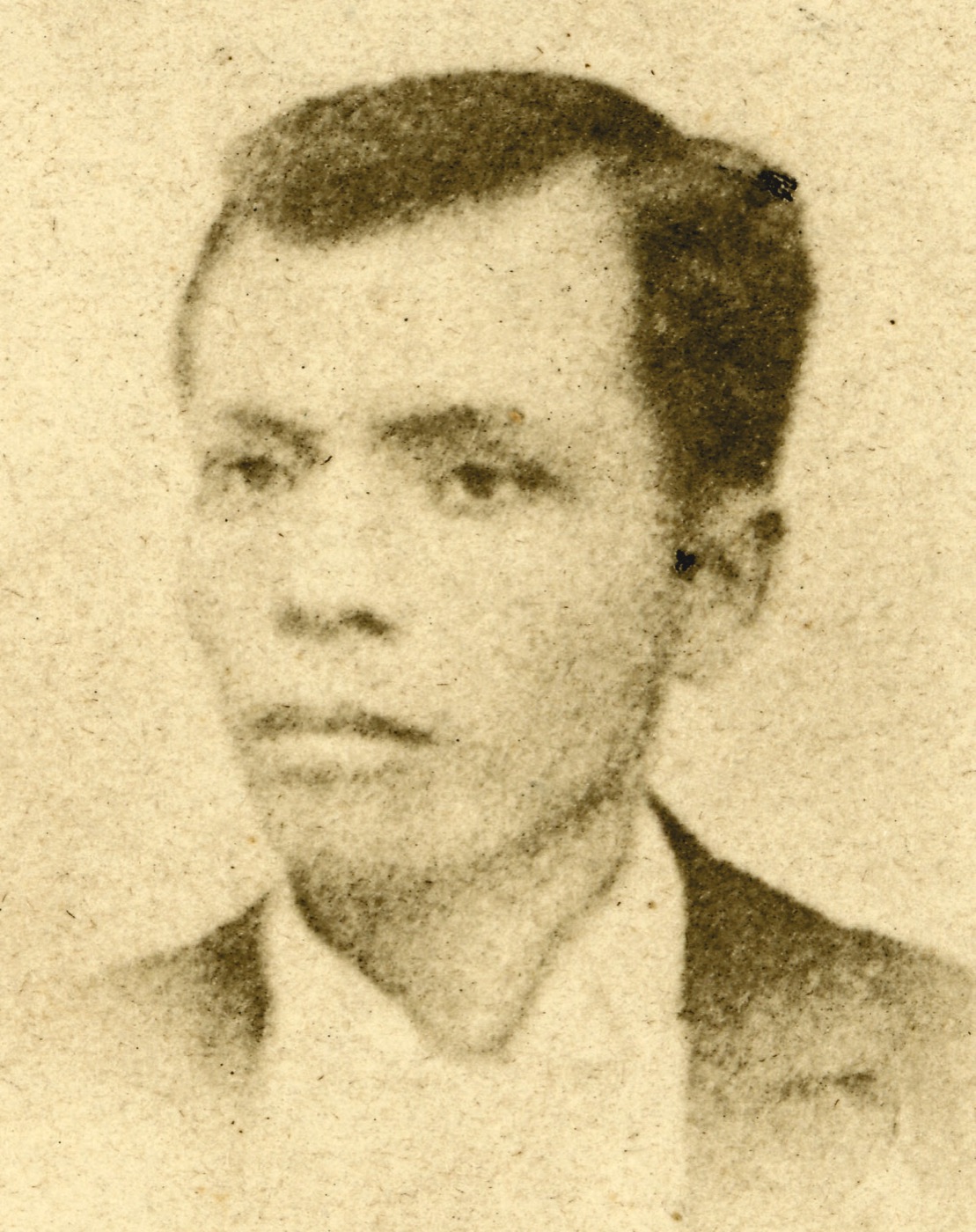
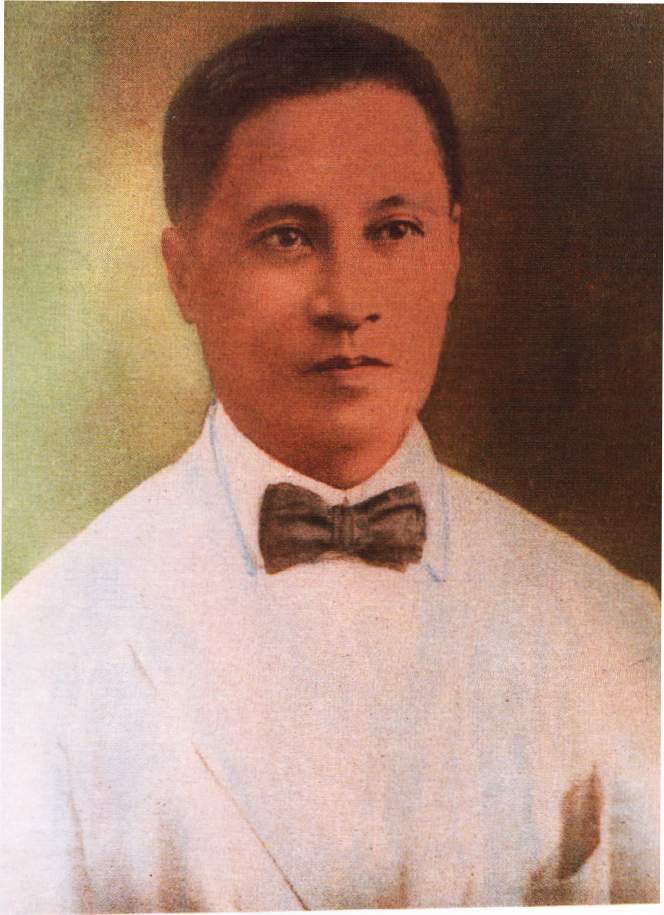
- José Rizal, studio portrait from the 1890s. Unknown photographer, 1890s. Public domain. · Public domain Open in image viewer ↗
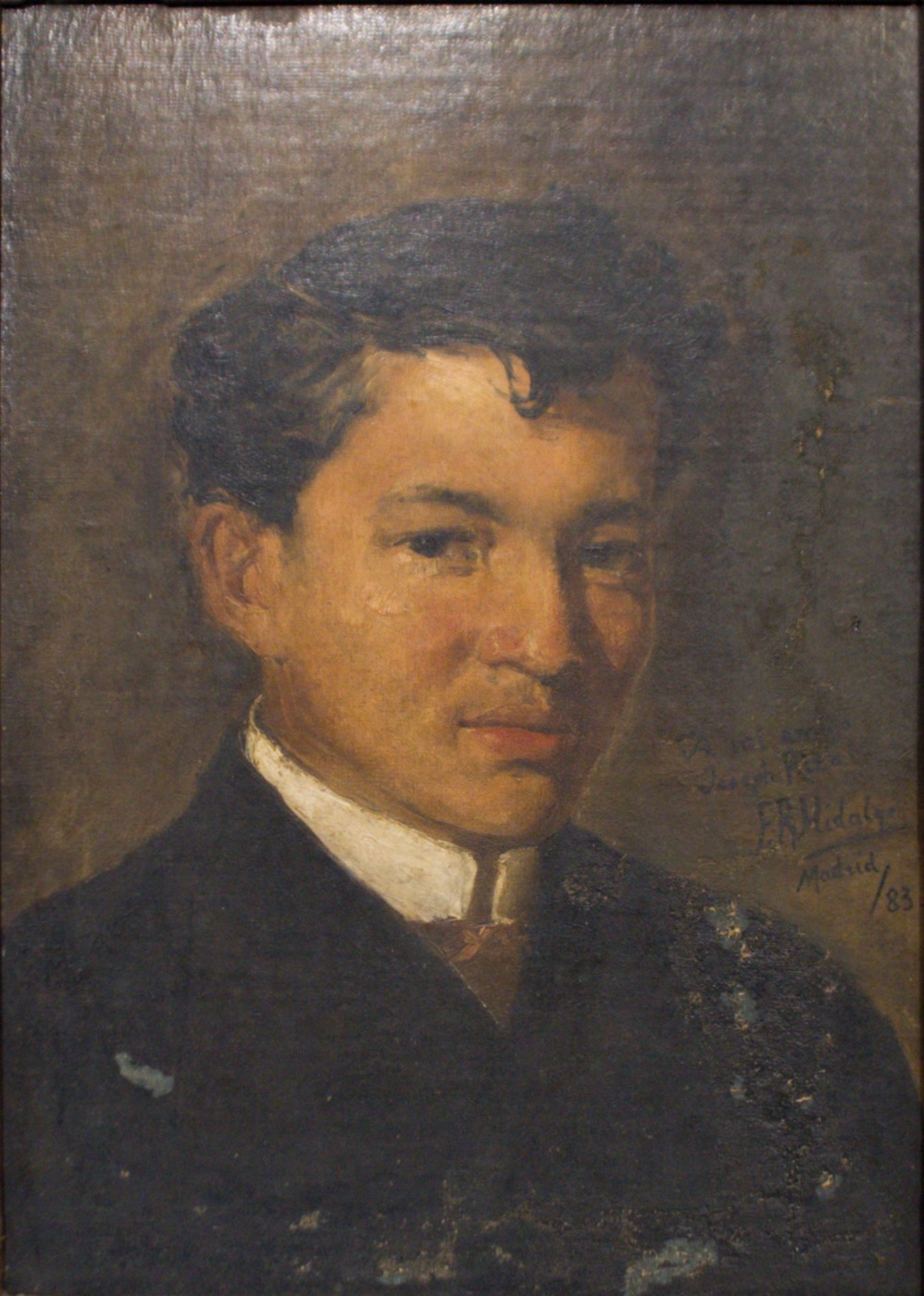
- A young Rizal in 1883, around the time he left for Europe. Portrait dated 1883. Public domain. · Public domain Open in image viewer ↗
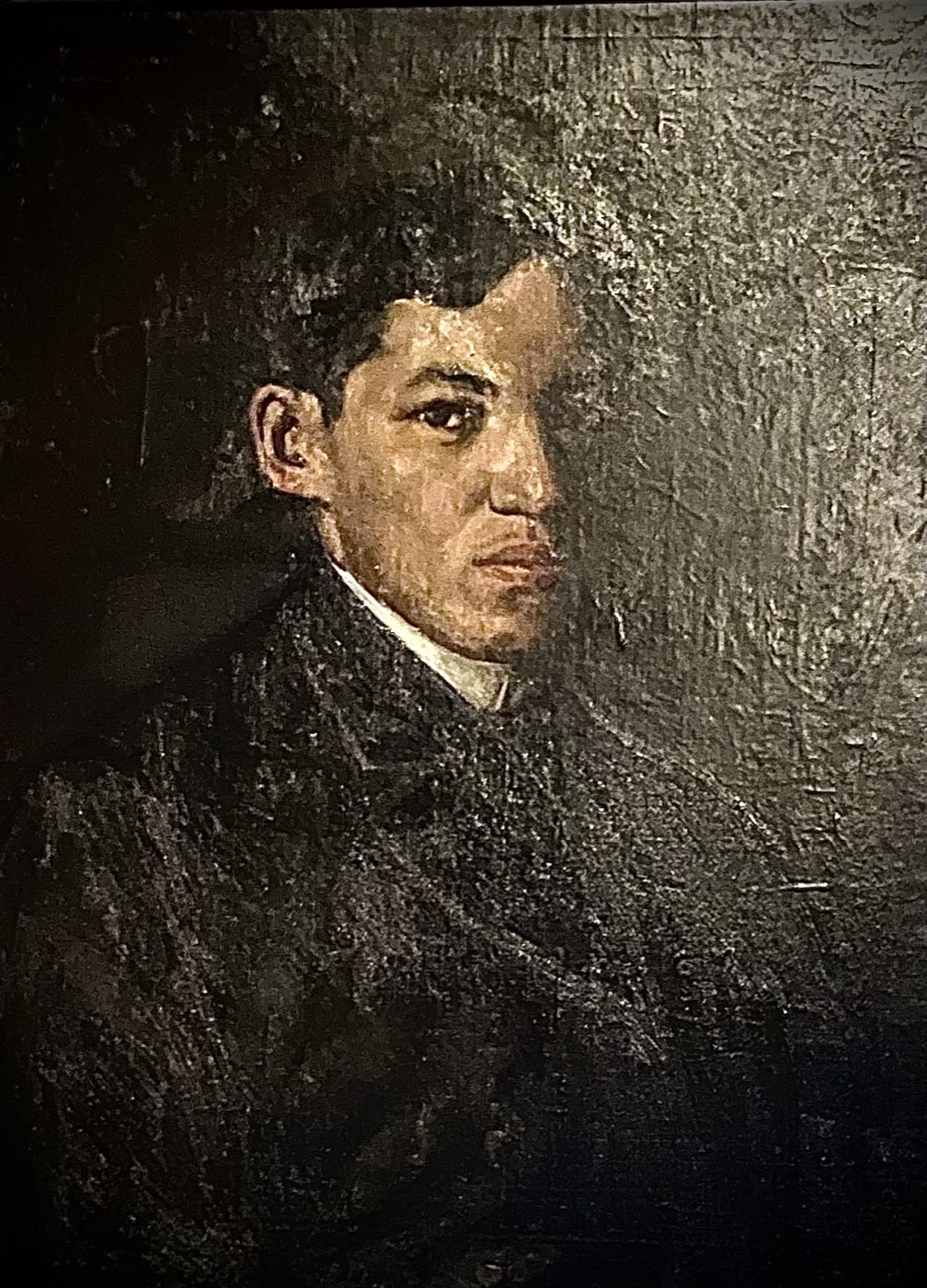
- Rizal in 1891, the year El Filibusterismo appeared in Ghent. Telesforo Sucgang, 1891. Wikimedia Commons, CC0. · CC0 1.0 Open in image viewer ↗
- José Rizal in 1896, the final year of his life. Unknown photographer, 1896. Public domain. · Public domain Open in image viewer ↗
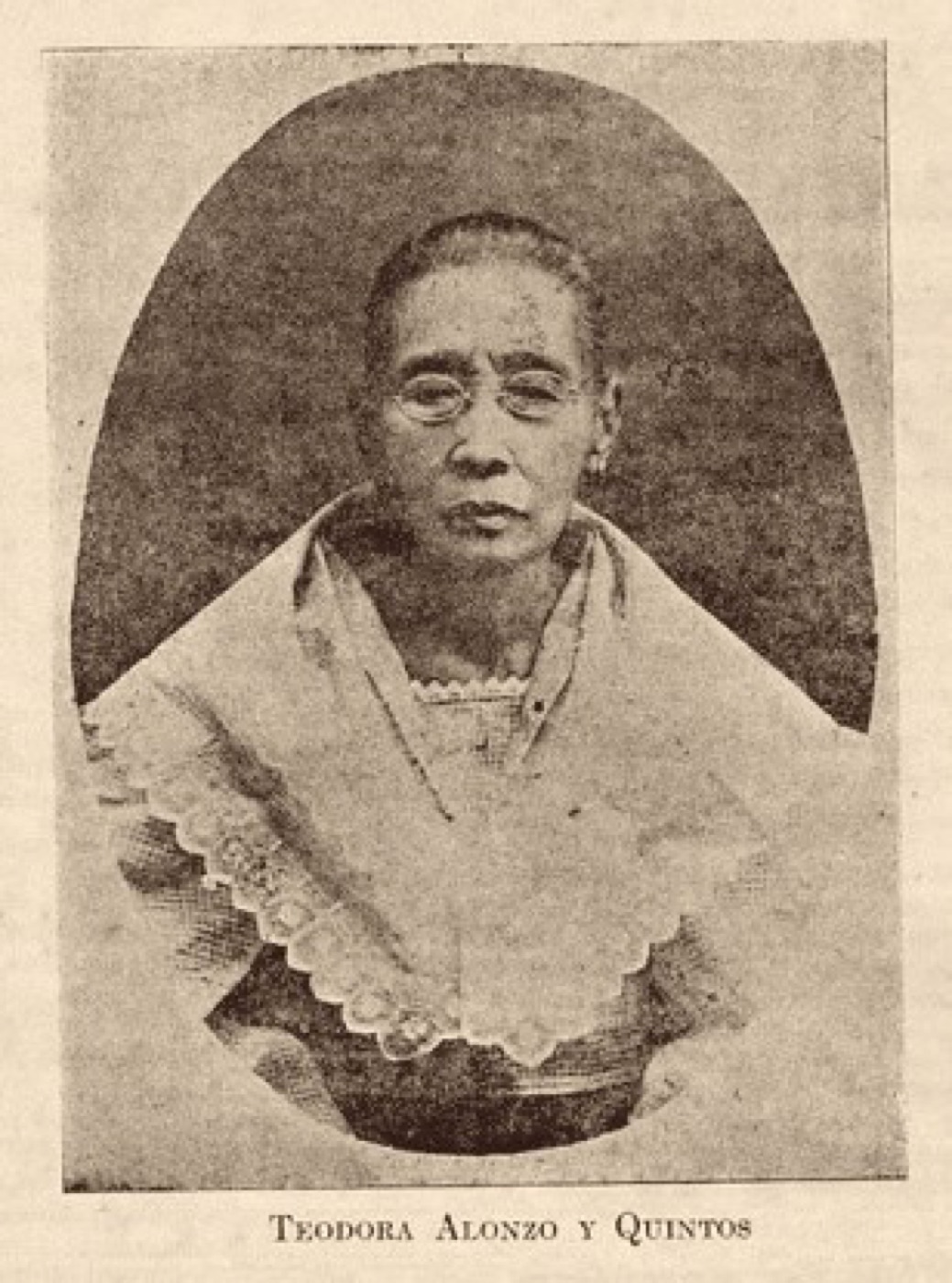
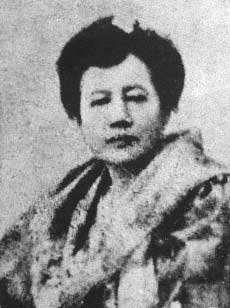
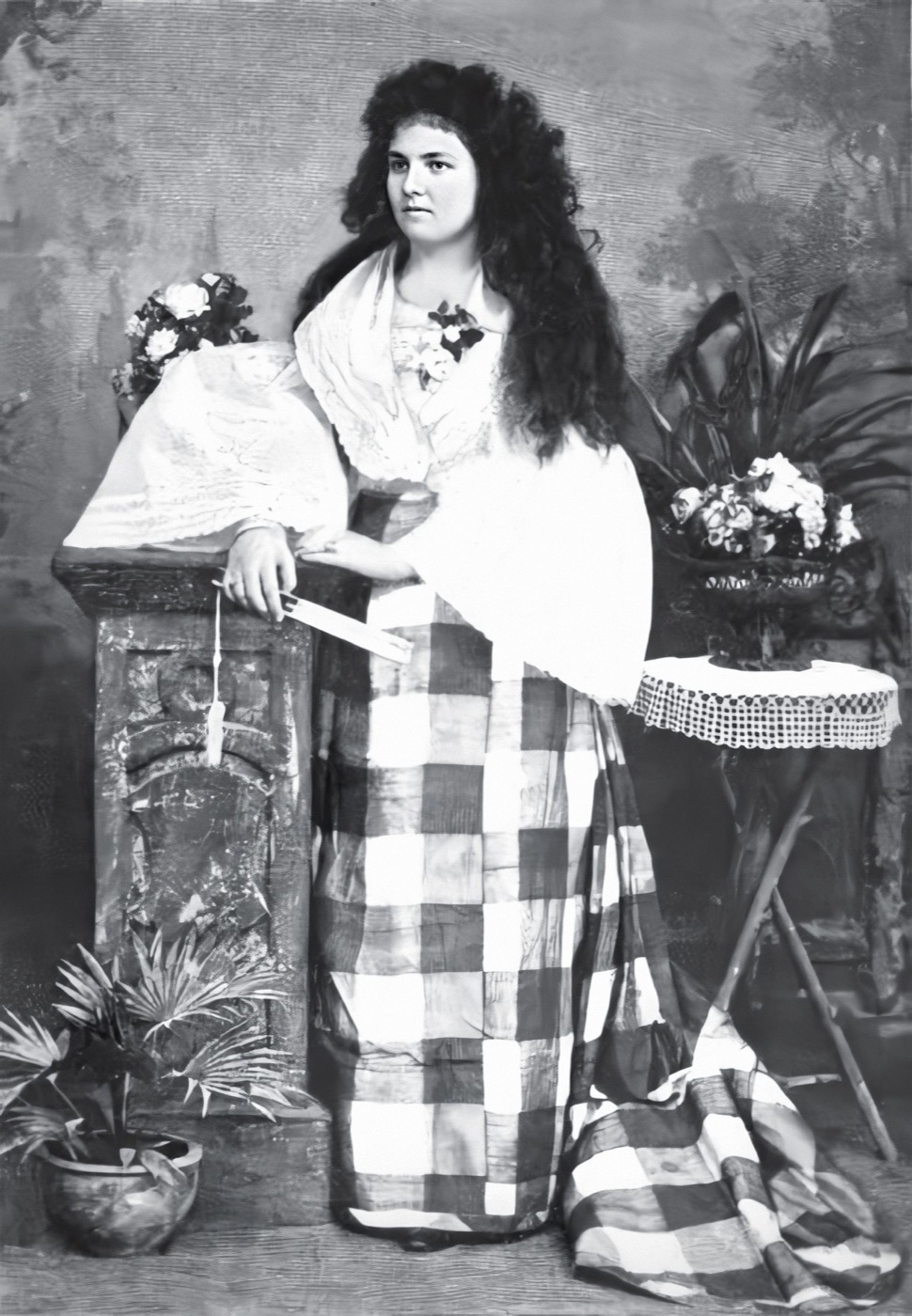
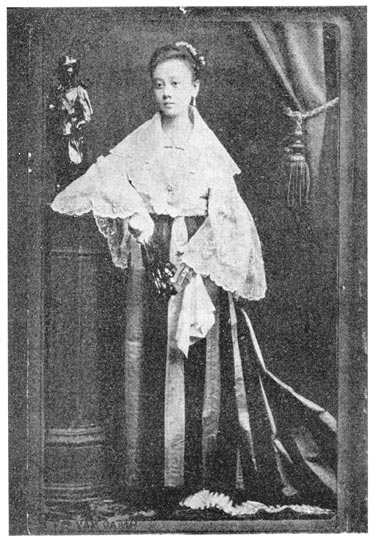
- Teodora Alonso y Quintos, Rizal’s first teacher and strongest early influence. Reproduced in Pascual Hicaro Poblete, Buhay at Mga Ginawa ni Dr. Jose Rizal (1909). Public domain. · Public domain Open in image viewer ↗
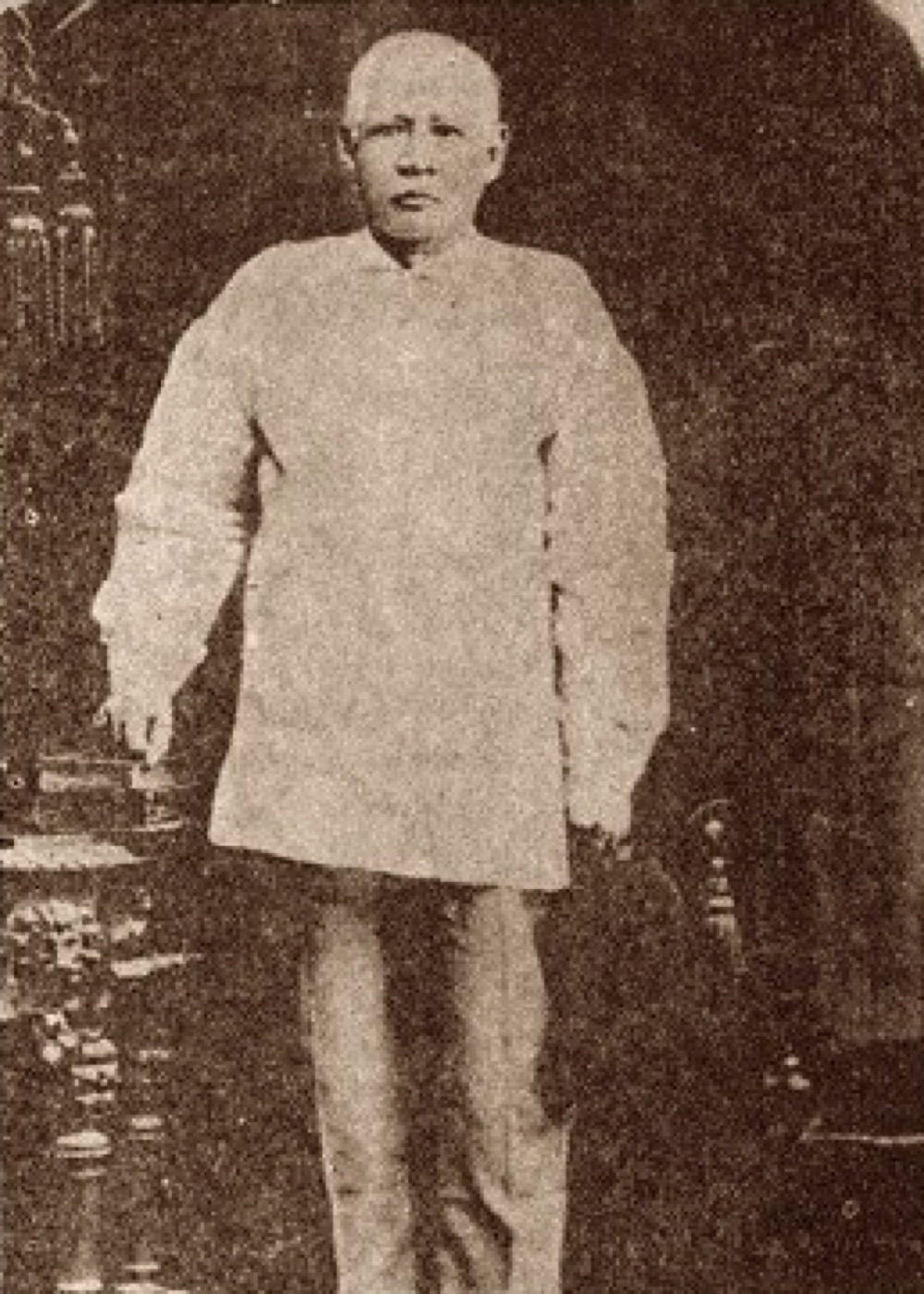
- Francisco Rizal Mercado, the family’s tenant farmer and patriarch. Reproduced in Pascual Hicaro Poblete, Buhay at Mga Ginawa ni Dr. Jose Rizal (1909). Public domain. · Public domain Open in image viewer ↗
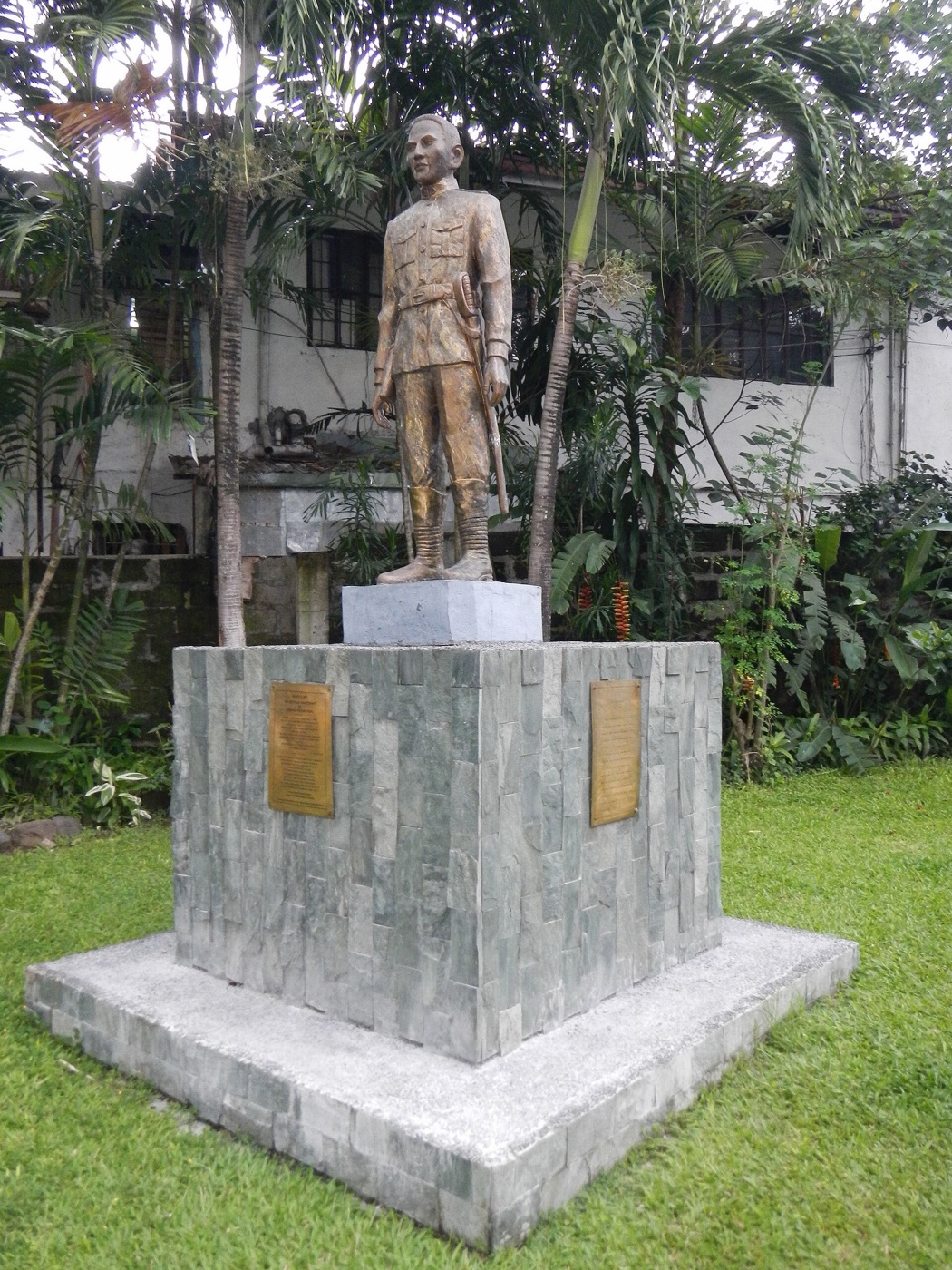
- The Paciano Rizal monument and tomb in Los Baños. Paciano supported his brother’s studies and joined the revolution. Ramon FVelasquez, CC BY-SA 3.0, via Wikimedia Commons. · CC BY-SA 3.0 Open in image viewer ↗
- Saturnina Rizal Hidalgo (Neneng), Rizal’s eldest sister and lifelong confidante. Photograph, late 19th century. Public domain. · Public domain Open in image viewer ↗
- Trinidad Rizal, who received the cooking lamp containing Mi Último Adiós on the eve of Rizal’s execution. Photograph, c. 1900. Public domain. · Public domain Open in image viewer ↗
- Josephine Bracken, Rizal’s companion in Dapitan. Austin Craig, Lineage, Life and Labors of José Rizal (1913). Public domain. · Public domain Open in image viewer ↗
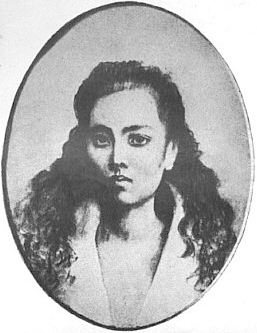
- Leonor Rivera, Rizal’s sweetheart for over a decade and the real-life inspiration for María Clara. Studio photograph, late 19th century. Public domain. · Public domain Open in image viewer ↗
- Crayon sketch of Leonor Rivera drawn by José Rizal during their youth. José Rizal, c. 1880s. Public domain. · Public domain Open in image viewer ↗
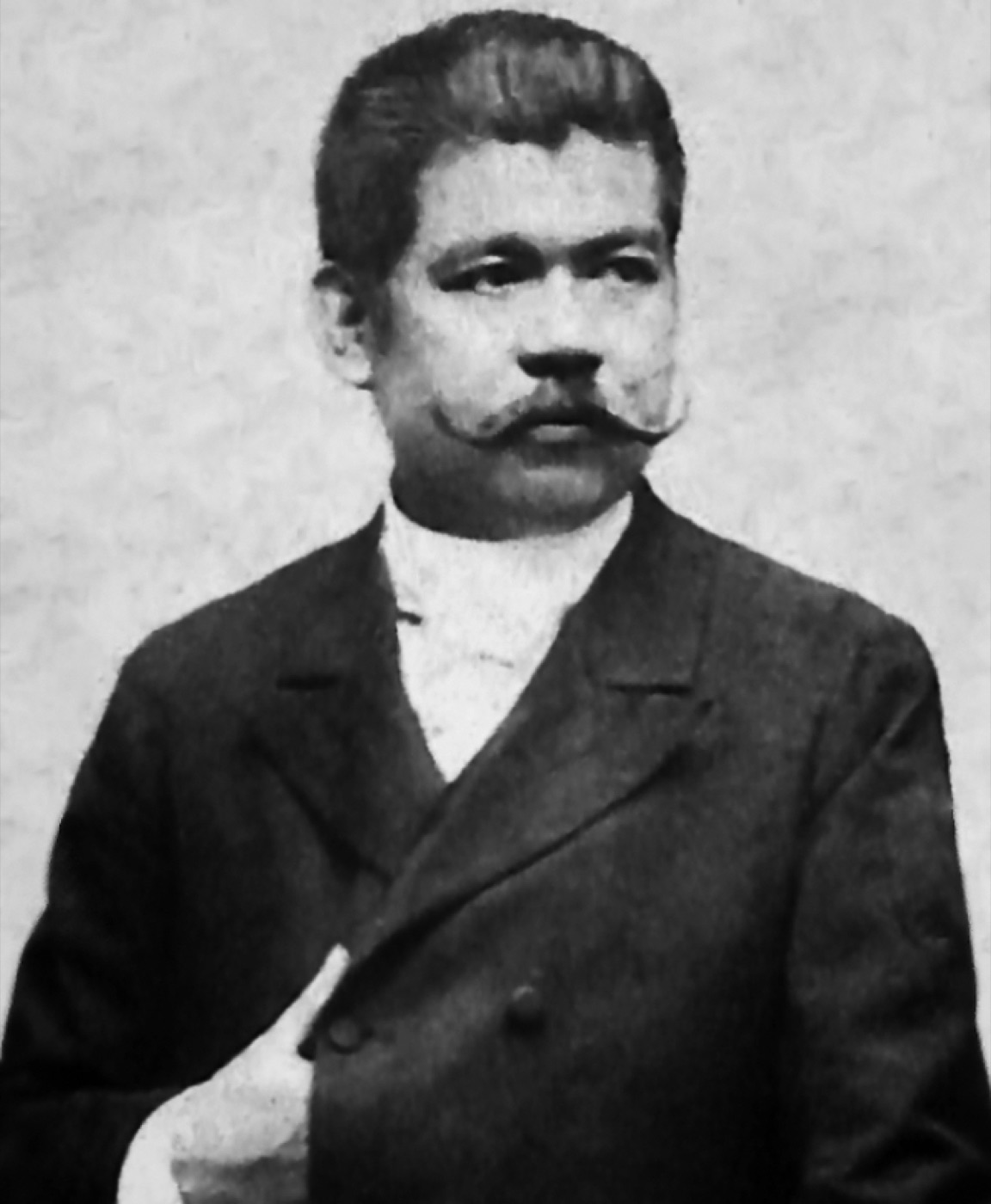
- Marcelo H. del Pilar, editor of La Solidaridad and leader of the Propaganda Movement. Unknown photographer, c. 1890. Public domain. · Public domain Open in image viewer ↗
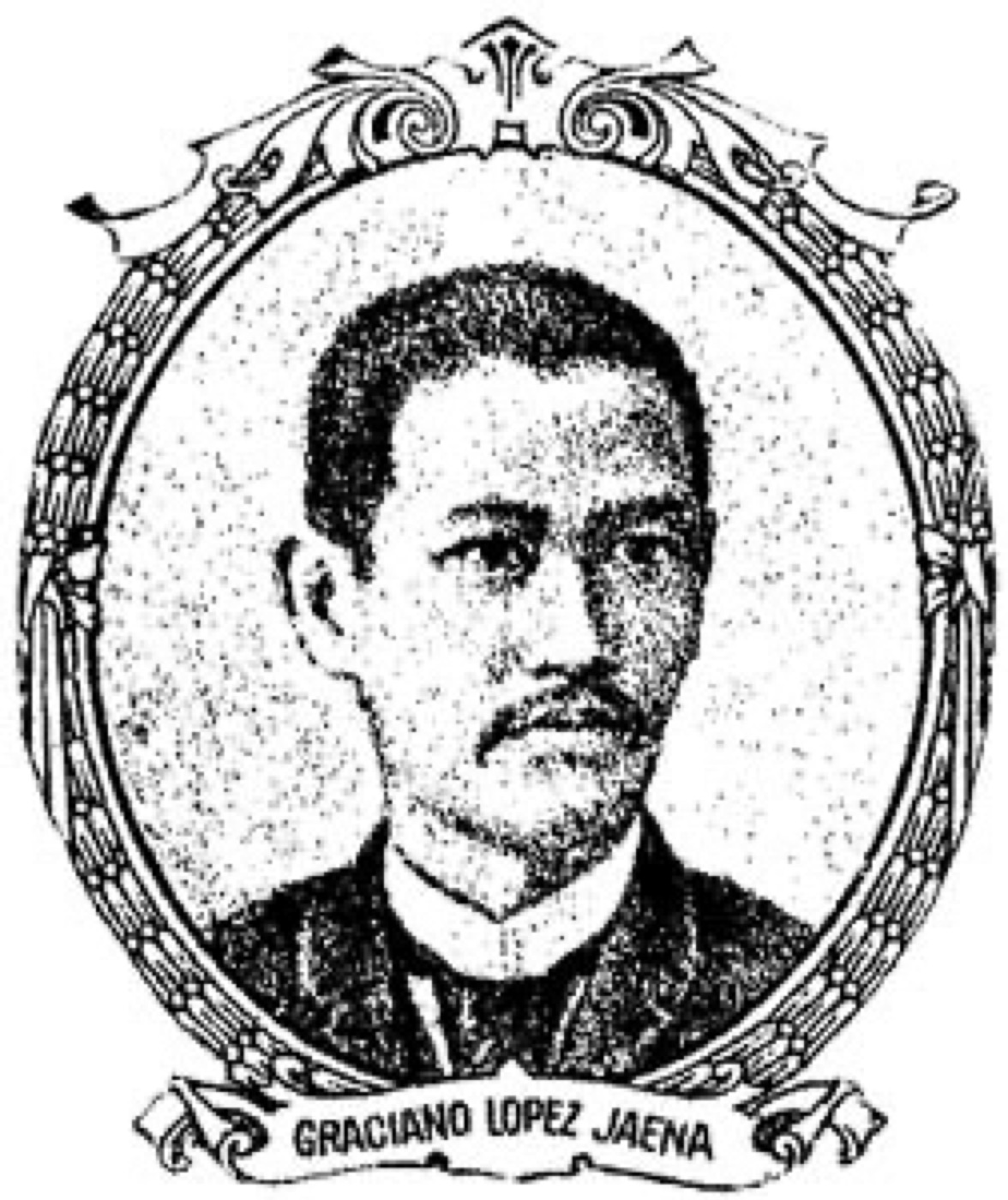
- Graciano López Jaena, orator and first editor of La Solidaridad. Jose N. Sevilla, Mga Dakilang Pilipino (1922). Public domain. · Public domain Open in image viewer ↗
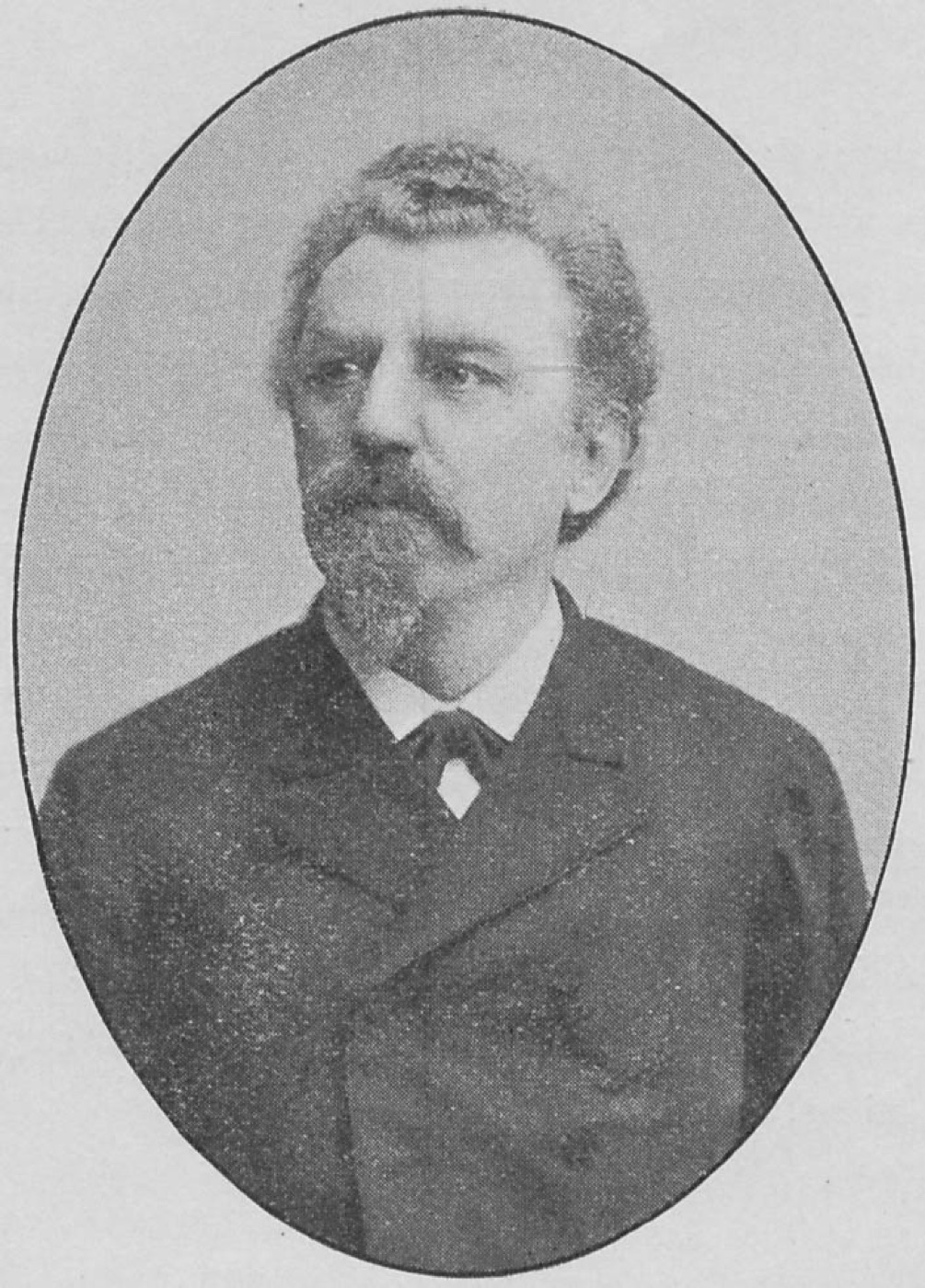
- Ferdinand Blumentritt, the Austrian scholar and closest European friend of Rizal. Onze Musici (1898). Public domain. · Public domain Open in image viewer ↗
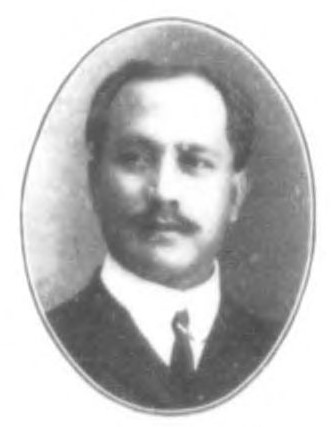
- Dr. Máximo Viola, Rizal’s friend and the financier who helped publish Noli Me Tangere in Berlin. Portrait via Geni / Wikimedia Commons, CC BY-SA 4.0. · CC BY-SA 4.0 Open in image viewer ↗
- Juan Luna, master painter of Spoliarium and close companion of Rizal in Europe. Pascual Poblete, Buhay at Mga Ginawa ni Dr. Jose Rizal (1909). Public domain. · Public domain Open in image viewer ↗
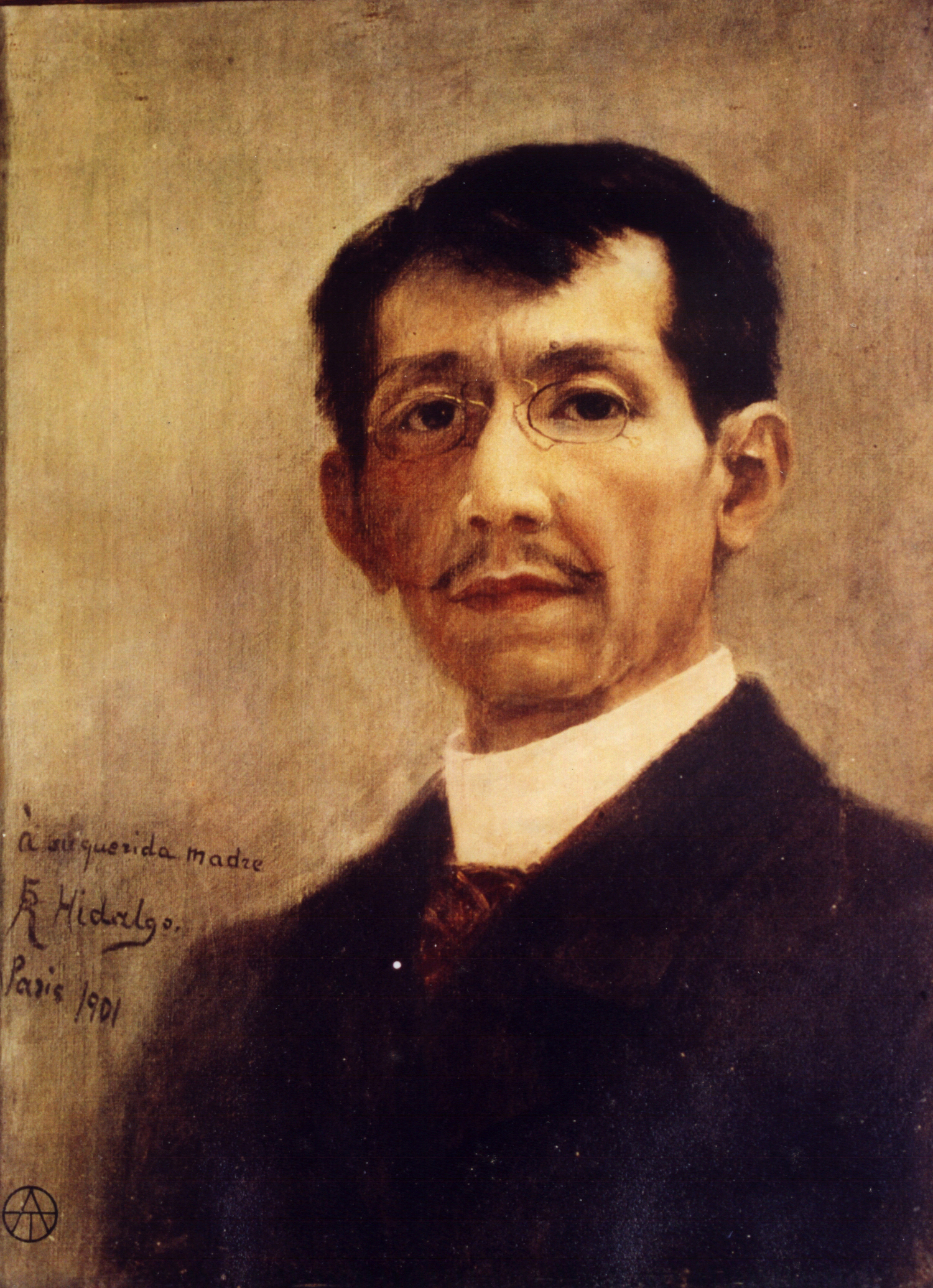
- Félix Resurrección Hidalgo, companion of Rizal and Luna and master of Filipino painting. Félix Resurrección Hidalgo, c. 1890s. Public domain. · Public domain Open in image viewer ↗
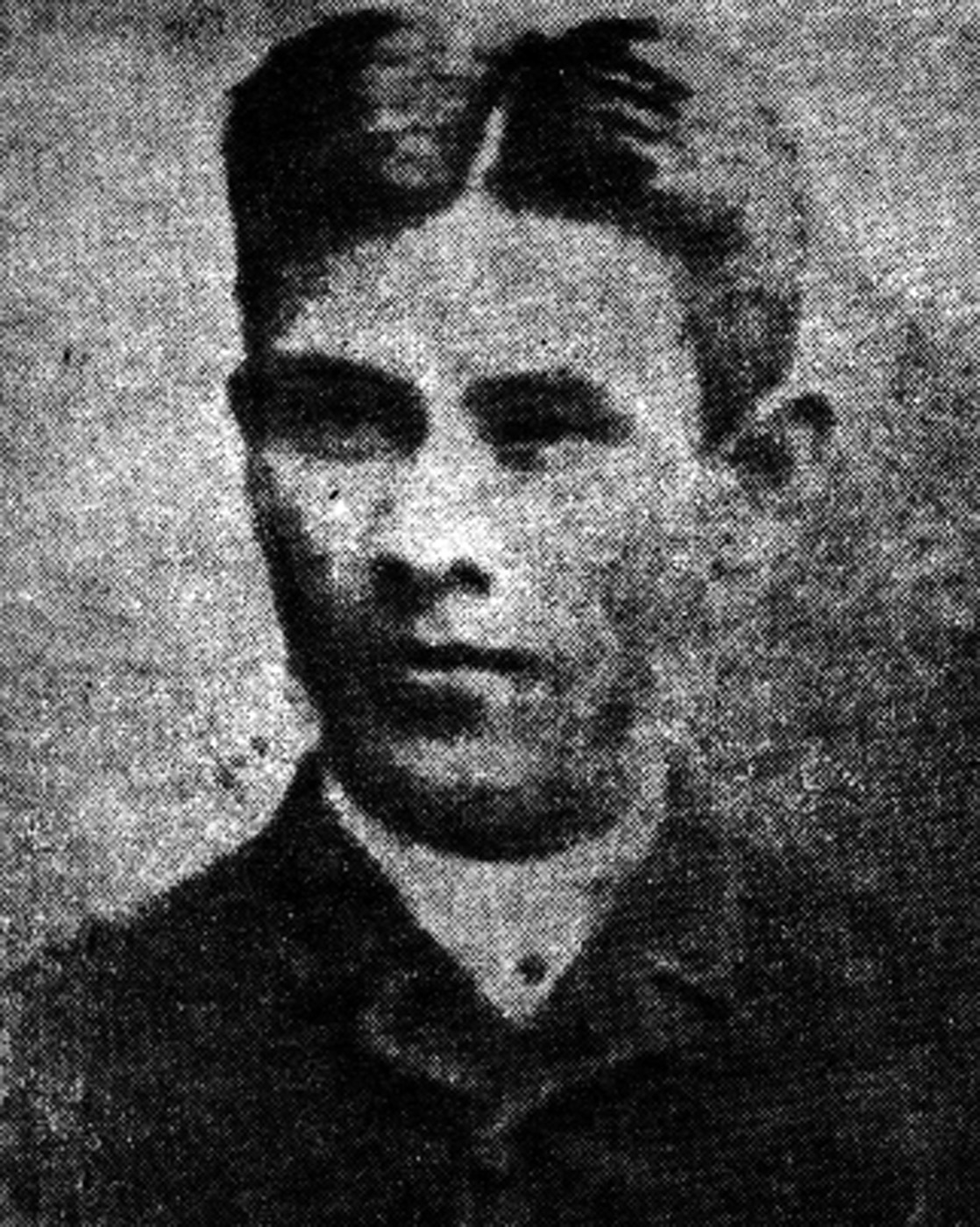
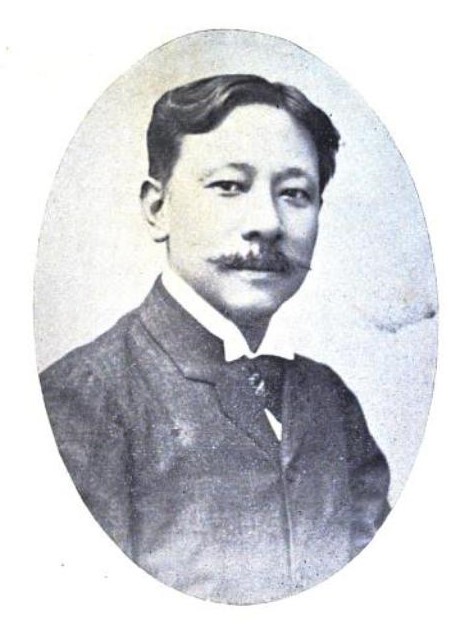
- Mariano Ponce, managing editor of La Solidaridad, historian, and Rizal’s trusted correspondent. Photograph, c. 1890s. Public domain. · Public domain Open in image viewer ↗
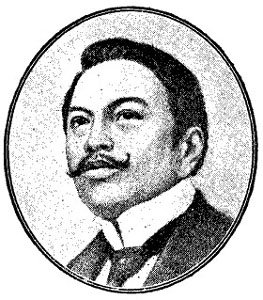
- Dr. Galicano Apacible, Rizal’s cousin and first president of La Solidaridad in Barcelona. Photograph, late 19th century. Public domain. · Public domain Open in image viewer ↗
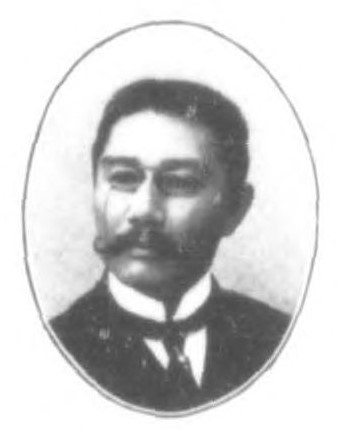
- Pedro Alejandro Paterno, author of Nínay (1885) and host of Filipino gatherings in Madrid. Jose N. Sevilla, Mga Dakilang Pilipino (1922). Public domain. · Public domain Open in image viewer ↗
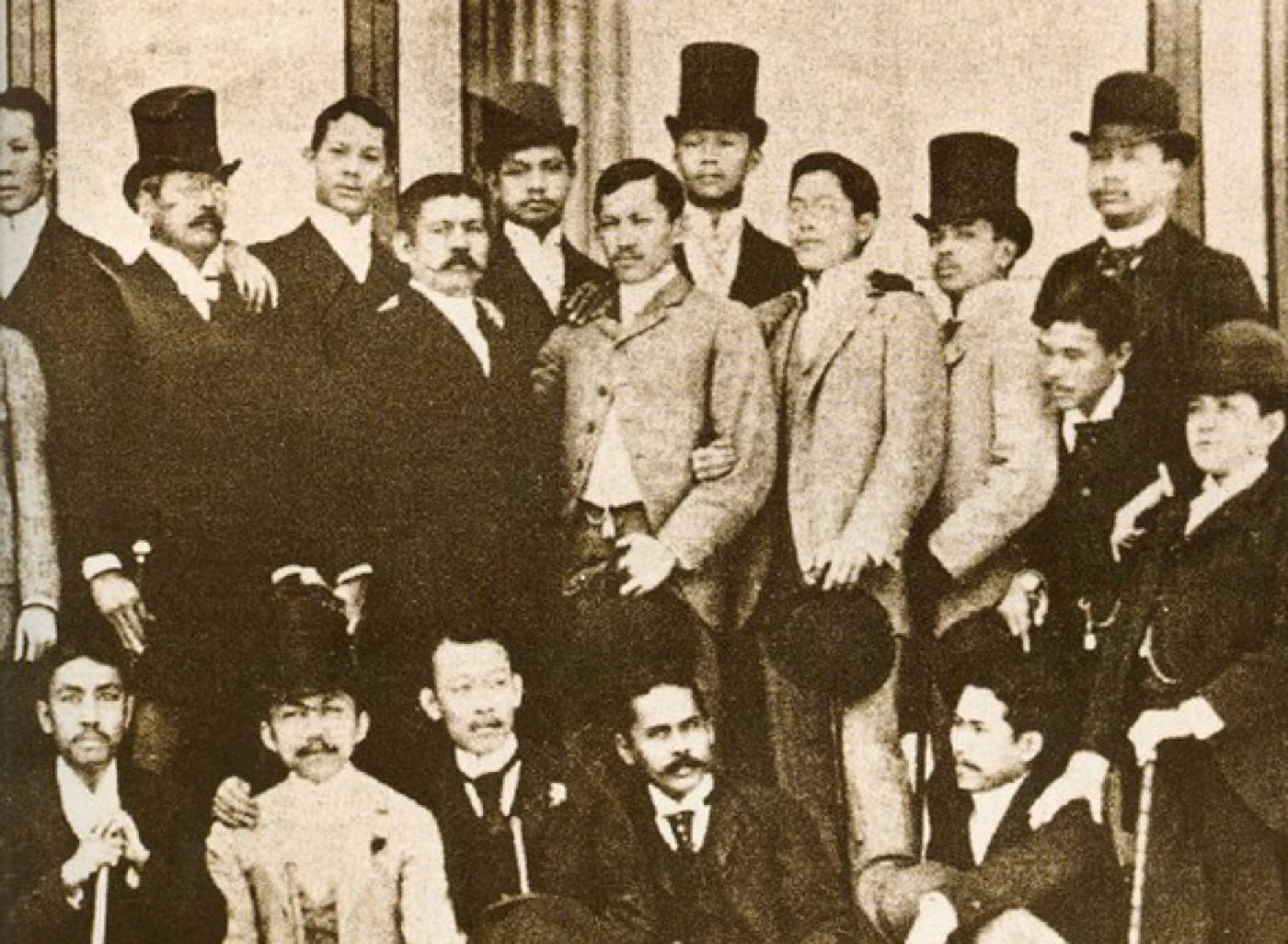
- Rizal (centre) with Marcelo del Pilar and other Filipino expatriates in Madrid. Unknown photographer, late nineteenth century. Public domain. · Public domain Open in image viewer ↗
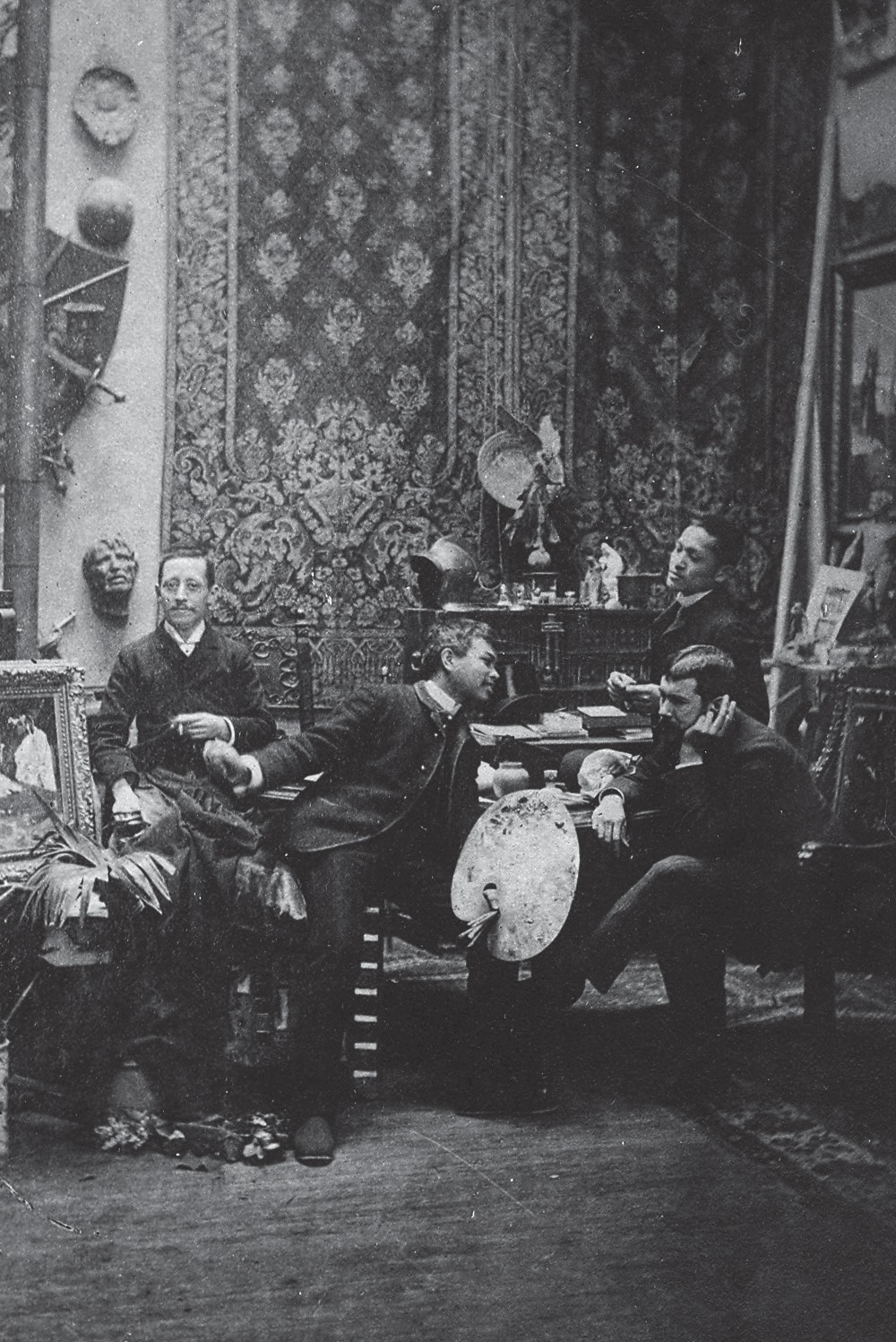
- Los Indios Bravos: José Rizal, Juan Luna, and Valentin Ventura in Luna’s Paris studio, c. 1889. Photograph, c. 1889. Public domain. · Public domain Open in image viewer ↗
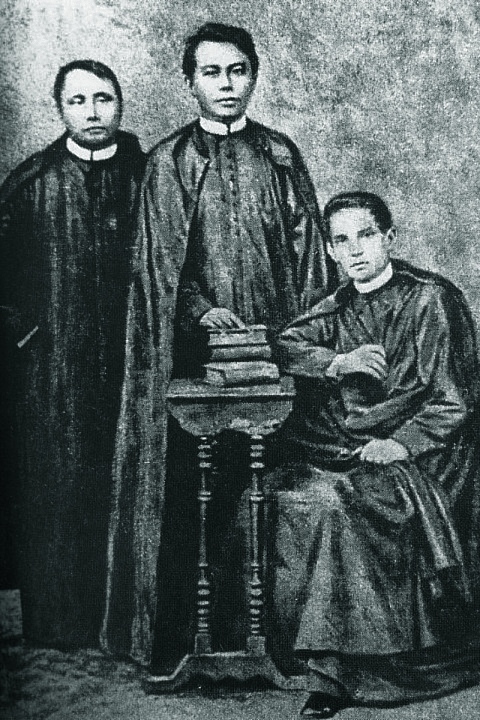
- Gomburza (Mariano Gomez, José Burgos, Jacinto Zamora), executed in 1872 at Bagumbayan, to whose memory Rizal dedicated El Filibusterismo. Historical illustration, 19th century. Public domain. · Public domain Open in image viewer ↗
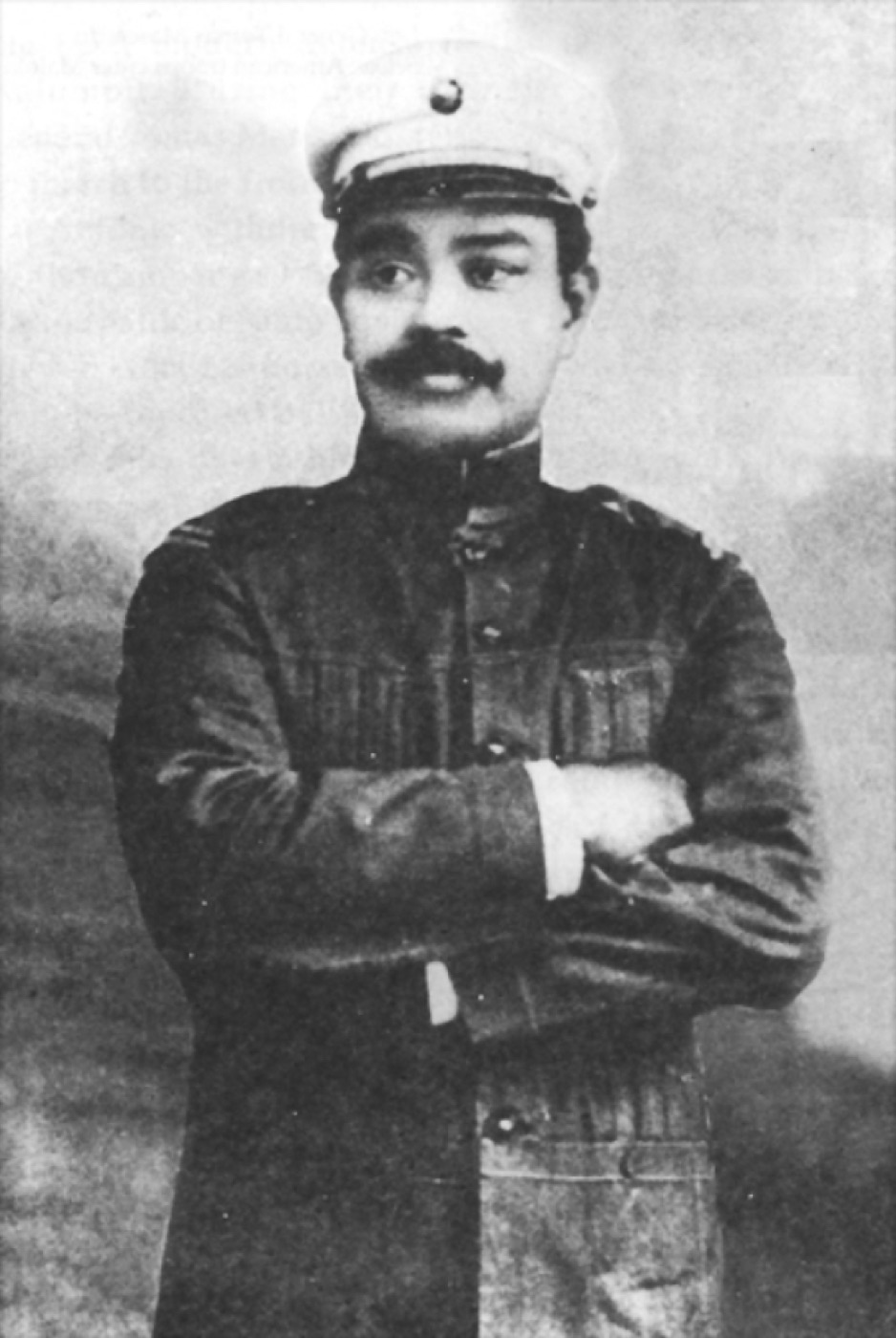
- Andrés Bonifacio, founder of the Katipunan. The only surviving photograph of him. Chofre y Cia, 1896. Public domain. · Public domain Open in image viewer ↗
- Antonio Luna, pharmacist, writer, and general of the Philippine Revolution. Unknown photographer. Public domain. · Public domain Open in image viewer ↗
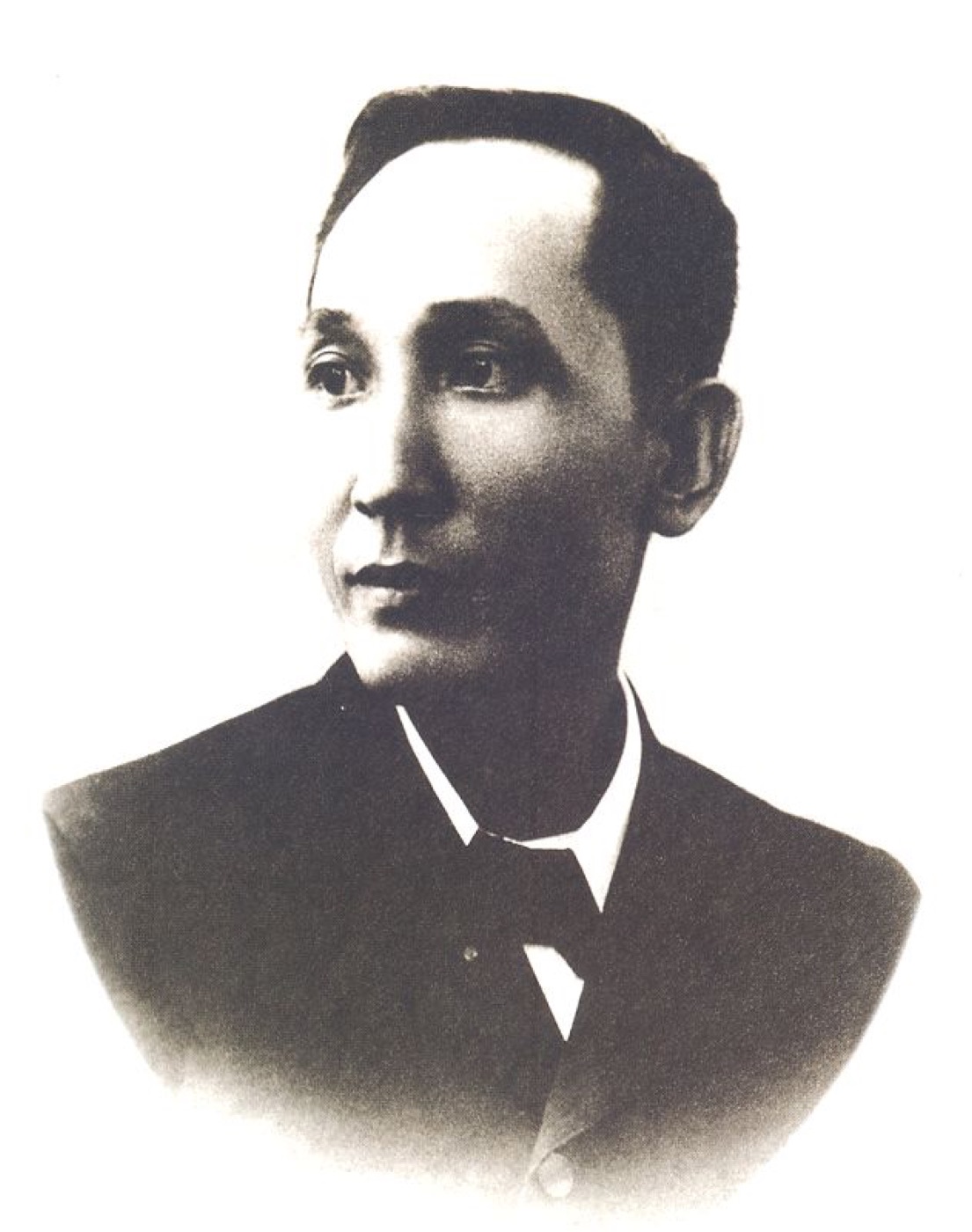
- Apolinario Mabini, constitutional adviser to the First Philippine Republic. Unknown photographer, before 1903. Public domain. · Public domain Open in image viewer ↗
- Dr. Pío Valenzuela, Katipunan emissary who visited Rizal in Dapitan in June 1896. Photograph, c. 1890s. Public domain. · Public domain Open in image viewer ↗
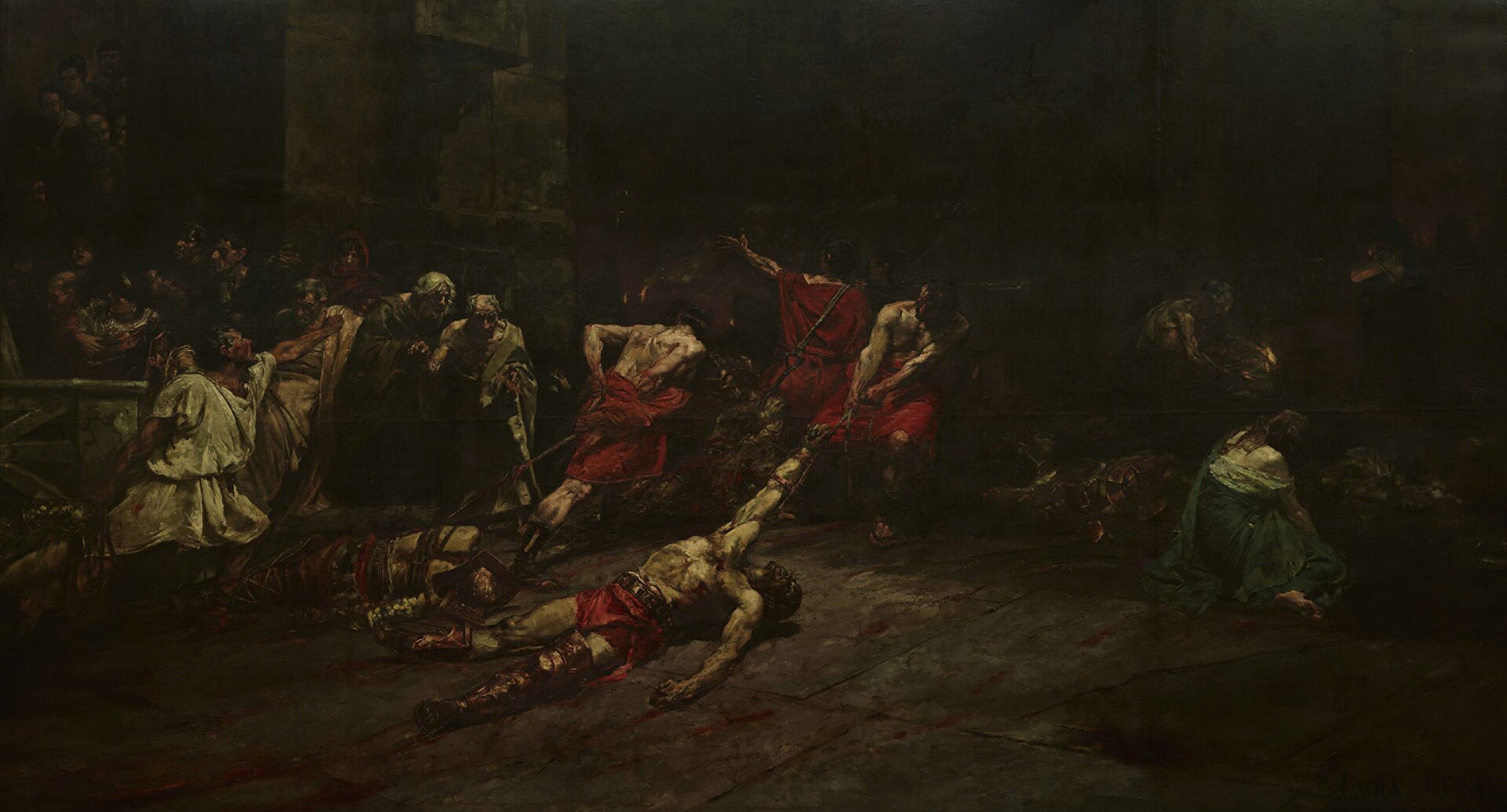
- Juan Luna’s monumental canvas Spoliarium, awarded the first gold medal at the 1884 Madrid Exposición Nacional. Juan Luna, 1884. National Museum of Fine Arts, Manila. Public domain. · Public domain Open in image viewer ↗
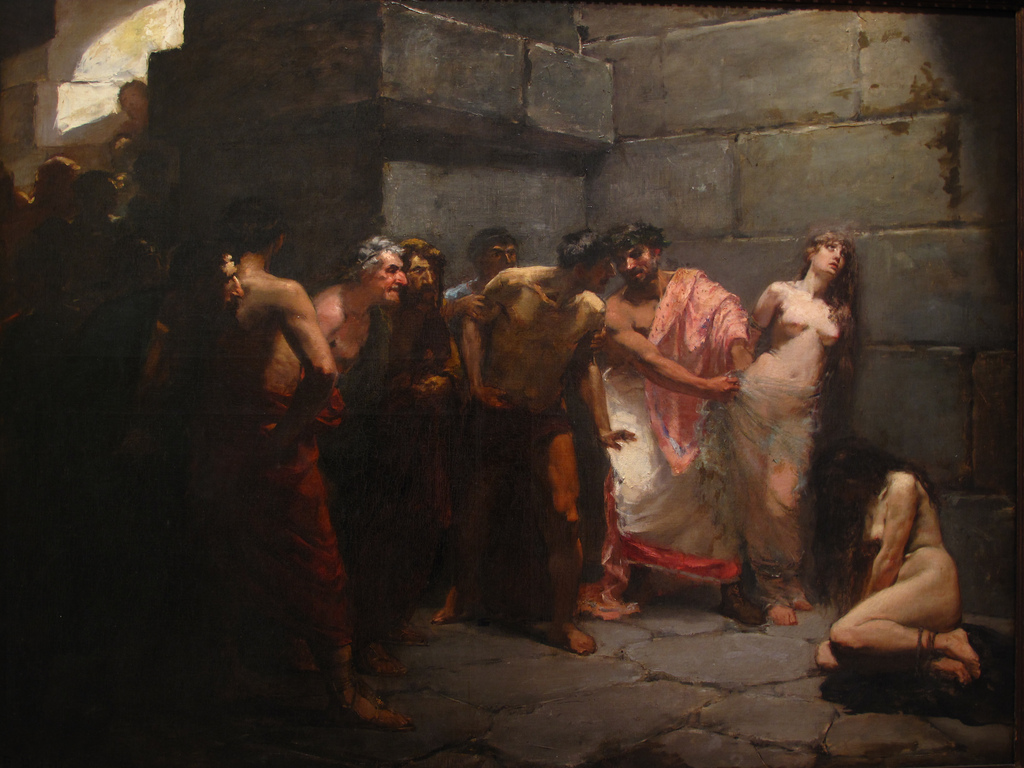
- Félix Resurrección Hidalgo’s Las Vírgenes Cristianas Expuestas al Populacho, awarded the silver medal in Madrid in 1884. Félix Resurrección Hidalgo, 1884. Bangko Sentral ng Pilipinas Collection. Public domain. · Public domain Open in image viewer ↗
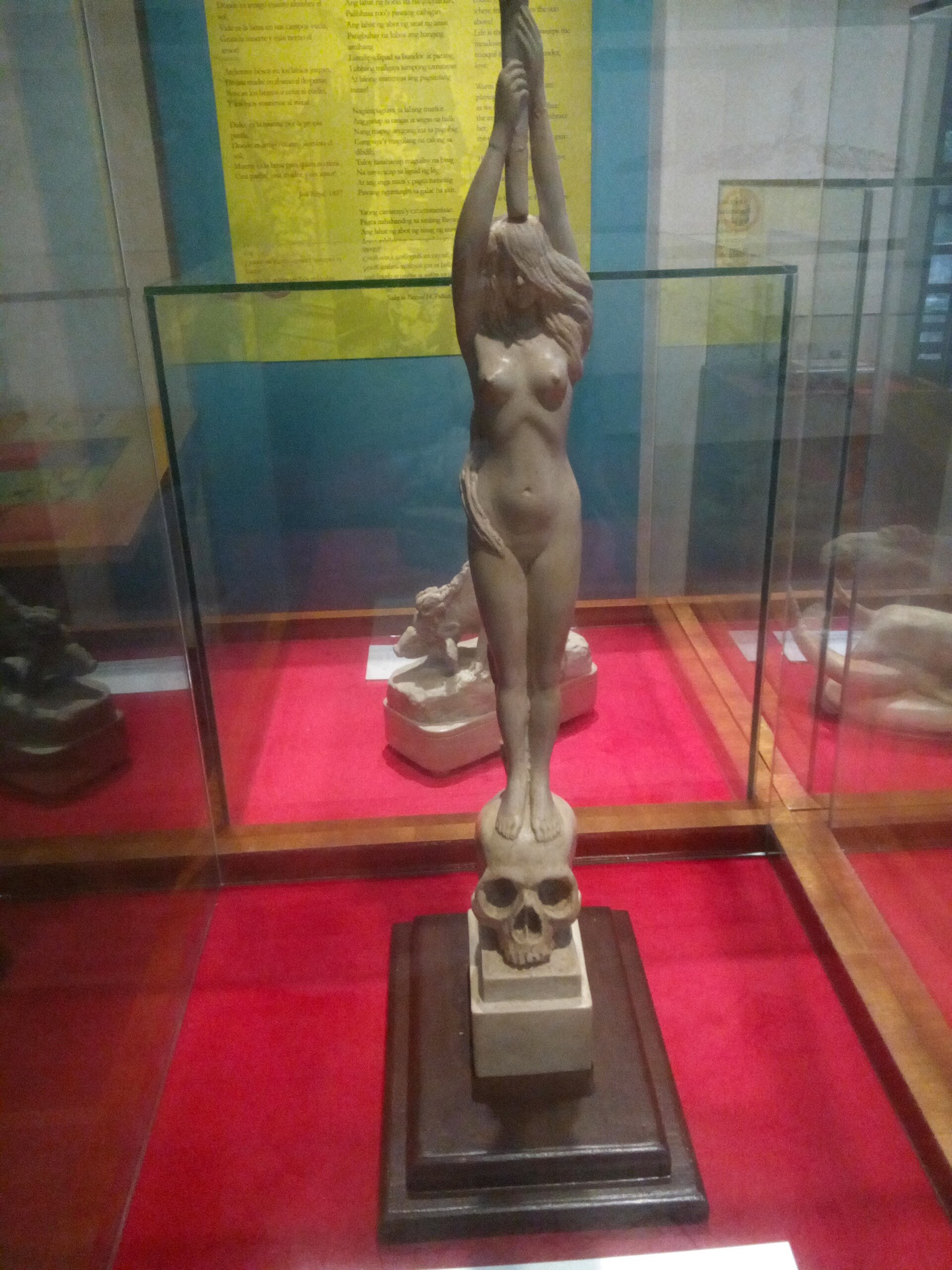
- The Triumph of Science over Death (Scientia vincit mortem), clay sculpture made by Rizal in Dapitan for Blumentritt. José Rizal, c. 1890s. Photographed via Wikimedia Commons, CC BY-SA 4.0. · CC BY-SA 4.0 Open in image viewer ↗
- Pencil sketch of Ferdinand Blumentritt by Rizal, a trace of their intellectual partnership. José Rizal, before 1896. Public domain. · Public domain Open in image viewer ↗
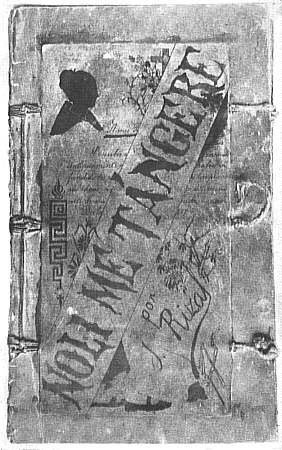
- The genuine 1887 Berlin first edition cover of Noli Me Tangere, printed by Berliner Buchdruckerei. José Rizal, 1887. Berliner Buchdruckerei-Actien-Gesellschaft. Public domain. · Public domain Open in image viewer ↗
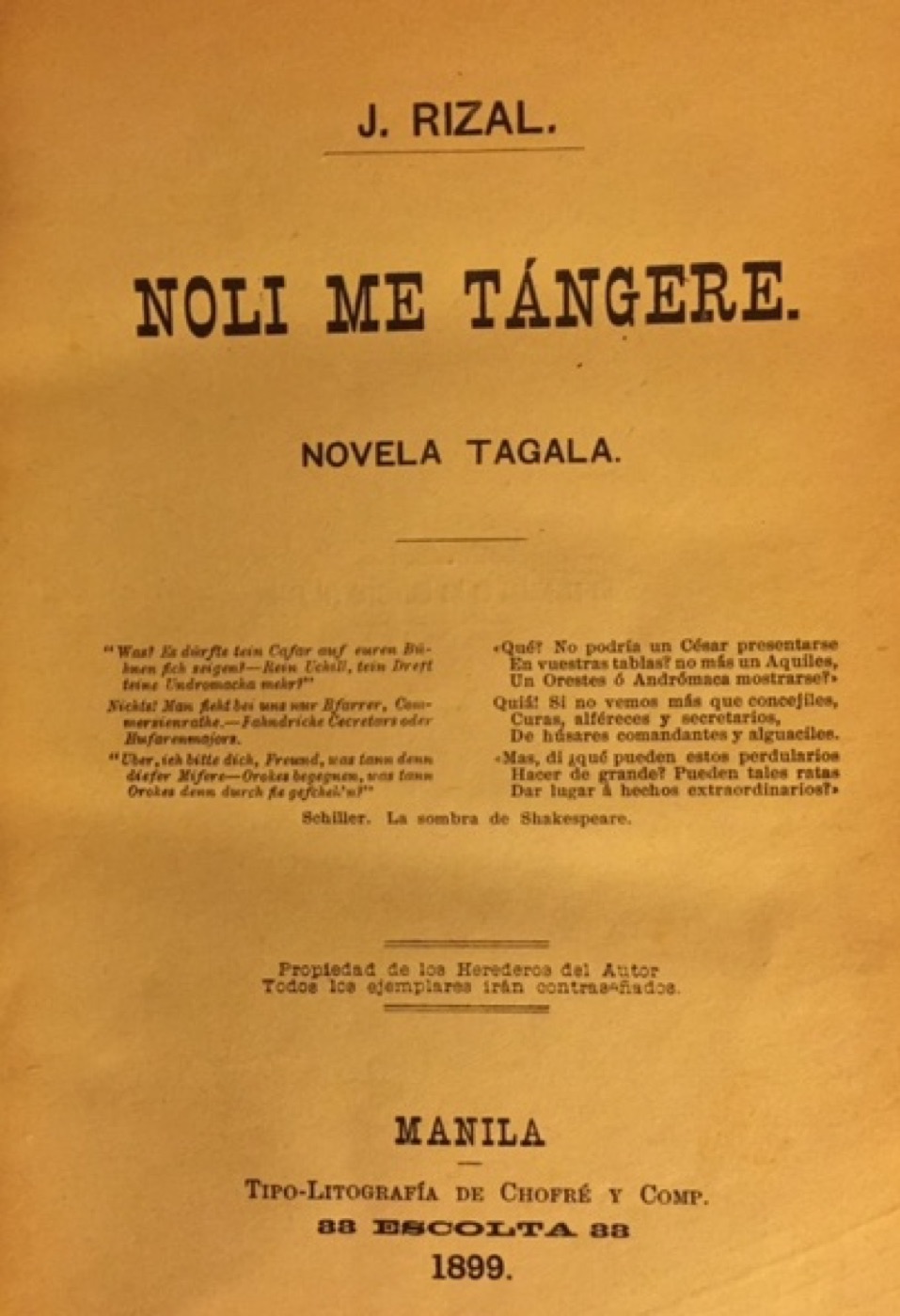
- The first Philippine edition of Noli Me Tangere, published in Manila in 1899. Public-domain edition; photograph by Guanyin2, CC BY-SA 4.0. · Public domain / CC BY-SA 4.0 Open in image viewer ↗
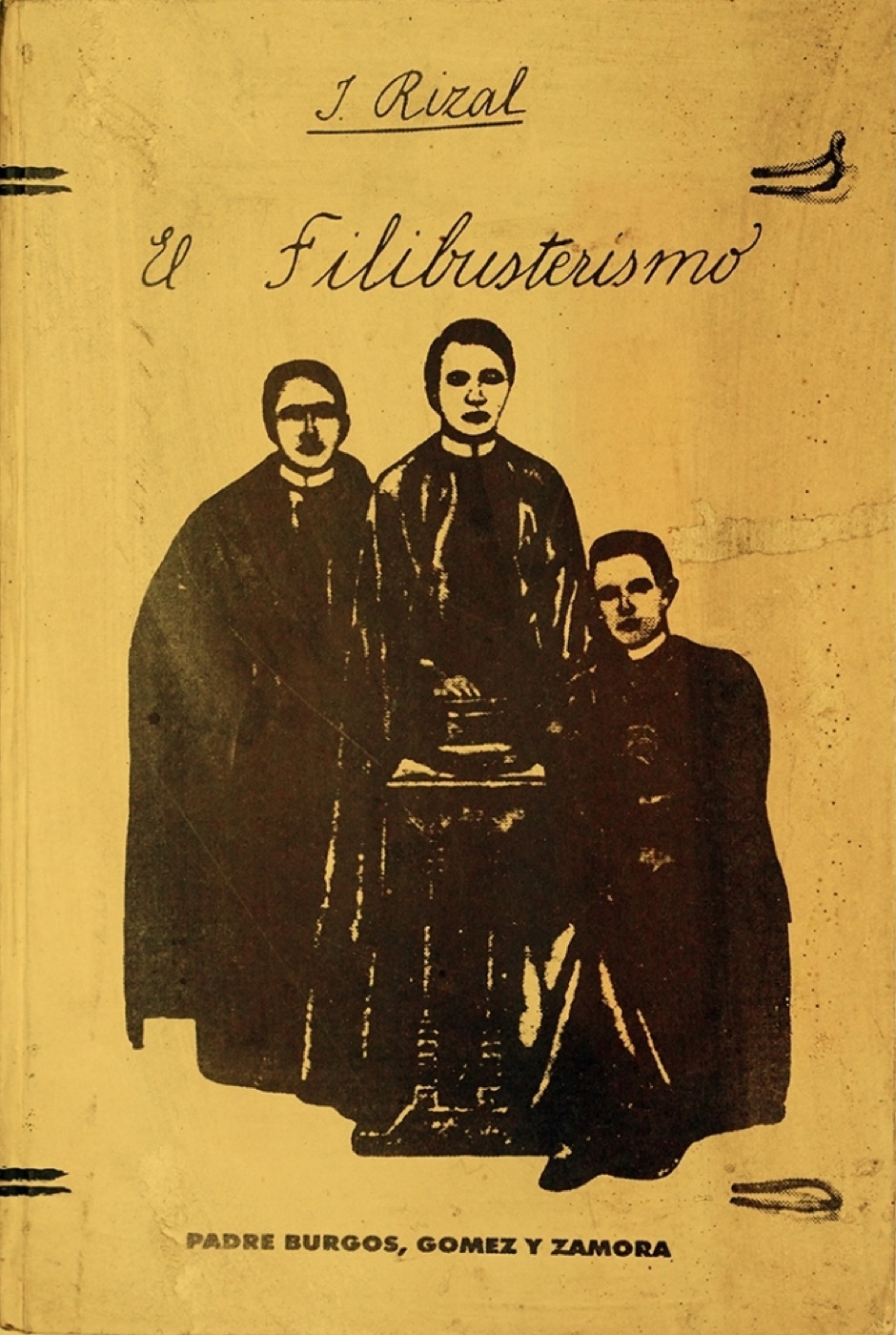
- A facsimile of the 1891 El Filibusterismo cover. The novel was printed in Ghent. José Rizal, 1891. Public domain. · Public domain Open in image viewer ↗
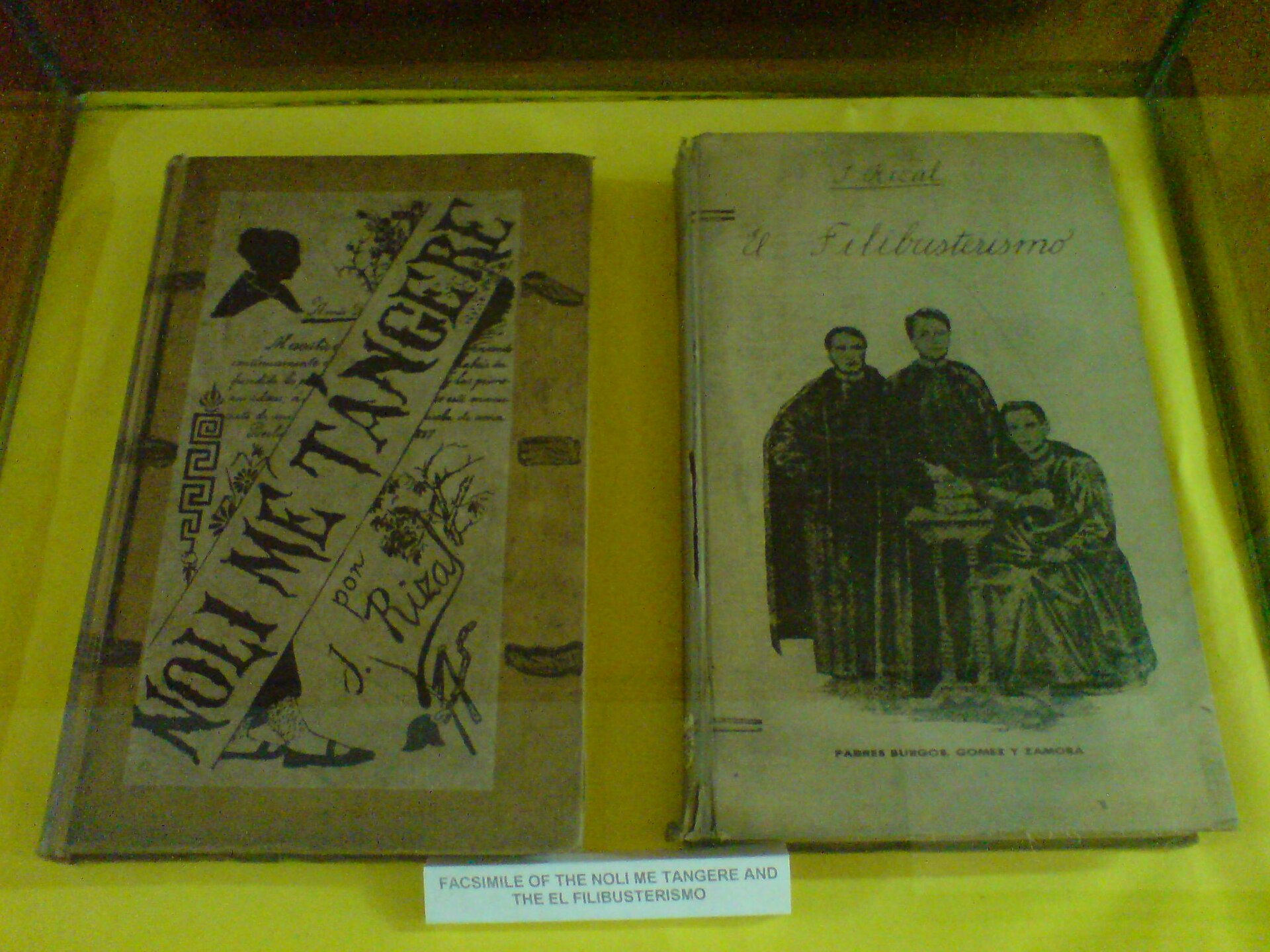
- The original handwritten manuscripts of Noli and Fili in the vault of the National Library of the Philippines. National Library of the Philippines / Ramon FVelasquez, CC BY-SA 3.0, via Wikimedia Commons. · CC BY-SA 3.0 Open in image viewer ↗
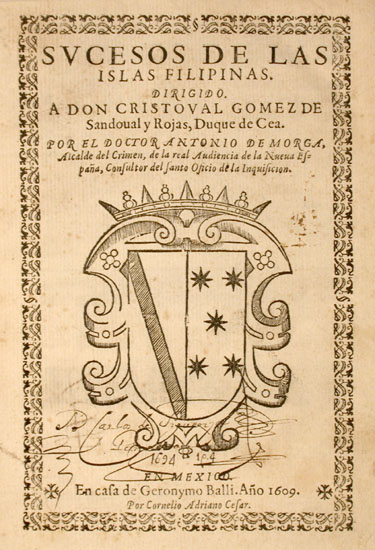
- Title page of Antonio de Morga’s Sucesos de las Islas Filipinas, annotated and published by Rizal in Paris in 1890. Librería de Garnier Hermanos, Paris, 1890. Public domain. · Public domain Open in image viewer ↗
- Front page of La Solidaridad, organ of the Propaganda Movement published in Barcelona and Madrid. La Solidaridad, February 15, 1889. Public domain. · Public domain Open in image viewer ↗
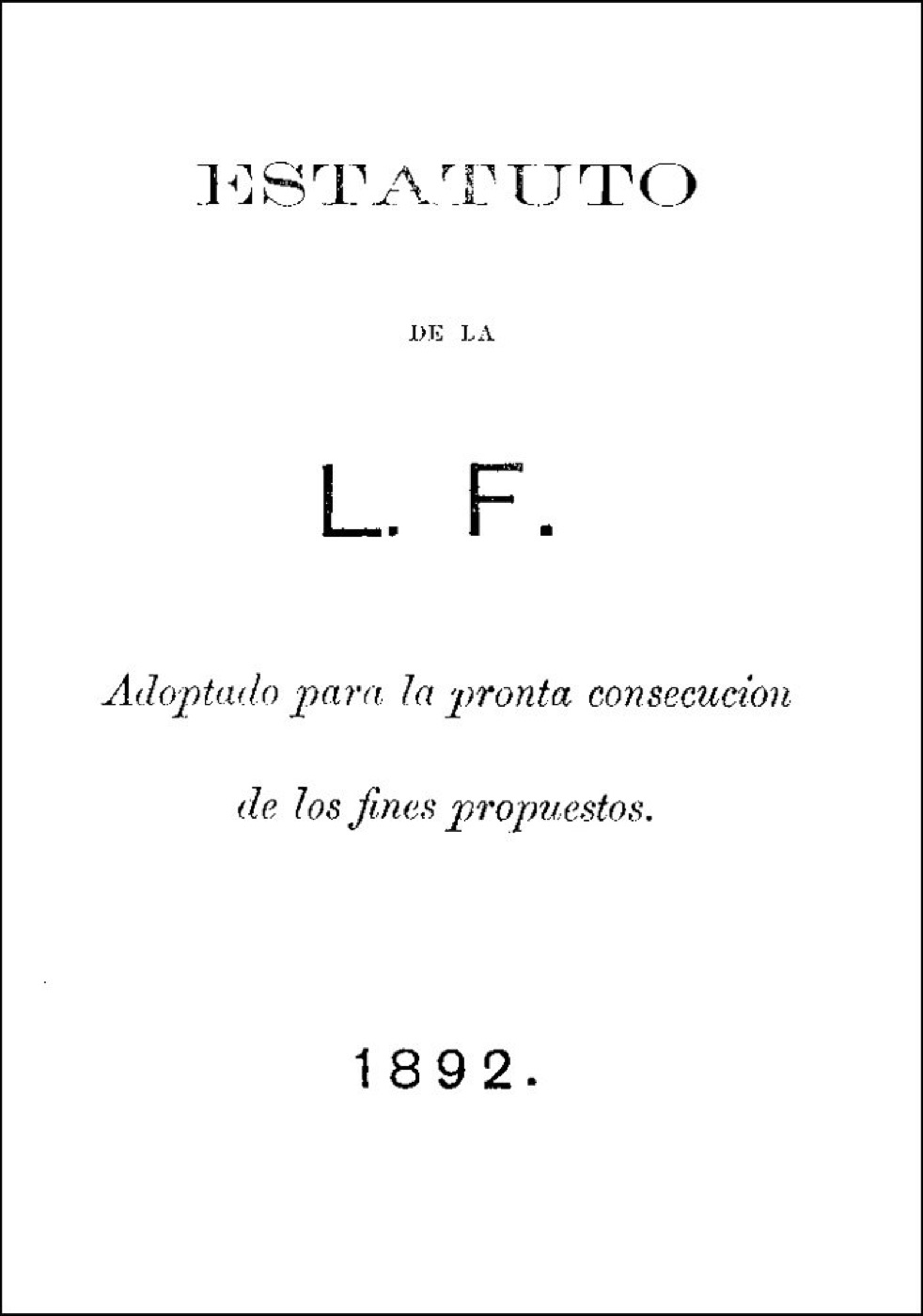
- The cover of La Liga Filipina’s constitution, 1892. José Rizal, 1892. Public domain. · Public domain Open in image viewer ↗
- Rizal’s handwritten regulations for La Liga Filipina. José Rizal, 1892. Public domain. · Public domain Open in image viewer ↗
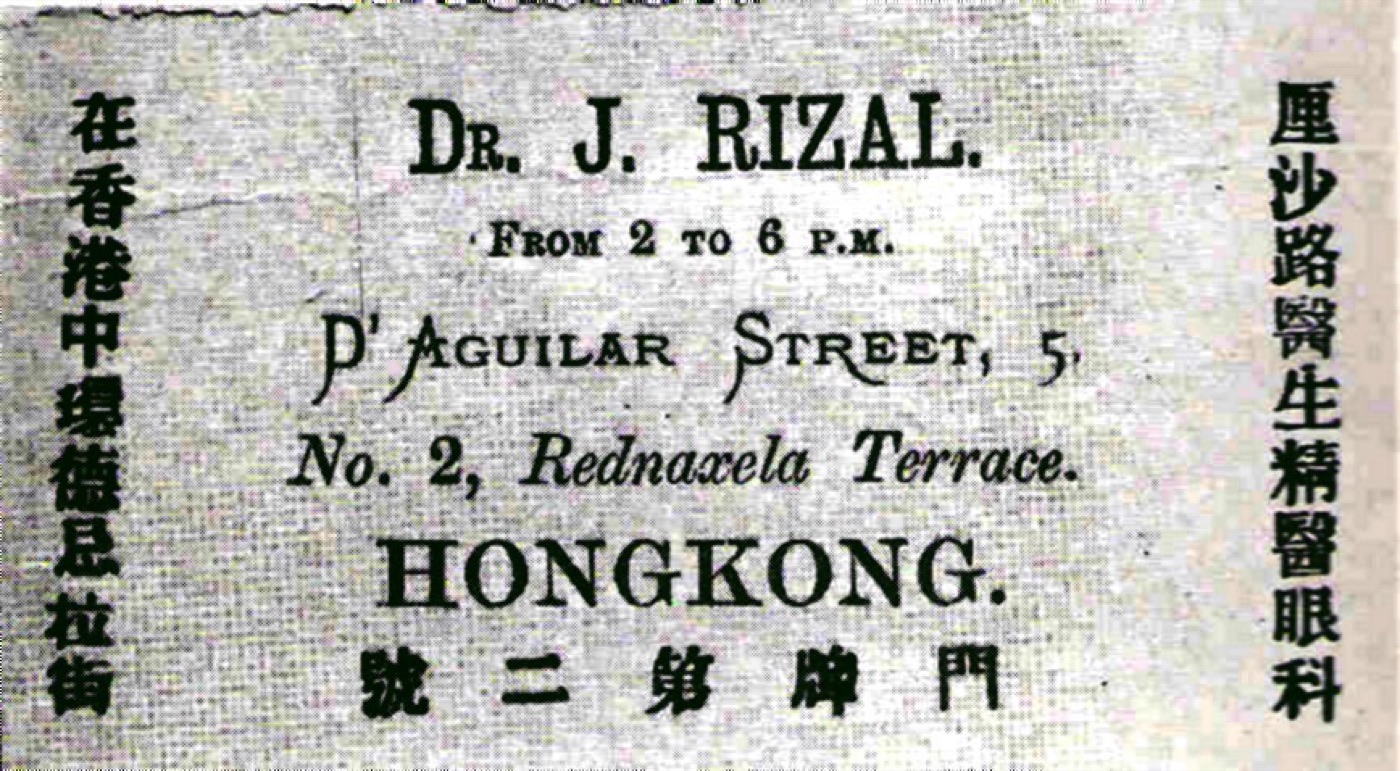
- Rizal’s ophthalmologist business card from Hong Kong, a document of working life in exile. José Rizal, late nineteenth century. Free Art License. · Free Art License Open in image viewer ↗
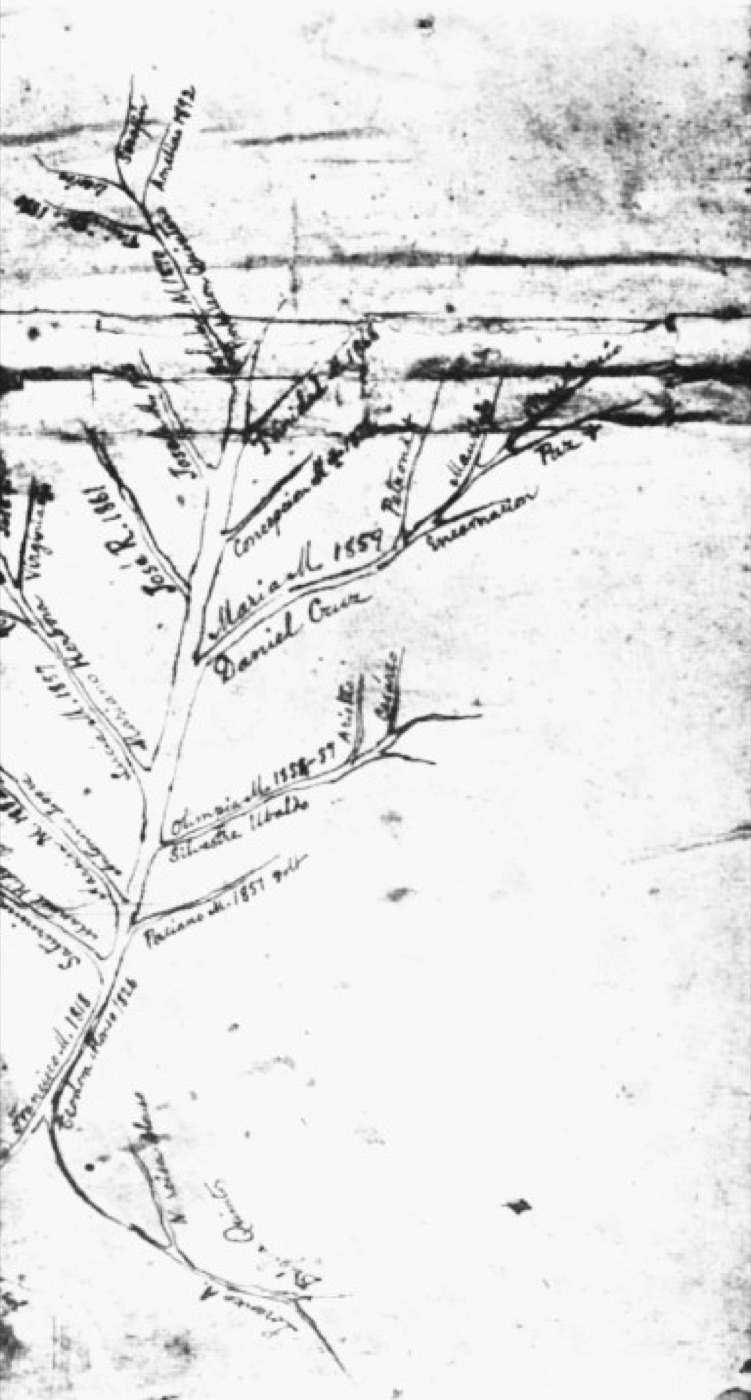
- Family tree drawn by Rizal in Dapitan, from Austin Craig’s 1913 biography. José Rizal, 1890s. Public domain. · Public domain Open in image viewer ↗
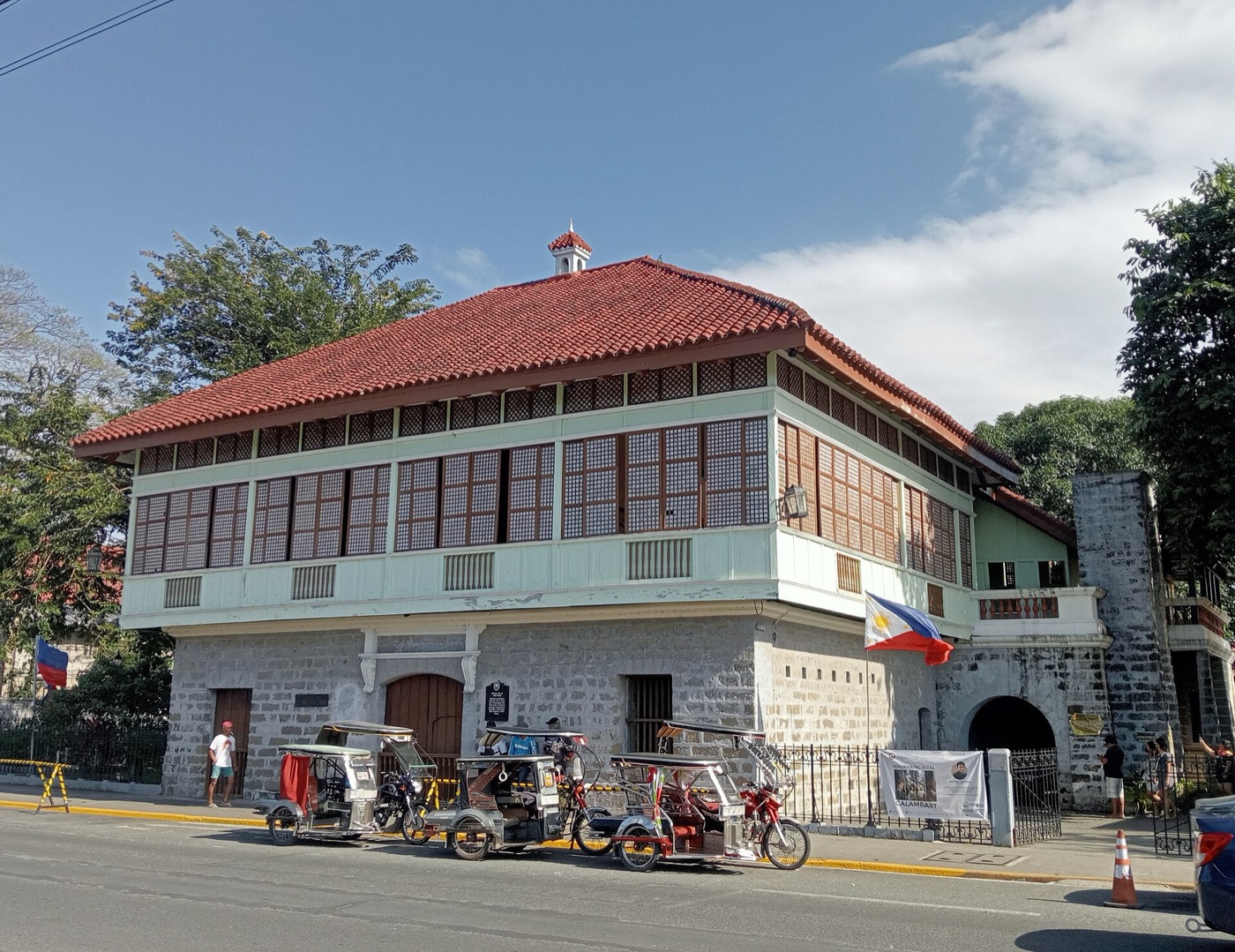
- The Rizal Shrine in Calamba, a reconstruction of the family house where Rizal was born. Ralff Nestor Nacor, CC BY-SA 4.0, via Wikimedia Commons. · CC BY-SA 4.0 Open in image viewer ↗
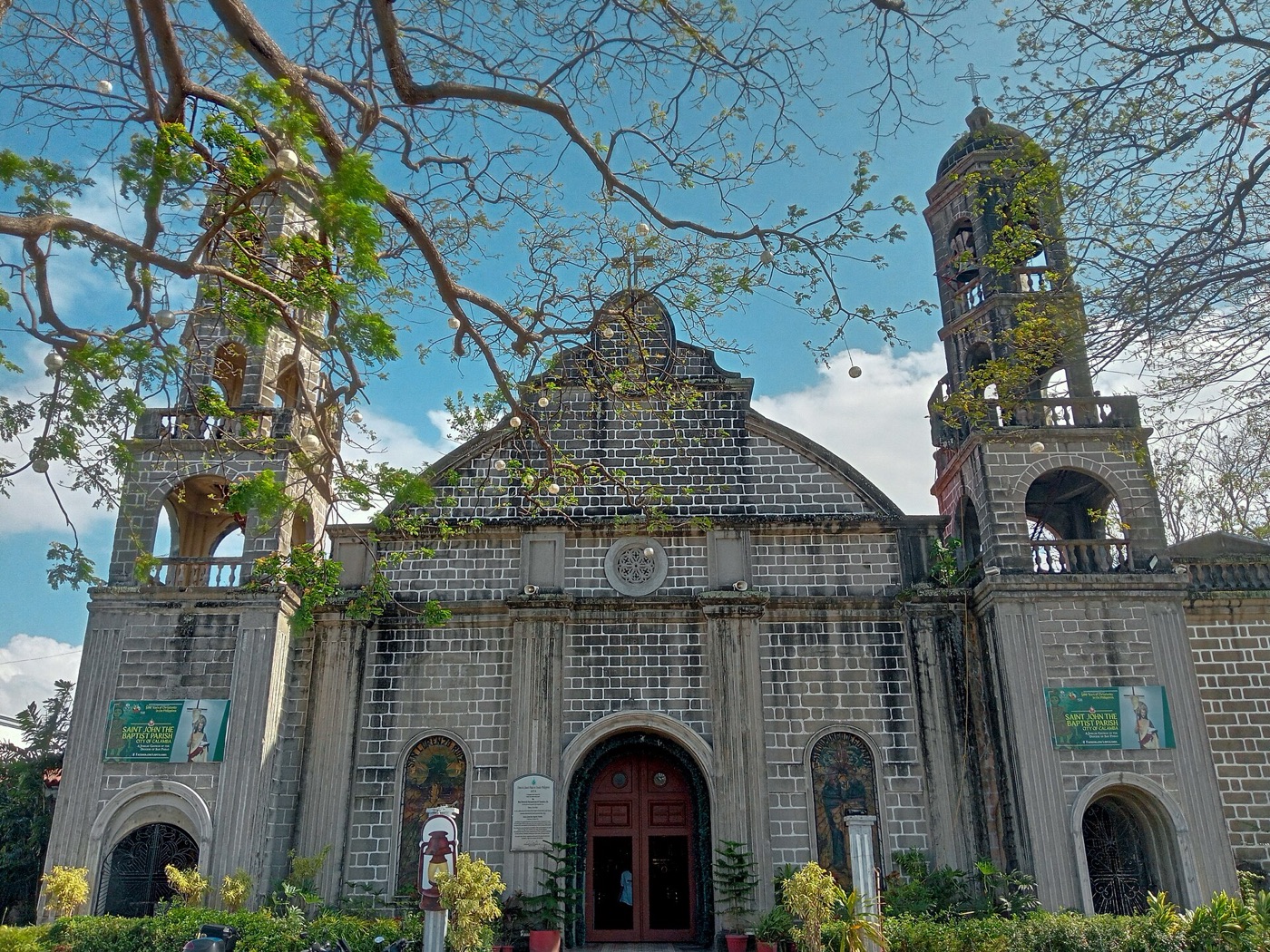
- Saint John the Baptist Parish Church, Calamba. Rizal was baptized here in 1861. Ralff Nestor Nacor, CC BY-SA 4.0, via Wikimedia Commons. · CC BY-SA 4.0 Open in image viewer ↗
- The original Ateneo Municipal in Intramuros, where Rizal studied and graduated with highest honors in 1877. Historical photograph, late 19th century. Public domain. · Public domain Open in image viewer ↗
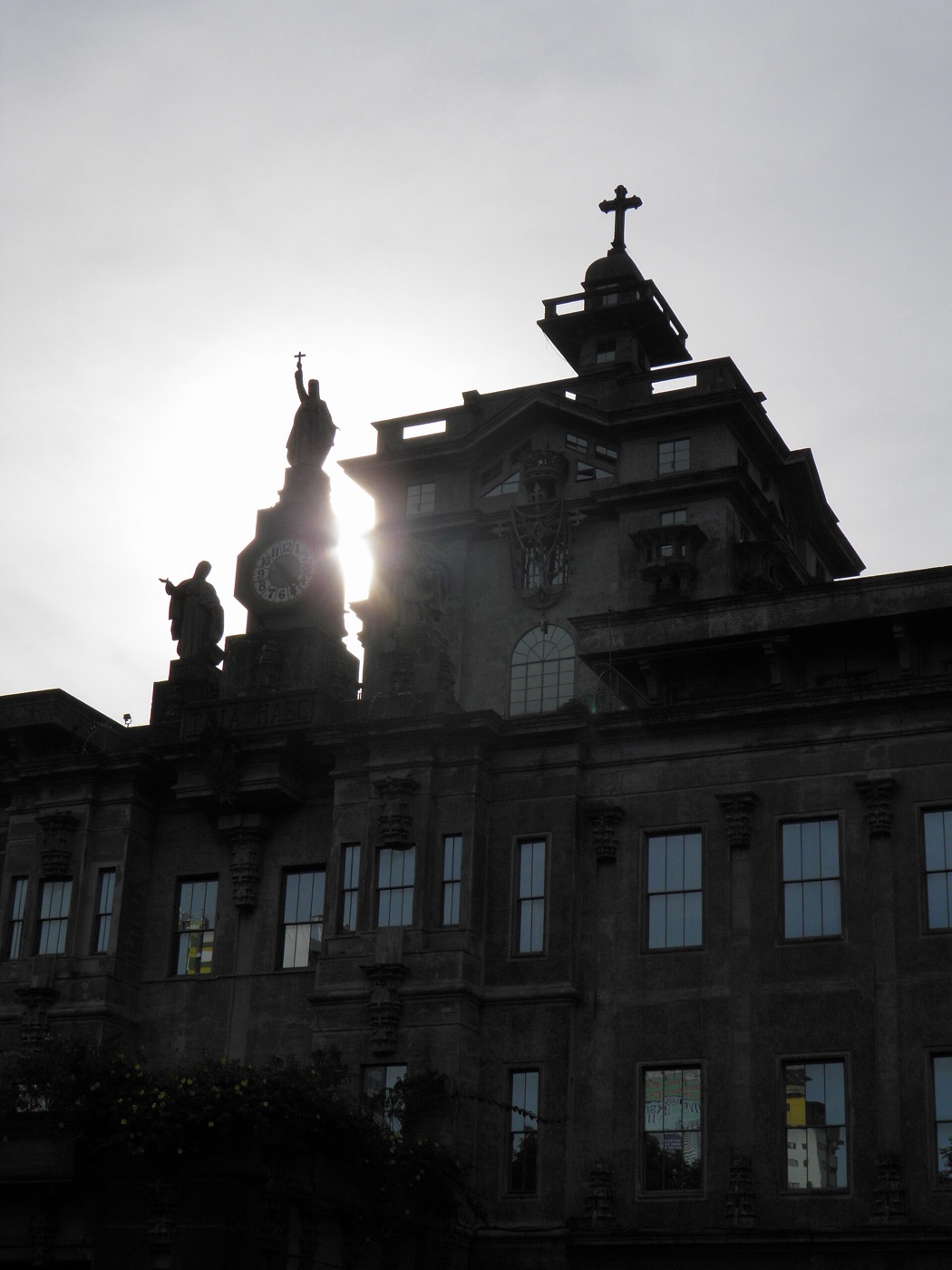
- The University of Santo Tomas, where Rizal studied philosophy and medicine. Gerrard Patricio, CC BY-SA 3.0, via Wikimedia Commons. · CC BY-SA 3.0 Open in image viewer ↗
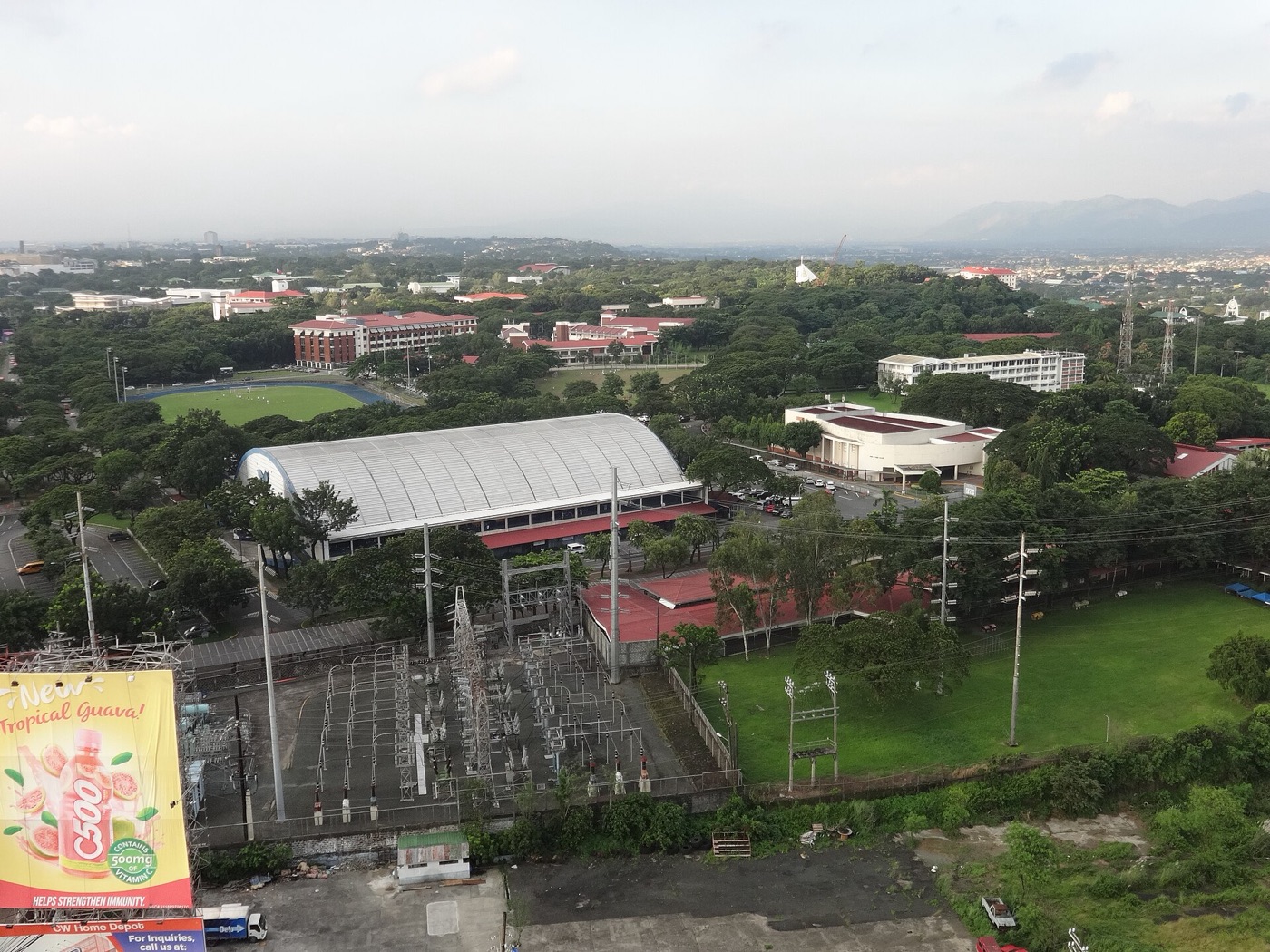
- Ateneo de Manila today. Rizal’s Ateneo was the earlier Intramuros school, not this modern campus. Patrick Roque, CC BY-SA 4.0, via Wikimedia Commons. · CC BY-SA 4.0 Open in image viewer ↗
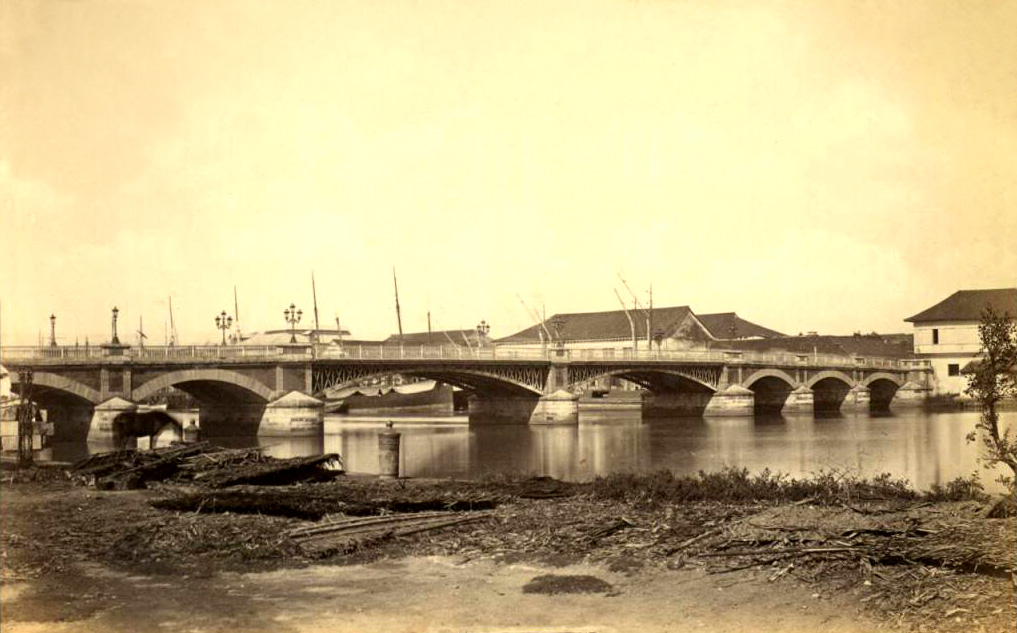
- Puente de España over the Pasig River, connecting Intramuros with Binondo. Historical photograph, c. 1880s. Public domain. · Public domain Open in image viewer ↗
- The bustling Escolta in Binondo, the commercial heart of 19th-century Manila. Library of Congress / photograph 1899. Public domain. · Public domain Open in image viewer ↗
- Universidad Central de Madrid on Calle San Bernardo, where Rizal earned his degrees in Medicine and Philosophy (1882–1885). Historical photograph, Madrid. Public domain. · Public domain Open in image viewer ↗
- Heidelberg: old town and castle above the Neckar, where Rizal studied ophthalmology in 1886. Schlurcher, CC BY 4.0, via Wikimedia Commons. · CC BY 4.0 Open in image viewer ↗
- Bronze statue of Rizal in Wilhelmsfeld, Germany, where he finished writing Noli Me Tangere in 1886. Photograph, Sep 2019, CC BY-SA 4.0, via Wikimedia Commons. · CC BY-SA 4.0 Open in image viewer ↗
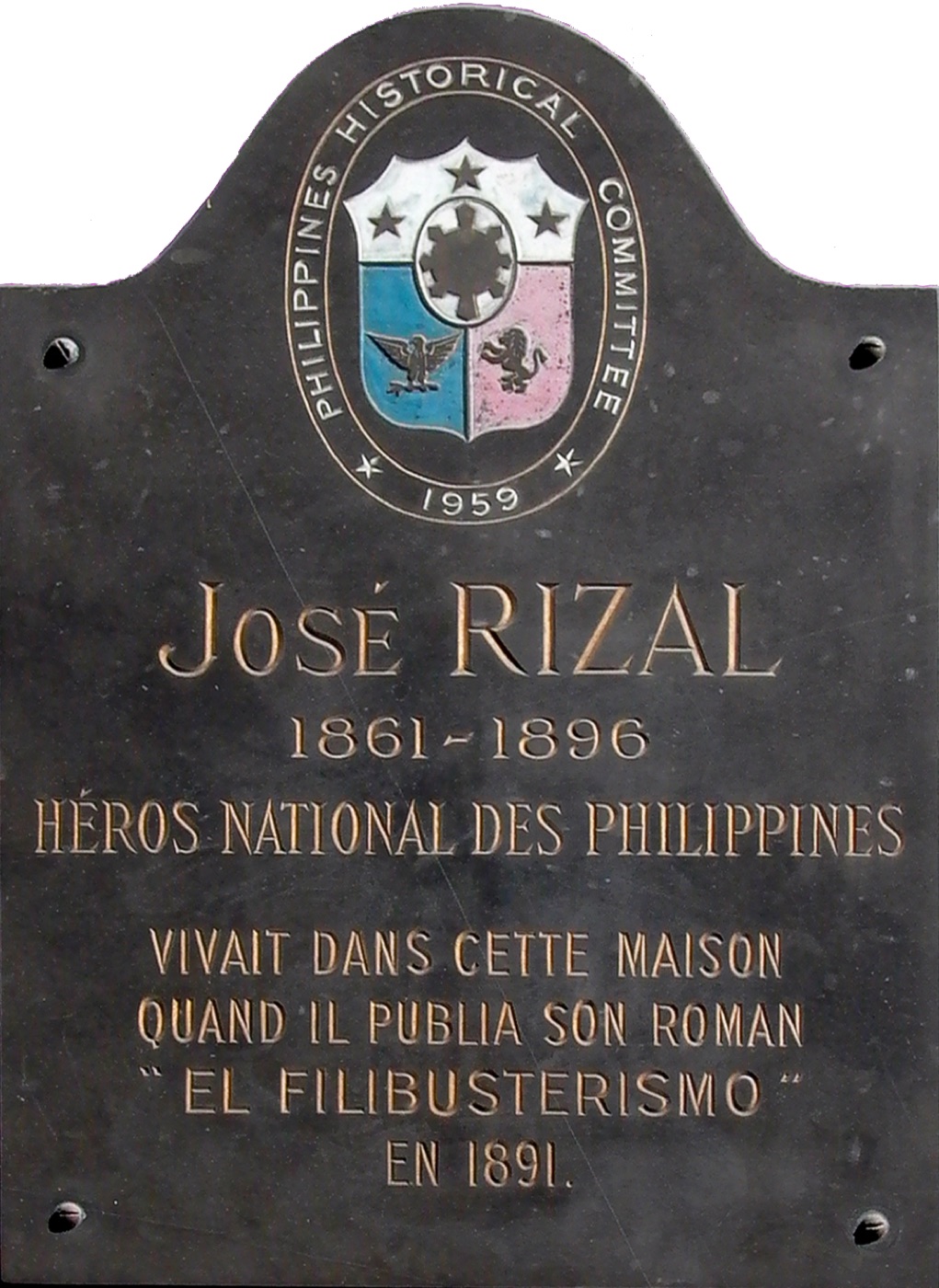
- The Rizal plaque in Ghent, marking the city where El Filibusterismo was printed. Paul Drieghe, CC BY-SA 3.0, via Wikimedia Commons. · CC BY-SA 3.0 Open in image viewer ↗
- The relief map of Mindanao sculpted by Rizal in the town plaza of Dapitan in 1892. Ralff Nestor Nacor, CC BY-SA 4.0, via Wikimedia Commons. · CC BY-SA 4.0 Open in image viewer ↗
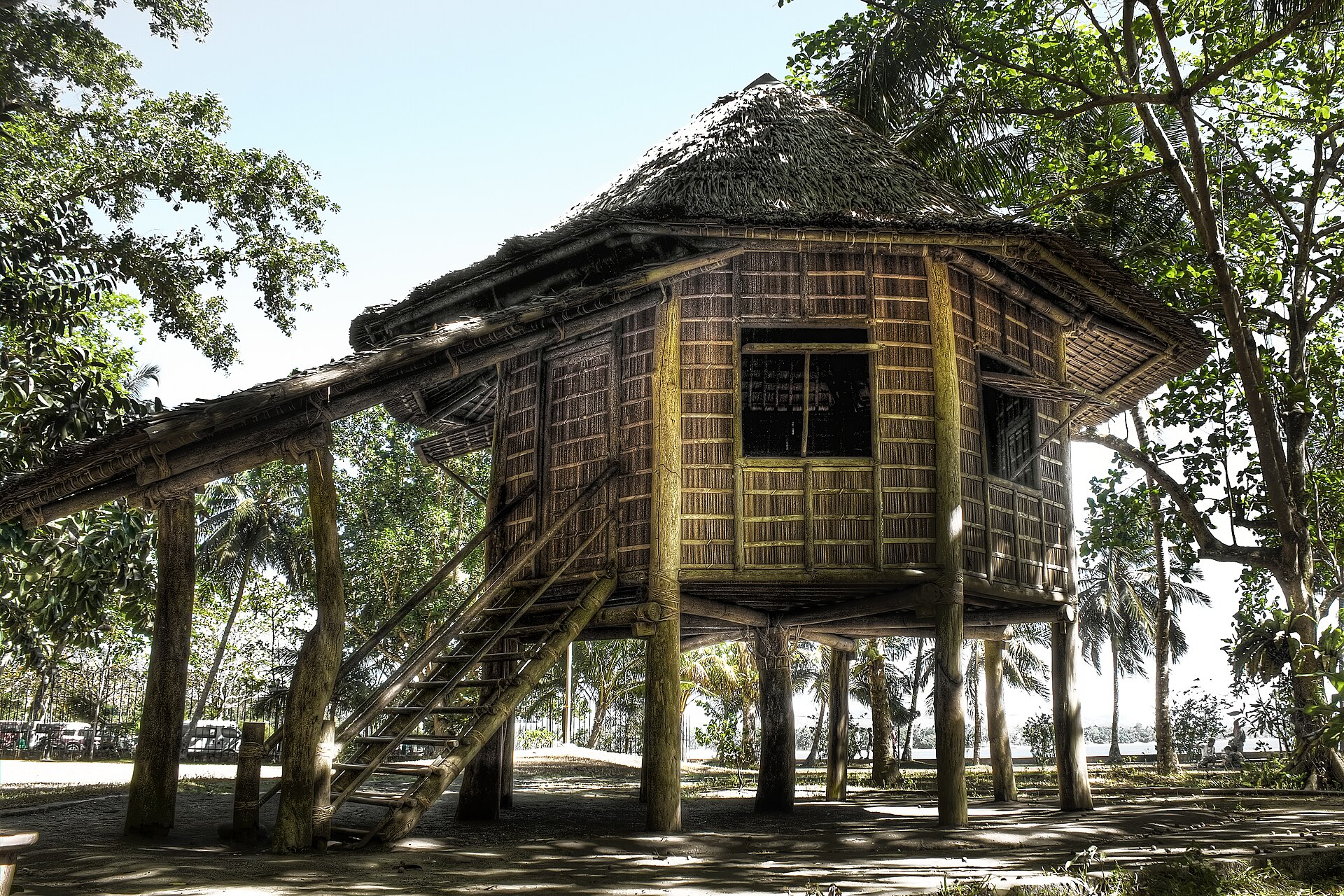
- Casa Redonda, the octagonal clinic and dormitory built by Rizal at his Talisay estate in Dapitan. Ralff Nestor Nacor, CC BY-SA 4.0, via Wikimedia Commons. · CC BY-SA 4.0 Open in image viewer ↗
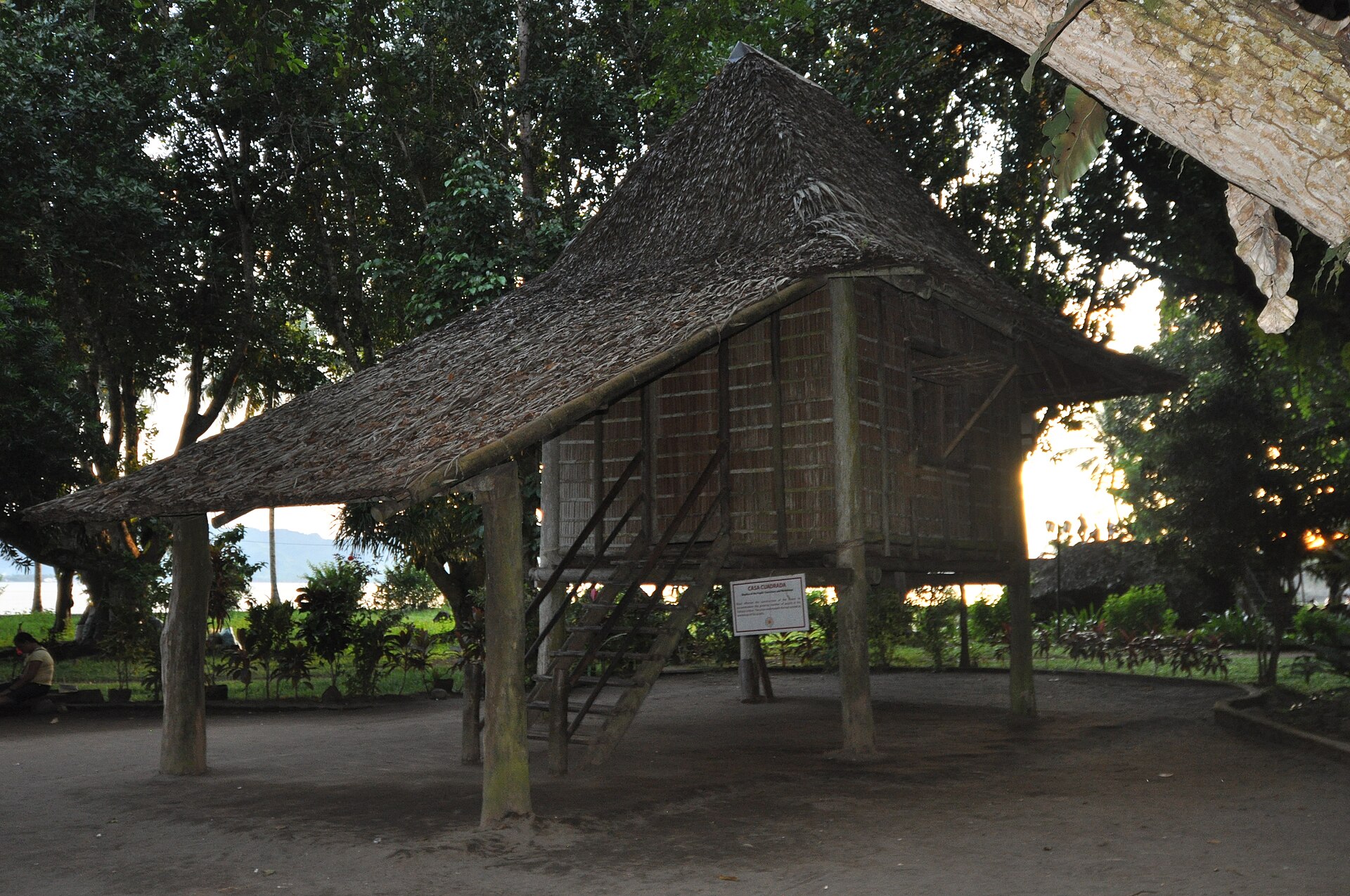
- Casa Cuadrada, the schoolhouse and workshop where Rizal taught local boys without tuition. Shakira S. Sison, CC BY-SA 3.0, via Wikimedia Commons. · CC BY-SA 3.0 Open in image viewer ↗
- The Rizal Shrine in Dapitan, where exile became a period of medical practice and teaching. QuianCagandahan, CC BY 4.0, via Wikimedia Commons. · CC BY 4.0 Open in image viewer ↗
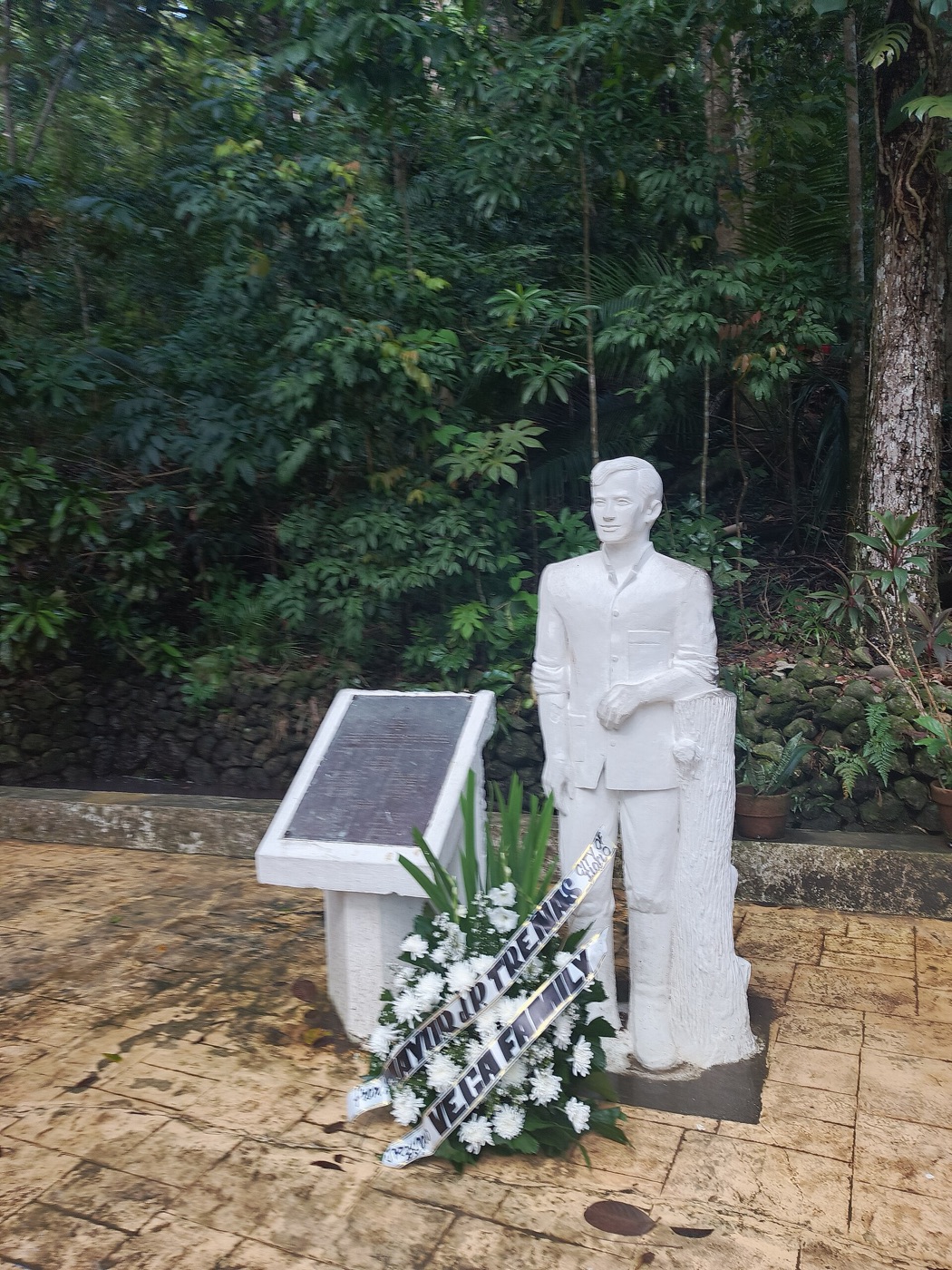
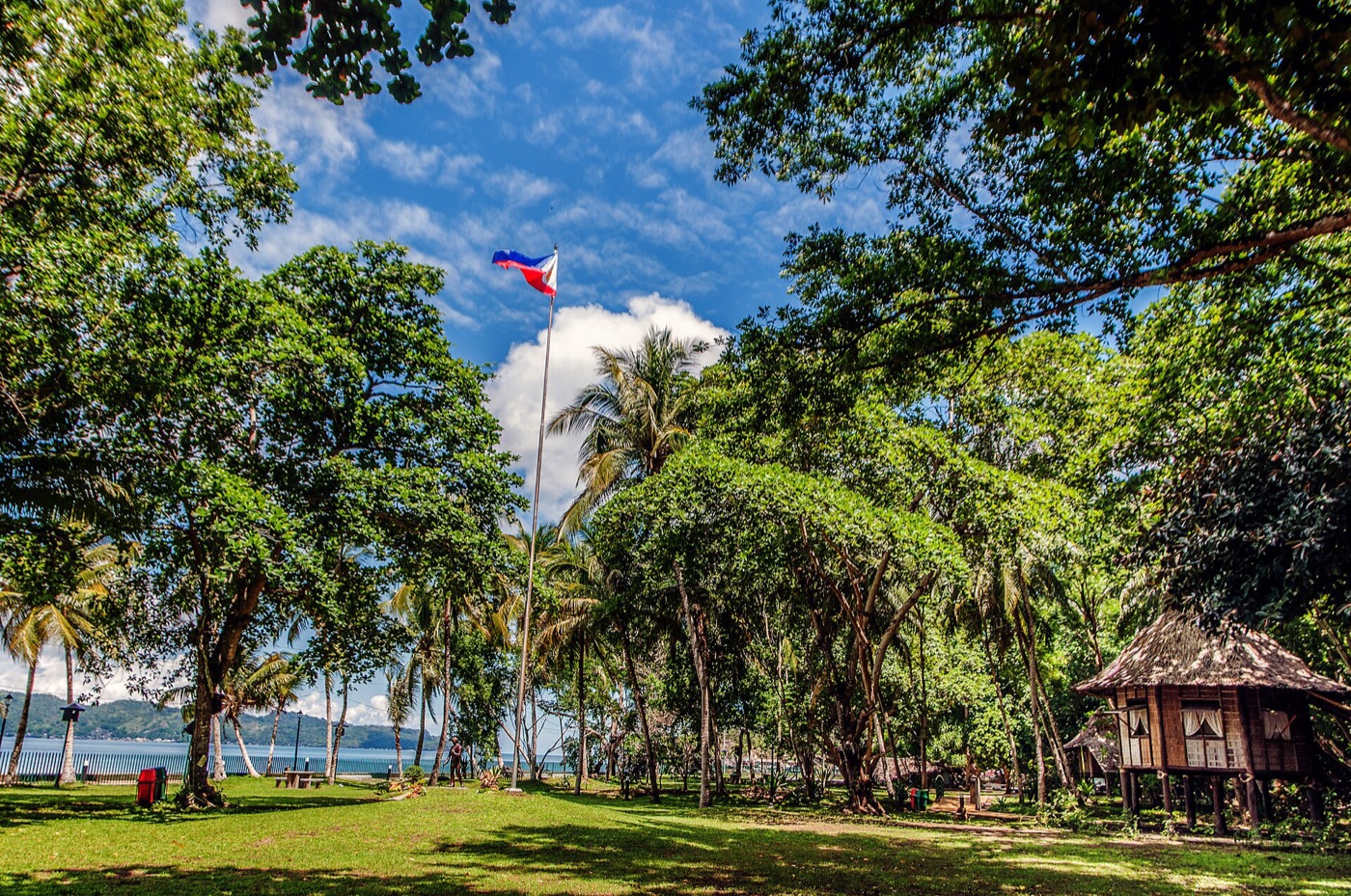
- The park and shrine at Talisay, Dapitan. Rizal lived here from 1892 until 1896. Francisco M. Pajares, Jr., CC BY-SA 4.0, via Wikimedia Commons. · CC BY-SA 4.0 Open in image viewer ↗
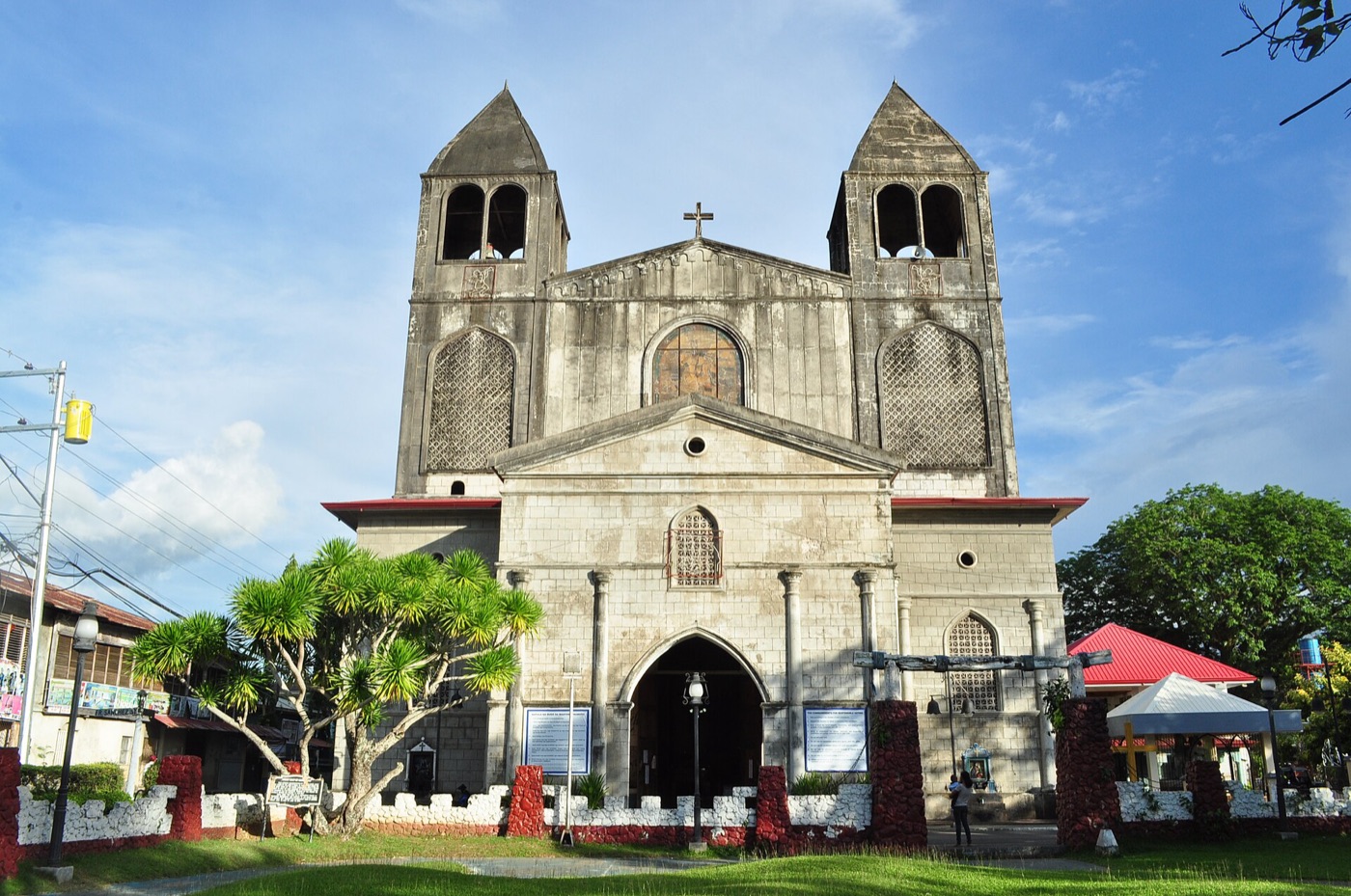
- Santiago el Mayor Parish Church, Dapitan: the town’s older institutional landscape. Project Kisame, CC BY 2.0, via Wikimedia Commons. · CC BY 2.0 Open in image viewer ↗
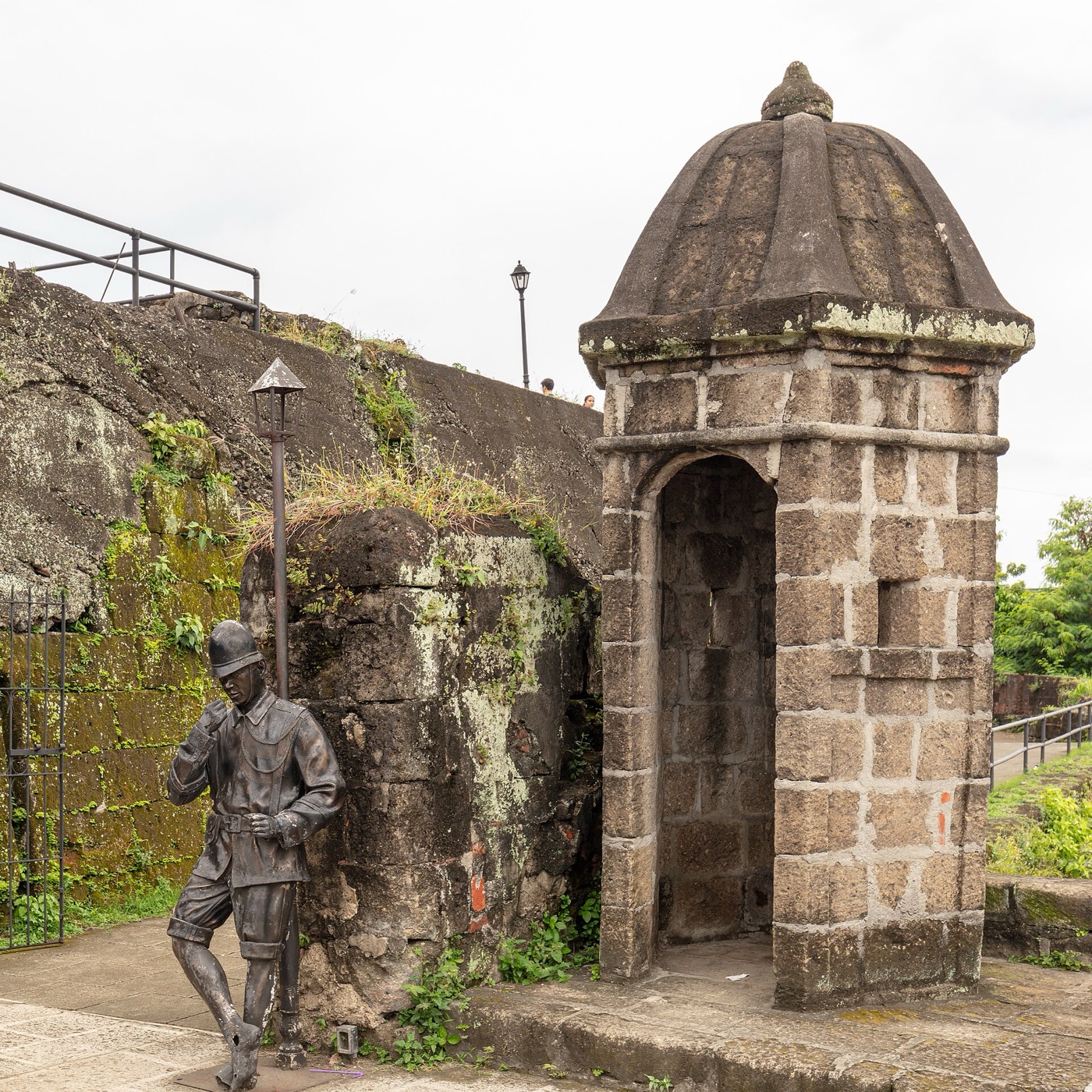
- Fort Santiago, Intramuros. Rizal was held here before his trial and execution. Diego Delso, CC BY-SA 4.0, via Wikimedia Commons. · CC BY-SA 4.0 Open in image viewer ↗
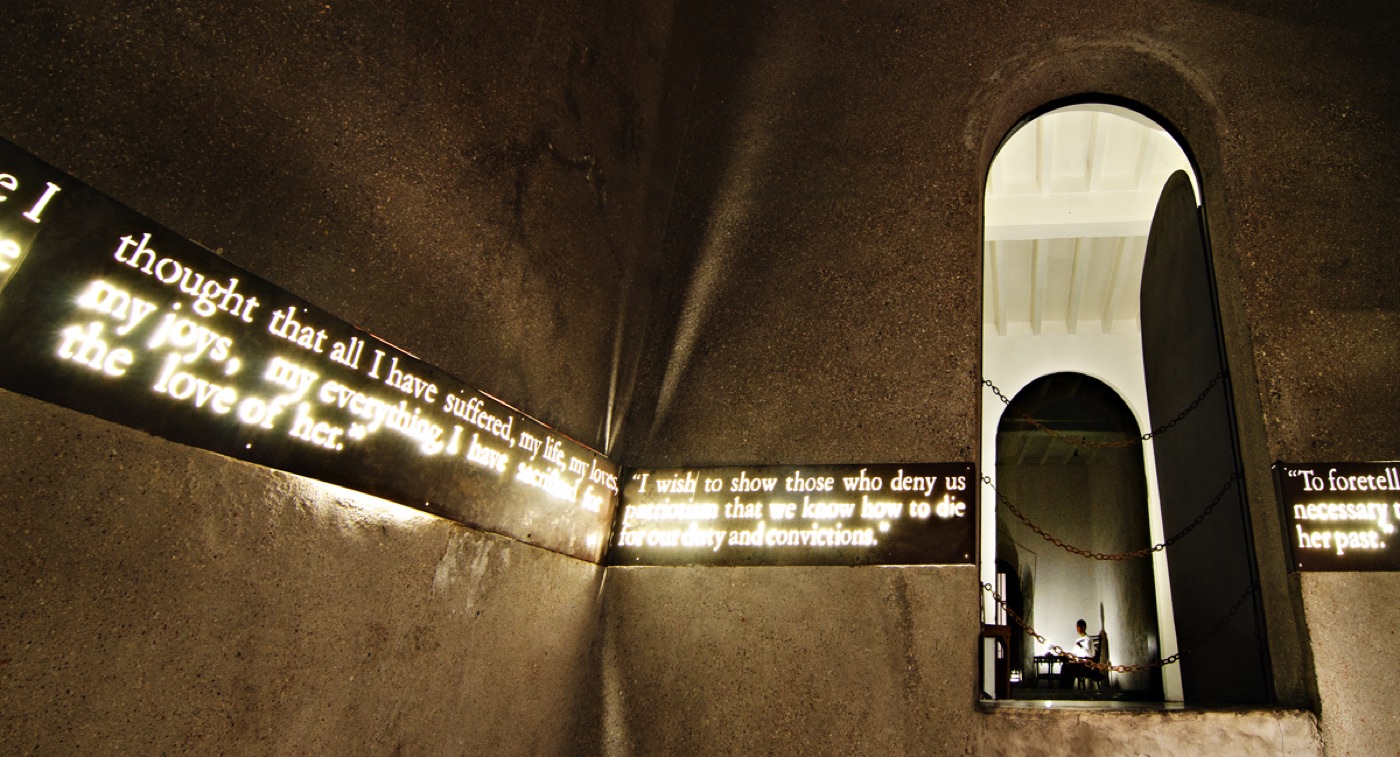
- The prison cell in Fort Santiago where Rizal was confined in late 1896 and penned Mi Último Adiós. Diego Delso, CC BY-SA 4.0, via Wikimedia Commons. · CC BY-SA 4.0 Open in image viewer ↗
- Diorama of Rizal’s court-martial trial at the Cuartel de España in Manila on December 26, 1896. Diorama photograph via Wikimedia Commons, CC BY-SA 4.0. · CC BY-SA 4.0 Open in image viewer ↗
- Manuel Arias Rodríguez’s 1896 painting of the execution at Bagumbayan. Manuel Arias Rodríguez, 1896. Museo del Ejército, Madrid. Public domain. · Public domain Open in image viewer ↗
- The life-size bronze sculptural tableau by Eduardo Castrillo at Bagumbayan (Rizal Park), Manila. Ralff Nestor Nacor, CC BY-SA 4.0, via Wikimedia Commons. · CC BY-SA 4.0 Open in image viewer ↗
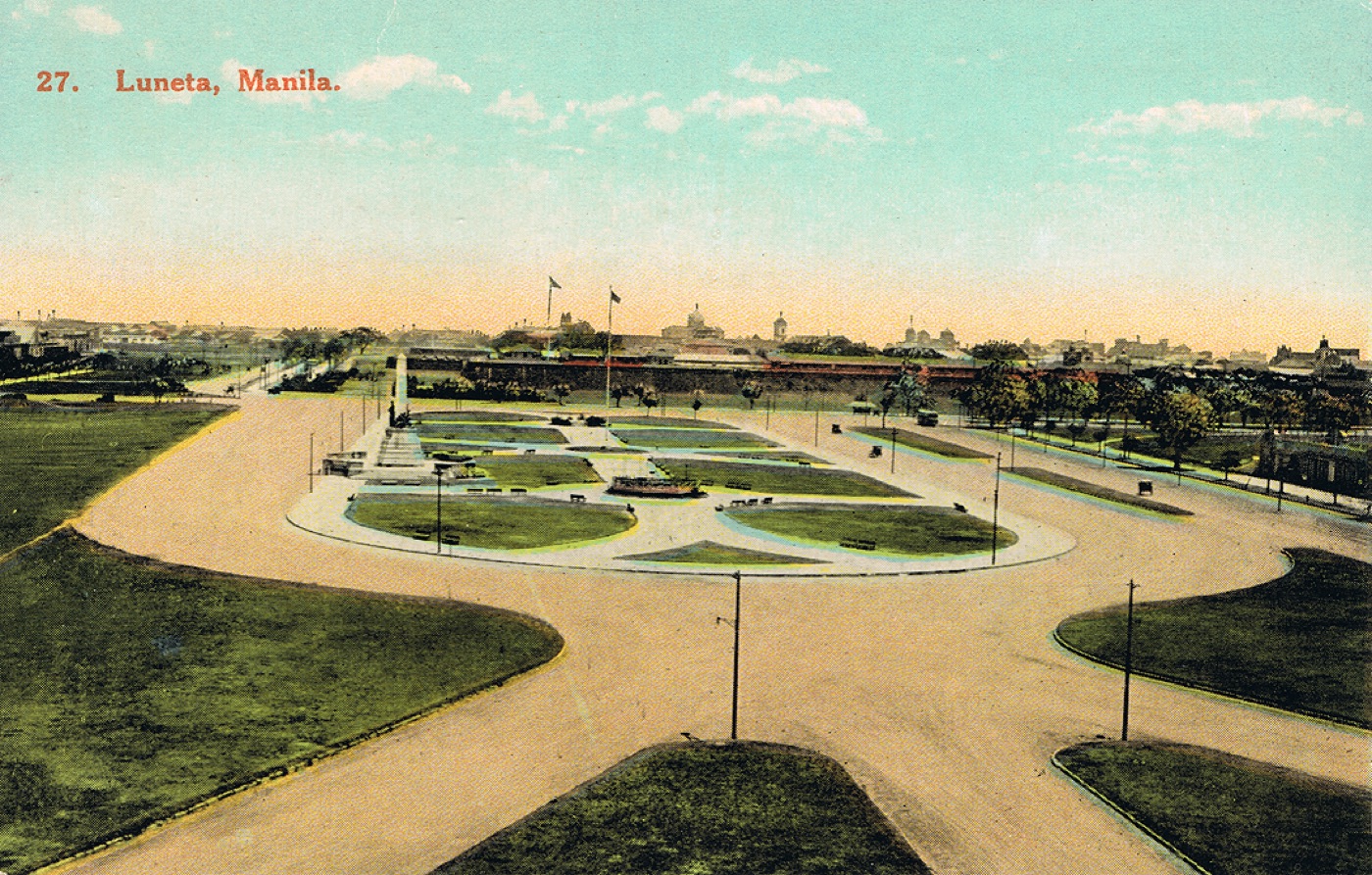
- An early twentieth-century postcard of the Luneta, before the present monument was completed. Postcard, early twentieth century. Public domain. · Public domain Open in image viewer ↗
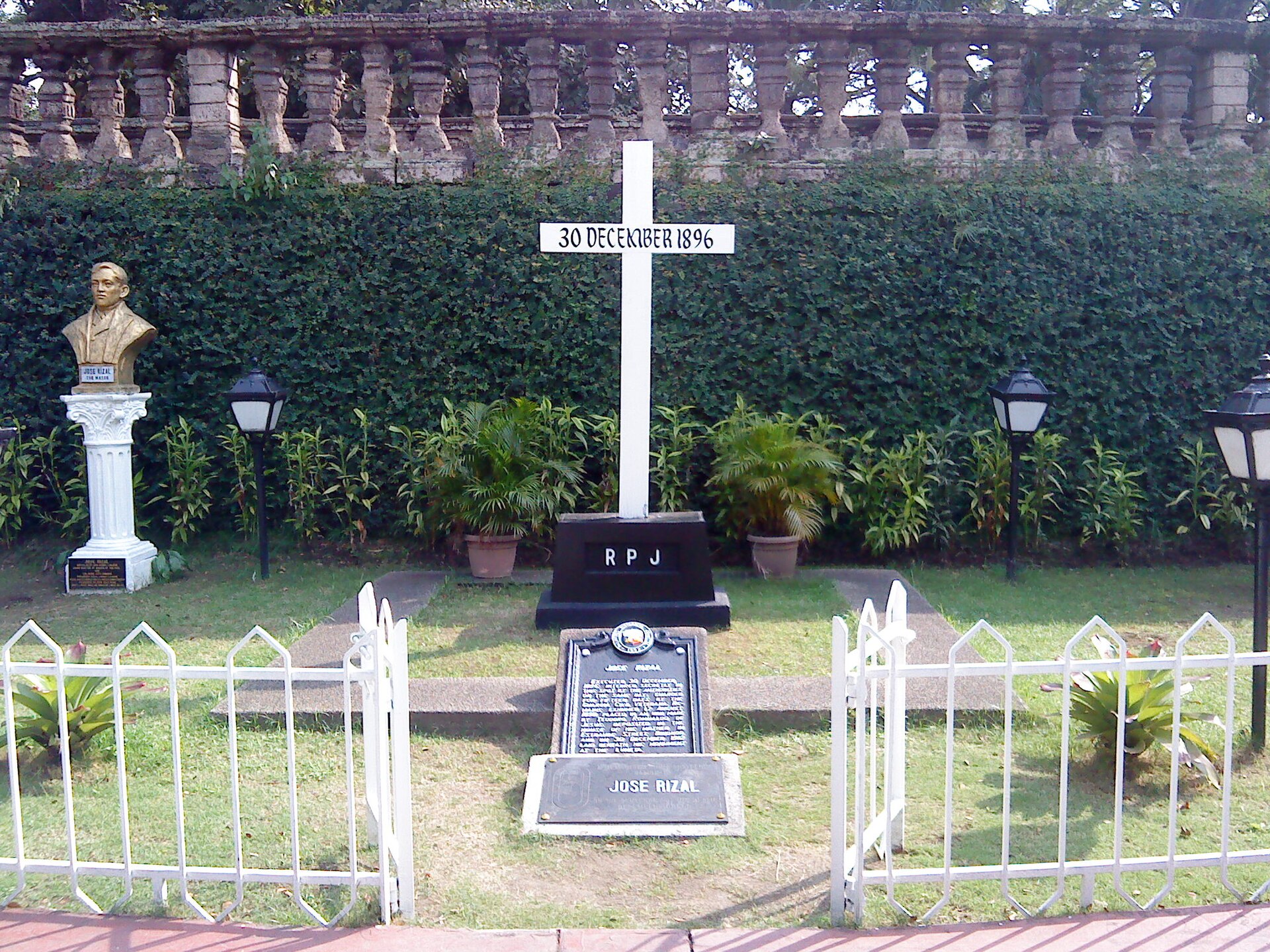
- Paco Cemetery (now Paco Park), Manila: Rizal’s secret burial site immediately following his execution in 1896. Patrick Roque, CC BY-SA 4.0, via Wikimedia Commons. · CC BY-SA 4.0 Open in image viewer ↗
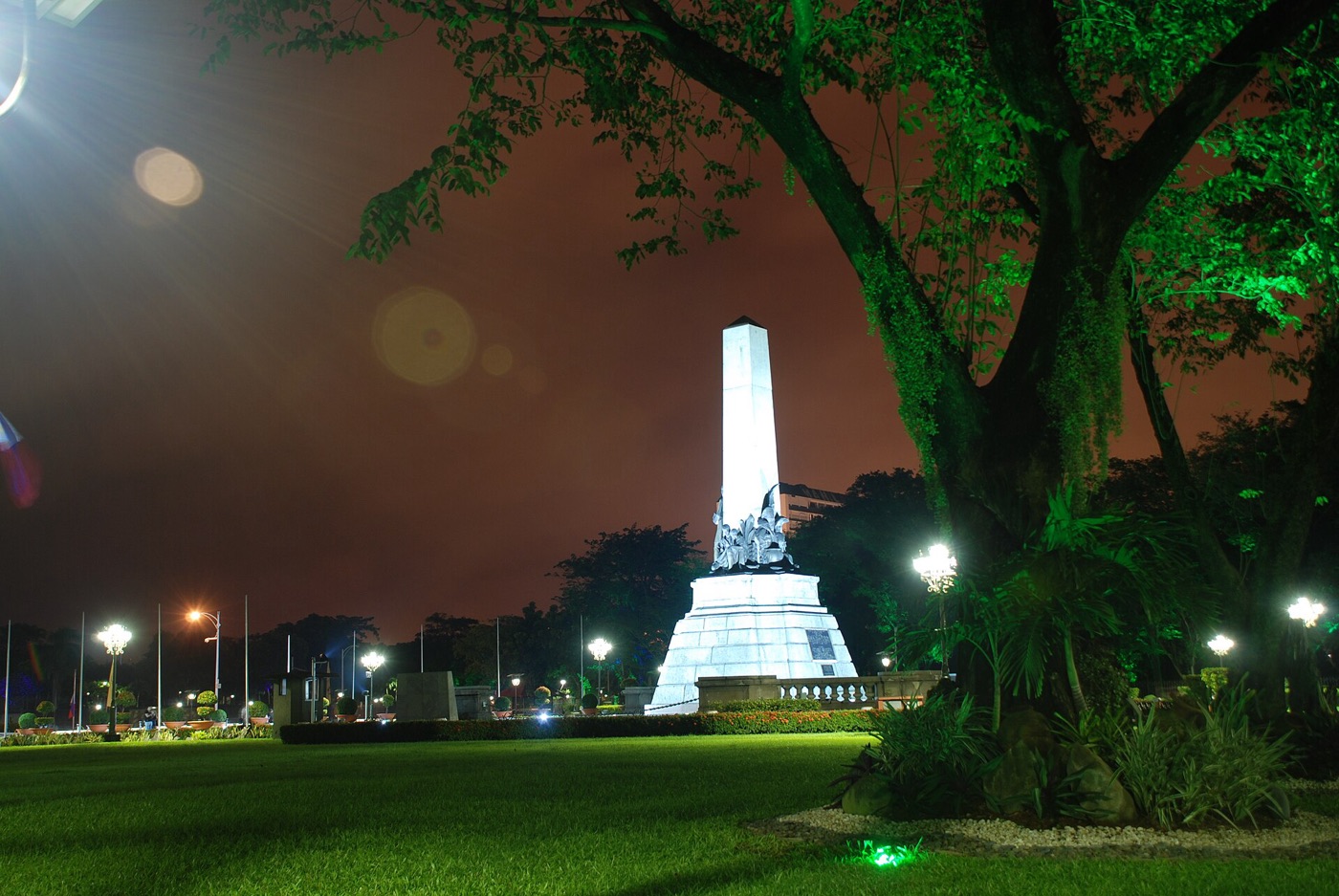
- The Rizal Monument at Luneta, the memorial landscape that grew around the execution site. Bondyag112665, CC BY-SA 3.0, via Wikimedia Commons. · CC BY-SA 3.0 Open in image viewer ↗
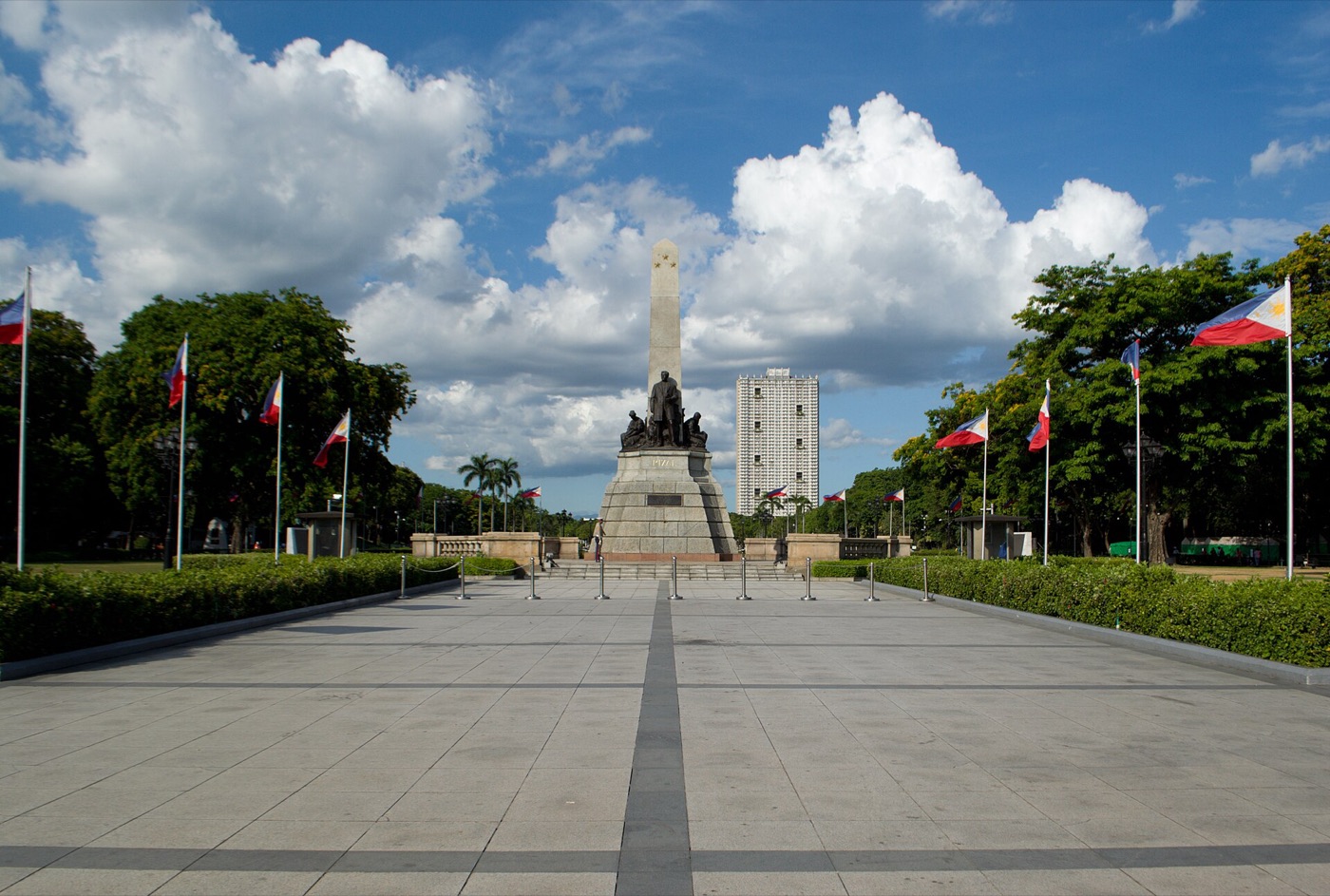
- The same monument in 2024: national memory is also a maintenance project. Ernest Malsin, CC BY 4.0, via Wikimedia Commons. · CC BY 4.0 Open in image viewer ↗
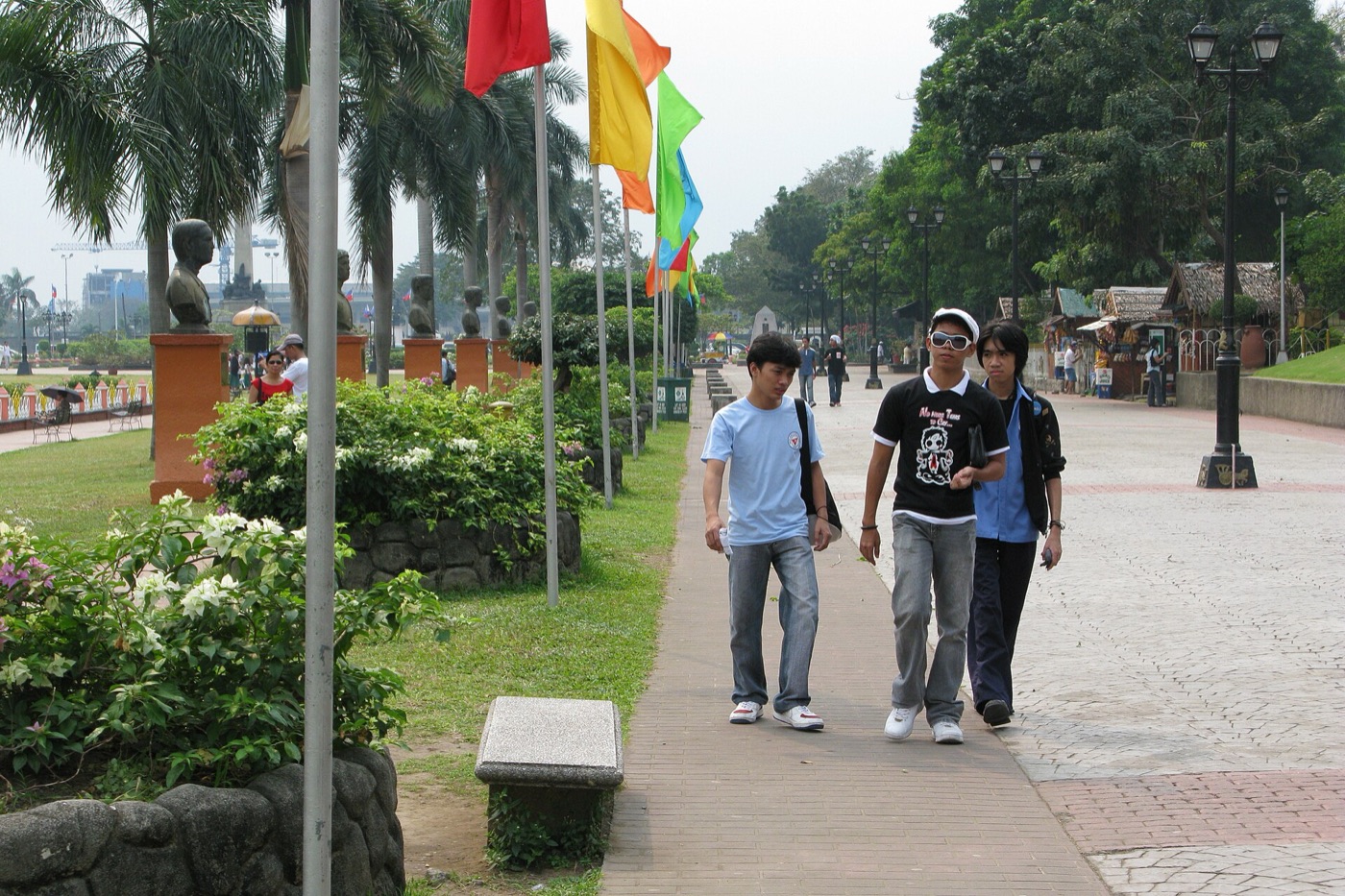
- Rizal Park today. The open grounds invite commemoration and everyday public life. Vyacheslav Argenberg, CC BY 4.0, via Wikimedia Commons. · CC BY 4.0 Open in image viewer ↗
- The 2015 National Historical Commission marker for La Liga Filipina in Manila. Andre Ryan Maceda, CC BY-SA 4.0, via Wikimedia Commons. · CC BY-SA 4.0 Open in image viewer ↗
- Historical marker connected to “Mi Último Adiós,” the poem Rizal hid in an alcohol lamp. Christian Sangoyo, CC BY-SA 3.0, via Wikimedia Commons. · CC BY-SA 3.0 Open in image viewer ↗
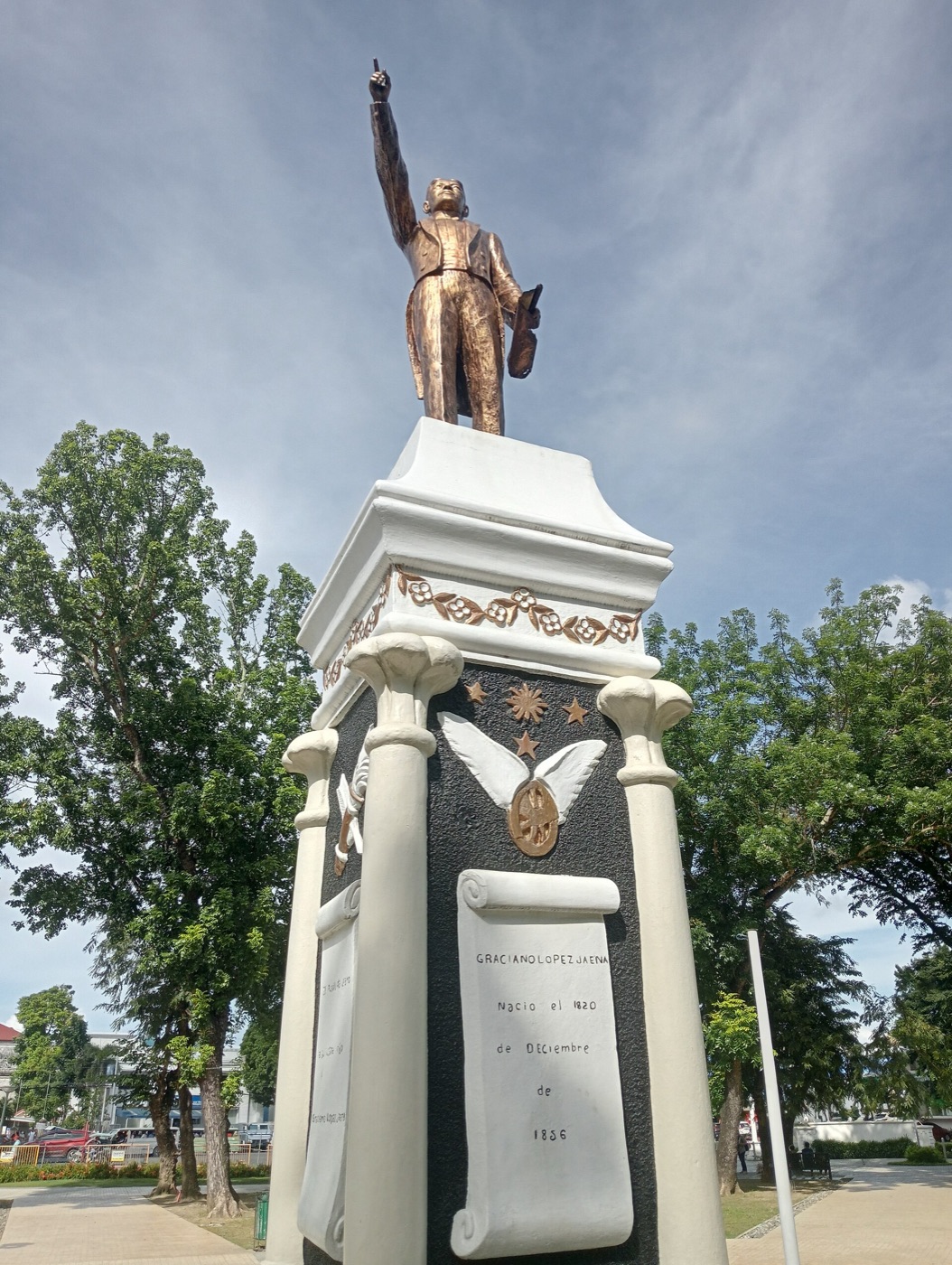
- The López Jaena monument in Jaro, Iloilo City. Ralff Nestor Nacor, CC BY-SA 4.0, via Wikimedia Commons. · CC BY-SA 4.0 Open in image viewer ↗
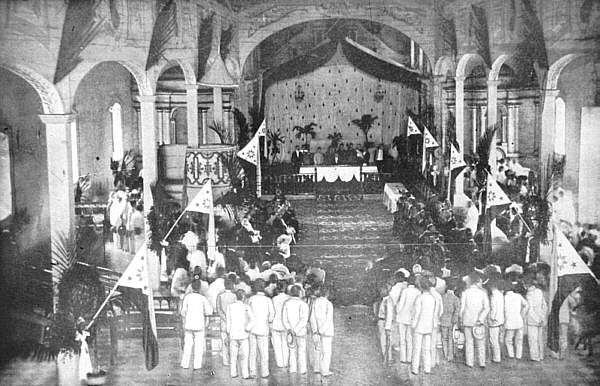
- The Malolos Congress inside Barasoain Church in September 1898, drafting the first democratic constitution in Asia. Photograph, 1898. Public domain. · Public domain Open in image viewer ↗
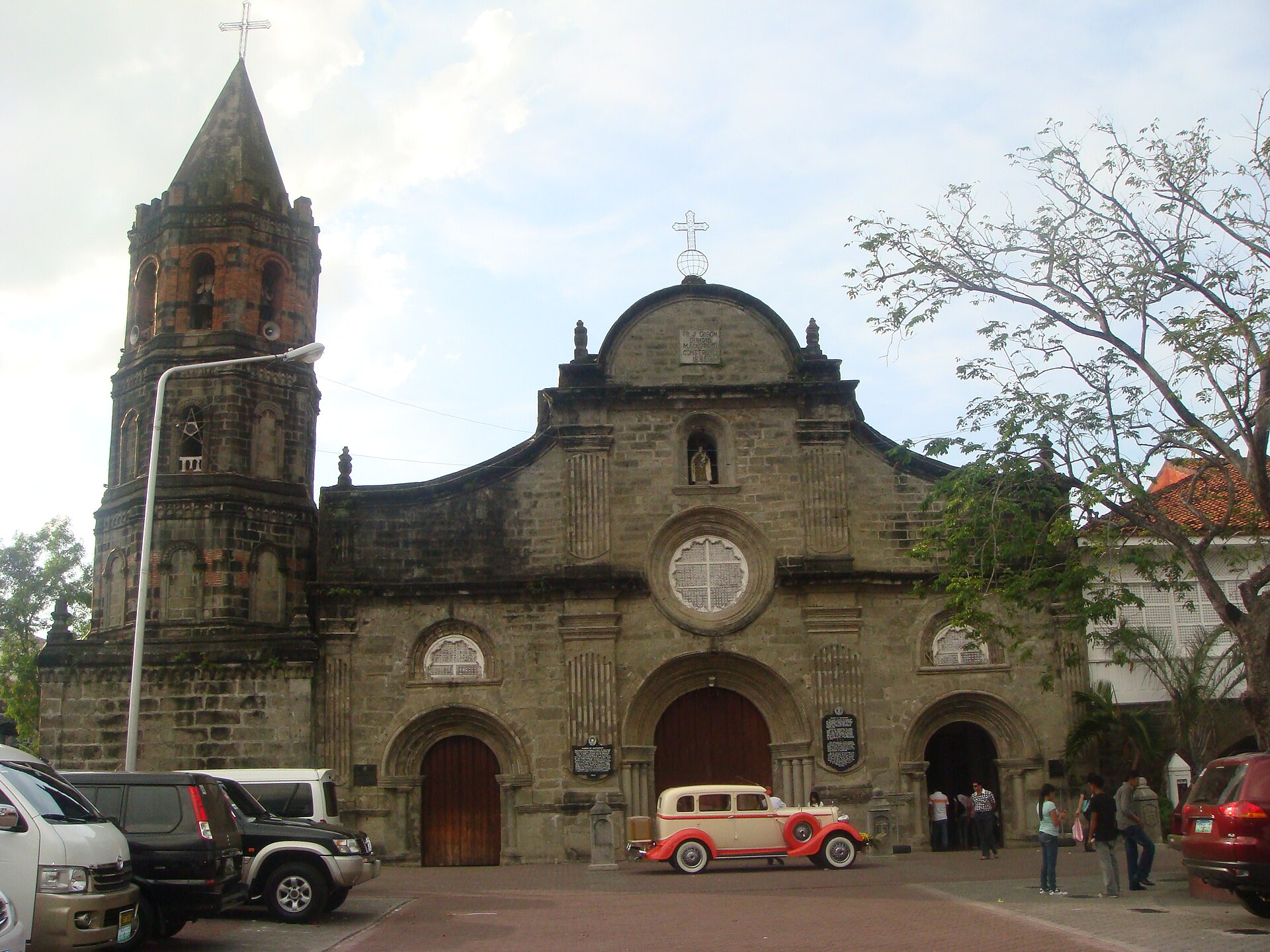
- Barasoain Church in Malolos, Bulacan: cradle of the First Philippine Republic and the site of the Malolos Congress. Ramon FVelasquez, CC BY-SA 3.0, via Wikimedia Commons. · CC BY-SA 3.0 Open in image viewer ↗
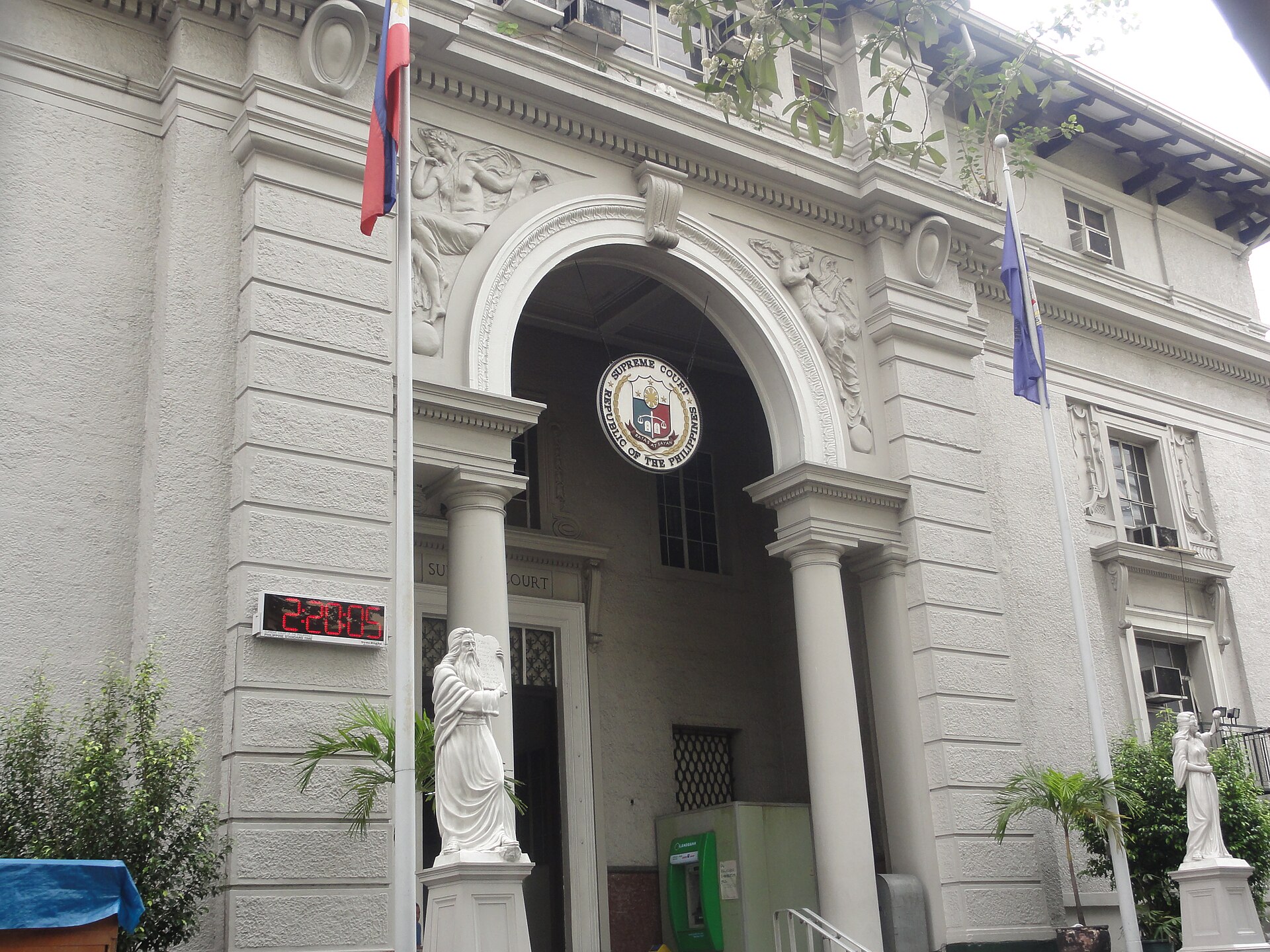
- The Supreme Court of the Philippines along Padre Faura Street, Manila, guardian of due process and civil liberties. Judgefloro, Public domain, via Wikimedia Commons. · Public domain Open in image viewer ↗
Method notes
The timeline chart in the interactive edition computes x-position from each record’s start year on a linear 1861–1896 scale. Ranges are retained in labels. Rows are exhibition selections, not a complete inventory of Rizal’s activity.
The relationship graph shows labeled connections established in the novels. Node arrangement and edge length carry no quantitative meaning. It does not purport to show actual historical people. Identity revelations remain in spoiler disclosures.
The Leaflet map uses approximate geographic locations and OpenStreetMap attribution. No fabricated path, inferred itinerary, or invented travel-distance statistic is presented.
Software and type
Leaflet 1.9.4 (BSD-2-Clause) powers the map. Map data and tiles: © OpenStreetMap contributors. DM Sans is distributed under the SIL Open Font License. A typography animation is adapted from the installed Design Taste skill’s word-highlight component.
Original exhibition copy and interactive implementation prepared for the student project. This site is an independent learning project, not an official museum or government publication.